

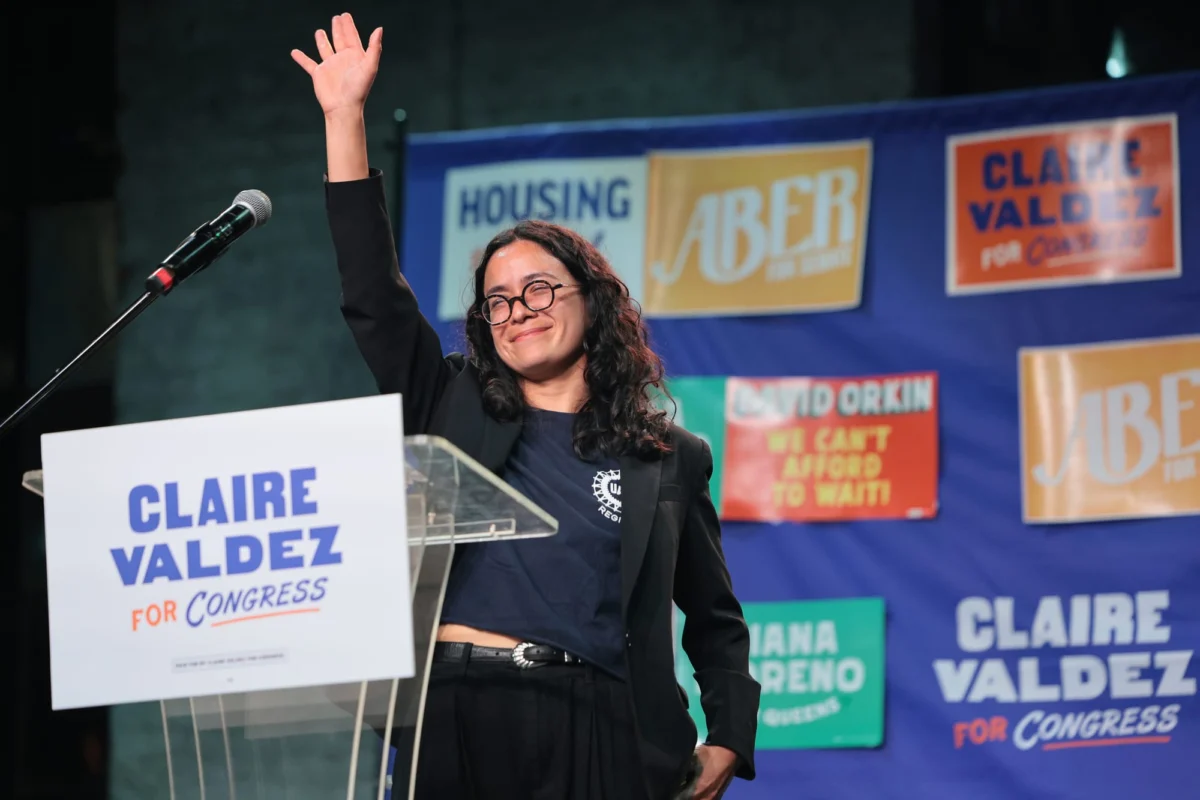
In a political earthquake that has reverberated from the streets of Bushwick to the halls of the Capitol, Democratic Socialist Claire Valdez has secured a commanding victory in the Democratic primary for New York’s 7th Congressional District. A painter by trade and a state assemblywoman by vocation, Valdez’s landslide win signals a profound shift in the city’s political landscape, signaling the ascension of a new, labor-centric coalition that defines itself by its rejection of corporate influence and its embrace of progressive structural change.
As the dust settles on a historic Tuesday night, the victory of Valdez—alongside fellow progressives Darializa Avila Chevalier and Brad Lander—suggests that the "Commie Corridor," a moniker for the vibrant, working-class enclaves spanning Brooklyn and Queens, has become the epicenter of a national experiment in democratic socialism.
The Election Results: A Mandate for Change
The numbers from Tuesday, June 23, 2026, were unequivocal. Valdez, 36, defeated her most formidable challenger, Brooklyn Borough President Antonio Reynoso, by a 20-point margin. Reynoso, a well-entrenched progressive affiliated with the Working Families Party, had secured the prestigious endorsement of the retiring incumbent, Representative Nydia Velázquez. Despite this institutional backing, the electorate opted for a candidate whose platform leaned heavily into the aesthetics of labor solidarity and the lived realities of the gig economy.
The 7th District, encompassing the culturally dense neighborhoods of Ridgewood, Williamsburg, and Bushwick, has long been a bellwether for progressive politics. However, Valdez’s campaign transformed this traditionally liberal stronghold into a laboratory for radical policy. By focusing on the intersection of artistic survival and labor rights, Valdez successfully mobilized a coalition of young voters, union members, and disenfranchised residents who feel increasingly priced out of the city’s creative heart.
Chronology of an Ascent
Valdez’s path to the nomination was neither accidental nor overnight. Her trajectory mirrors the growing influence of grassroots organizing within the New York Democratic Socialists of America (NYC-DSA).
- Early Roots: Originally from Texas, Valdez moved to New York City to pursue a career in the fine arts. Her exposure to the precarious nature of the arts economy—where "starving artist" is a lifestyle rather than a cliché—shaped her understanding of economic disparity.
- Labor Organizing: Her transition into politics began at Columbia University, where she worked as a program assistant in the visual arts department. It was there that she joined UAW Local 2110, cutting her teeth on the front lines of labor negotiations and discovering the power of collective bargaining.
- The Assembly Win (2024): Valdez’s successful campaign for the New York State Assembly served as a proof-of-concept for her current platform. By eschewing corporate donations and focusing on rent stabilization, union density, and healthcare, she demonstrated that an anti-establishment message could win in a competitive urban district.
- The Primary Surge (2026): Throughout the spring, Valdez’s campaign built momentum by highlighting the "crisis moment" of the current economy. While her opponents engaged in traditional political maneuvering, Valdez utilized her artistic background to reframe policy debates, framing the right to create as an extension of the right to live with dignity.
The "Mamdani Effect" and a Progressive Sweep
Valdez’s victory was not an isolated incident but part of a coordinated sweep. She was one of three prominent candidates backed by the influential Zohran Mamdani network, a faction of the progressive left that has become a force of nature in New York City politics.
Darializa Avila Chevalier, an activist who campaigned on a platform of radical inclusivity and environmental justice, achieved a stunning upset against five-term incumbent Representative Adriano Espaillat in the 13th Congressional District (Upper Manhattan and the Bronx). Meanwhile, former comptroller Brad Lander successfully unseated two-time Congressman Dan Goldman in the 10th District, which covers Lower Manhattan and parts of eastern Brooklyn.
This "trio of change" represents a significant departure from the moderate, establishment-aligned politics that have long dominated New York’s congressional delegation. Their platforms converge on a singular set of priorities: the expansion of Medicare-for-All, the protection of immigrant communities, and a vocal, uncompromising stance against the ongoing humanitarian crisis in Gaza.
The Artist as Legislator: A New Platform
In an exclusive interview with Hyperallergic, Valdez articulated the philosophy that defined her campaign. For Valdez, the struggles of the artist are indistinguishable from the struggles of the broader working class.
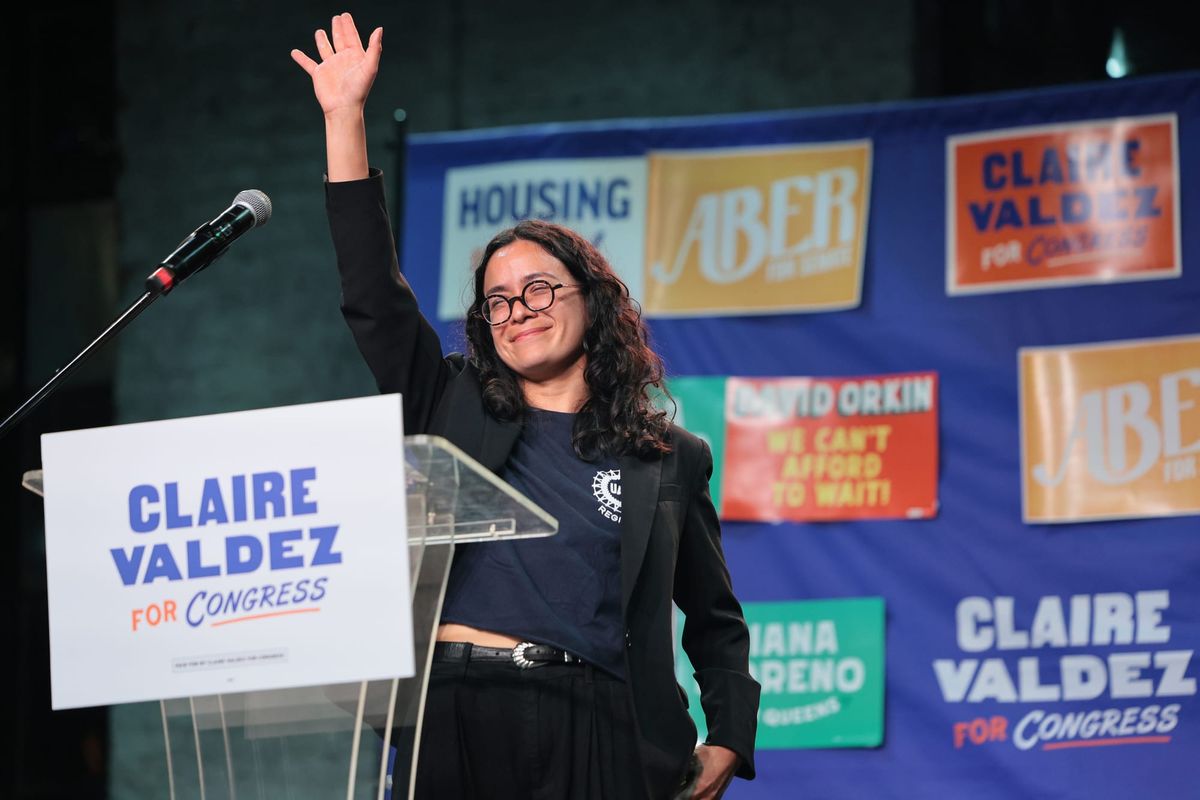
"We’re at this terrible crisis moment where bosses and billionaires are crushing working people," Valdez told Editor-in-Chief Hakim Bishara. "They’re making our rents too expensive; they’re cutting our wages; they’re stealing our time."
She rejects the notion that the arts should be treated as an elite luxury. "Art is often treated as a luxury good and as an investment, not as something that is the representation of our collective humanity," she said. "The people who make art are workers who deserve remuneration, protection, and dignity."
Valdez’s legislative agenda includes:
- Housing Security: Implementing federal rent protections and investing in social housing to ensure artists and workers can remain in the communities they define.
- Labor Reform: Strengthening the National Labor Relations Act to make it easier for precarious workers—including freelance artists and gig workers—to organize.
- Healthcare as a Human Right: Advocating for a single-payer healthcare system, arguing that the current system ties human well-being to employment status, which is inherently unstable for creative professionals.
Implications for the Future of the Democratic Party
The implications of the June 23 results are significant for both the city and the nation. By defeating incumbents and established party favorites, the progressive movement has signaled that the Democratic Party’s center of gravity is shifting.
A Challenge to the Establishment
The defeat of Dan Goldman and Antonio Reynoso illustrates the limitations of the traditional "moderate-progressive" alliance. These candidates, often backed by established donors and institutional heavyweights, struggled to compete with the sheer ground-game efficiency of the DSA-backed candidates. The "Commie Corridor" has effectively demonstrated that a candidate can win a federal primary without the traditional machinery of the Democratic establishment.
Policy Implications
The success of this cohort will likely force national Democratic leadership to address the issues prioritized by the left more urgently. The demand for a change in foreign policy—specifically regarding the ongoing situation in Gaza—has moved from the fringes to the center of the party’s primary discourse. Candidates who fail to articulate a clear vision on these issues may find themselves vulnerable to similar primary challenges in future cycles.
The Arts and Civic Life
Perhaps most uniquely, Valdez brings a "cultural worker" perspective to Washington. By framing her platform around the necessity of time, space, and economic support for the creative class, she is challenging the neoliberal assumption that "success" is measured solely by GDP. She argues that a society’s health is measured by the flourishing of its creative spirit—which, in turn, requires a stable economic floor.
Conclusion: A New Chapter for the 7th
As November approaches, the road ahead for Claire Valdez is clear. While the general election in a deep-blue district is statistically likely to result in her elevation to Congress, the real test will begin in January 2027. She will enter a chamber where her ideological stances—often categorized as "radical"—will face the friction of a divided federal government.
However, if her primary campaign is any indication, Valdez is not interested in the status quo. She has successfully convinced the voters of the 7th District that the "art of politics" is not about compromise or incrementalism, but about the bold assertion that every worker, whether they hold a paintbrush or a wrench, deserves a life of dignity, stability, and creative freedom. The "Commie Corridor" has spoken, and it has set the stage for a new, unapologetic era of American democratic socialism.
 Muslim
 Evan Lee Salim
 Jia Lissa
