

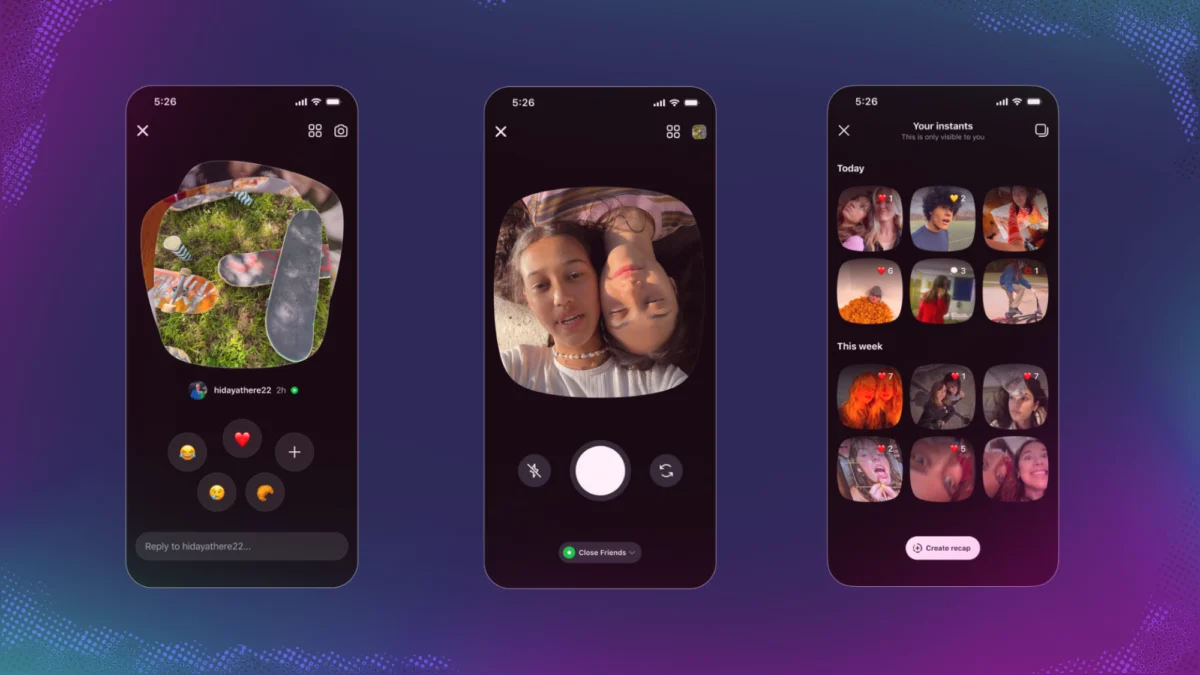
In an era defined by the curated aesthetic—where every frame is meticulously edited, filtered, and polished before hitting the grid—Instagram is pivoting back to the raw, the immediate, and the fleeting. This Wednesday, the Meta-owned social media giant officially unveiled "Instants," a new messaging tool designed to facilitate the sharing of unedited "photo dumps" that vanish once viewed. While the feature aims to capture the candid energy of real-time connection, it also brings a host of questions regarding privacy, platform moderation, and the evolving nature of digital intimacy.
The Core Concept: What Are Instants?
At its simplest, Instants is a specialized delivery system for batches of photos sent directly through Instagram’s Direct Message (DM) interface. Unlike a traditional story or a static post, an Instant is designed to be a "blink-and-you-miss-it" experience. When a user sends a collection of snaps to their "Close Friends" list or a group of mutual followers, the recipient receives them as a dynamic stack of images.
The primary hook? These photos cannot be edited. There are no filters, no cropping tools, and no sophisticated retouching suites available within the feature. Users can append text-based captions to the batch, but the visual content remains in its "raw" state. The feature is built on the principle of ephemerality: once the photos are viewed, they disappear. If they aren’t opened, they are programmed to delete automatically after 24 hours.
This mechanism places Instagram firmly in competition with other privacy-focused messaging platforms like Snapchat, Signal, and Telegram, all of which have long utilized disappearing messages as a core pillar of their user experience.
A Chronology of the Shift: From Polished Grids to Raw DMs
The introduction of Instants marks a significant milestone in Instagram’s ongoing identity crisis. To understand why this feature exists, one must look at the platform’s trajectory over the last decade.
- 2010–2015: The Filtered Era. Instagram was built on the back of distinctive filters (remember "Valencia" and "Lo-Fi"?). The goal was to make everyday photos look like professional art.
- 2016: The Rise of Stories. Recognizing that users were becoming afraid to post "imperfect" photos to their main grid, Instagram launched Stories. This created a secondary, lower-pressure space where content disappeared after 24 hours.
- 2020–2023: The "Photo Dump" Phenomenon. Influencers and casual users alike began embracing the "photo dump"—a carousel of slightly messy, candid, or context-less photos. It became the cool, anti-aesthetic way to use the platform.
- 2024: The Launch of Instants. Meta is now formalizing the "photo dump" by creating a dedicated tool that enforces the "raw" aesthetic by stripping away editing capabilities and adding the pressure of a one-time view.
Supporting Data and User Behavior
Why would users want to send photos that disappear? Digital anthropology suggests that as social media platforms become more saturated with advertisements and algorithmic suggestions, users are retreating into "Dark Social"—the private, unmonitored channels like DMs and group chats.
According to recent internal data trends from Meta, DM engagement has significantly outpaced public feed interactions. Users are increasingly using Instagram not as a broadcast medium, but as a private messaging app. By integrating Instants, Meta is attempting to keep that traffic within its ecosystem rather than allowing users to migrate to third-party messaging apps like WhatsApp (which, while also owned by Meta, offers a different user experience) or Signal.
The inclusion of an "undo" button is also a direct response to user anxiety. The ability to "take back" a sent photo suggests that Instagram acknowledges the potential for regret when sending impulsive, unedited content, providing a safety valve for users who might otherwise be hesitant to share in the heat of the moment.
Official Responses and Platform Nuances
While Instagram is framing this as a fun, spontaneous way to connect, the company remains tight-lipped regarding the technical infrastructure supporting the feature. Mashable has reached out to Instagram for comment, specifically regarding the long-term storage of these "disappearing" images.
Crucially, while the images disappear from the chat, they are not immediately deleted from the server. Instagram has confirmed that users can access a private folder where their sent Instants are saved for their own personal reference. From this repository, users can choose to repost these images to their Stories. This reveals that "disappearing" in the context of Instagram is a UI choice for the recipient, not a total deletion from the Meta cloud.
The Important Caveats: Privacy and Security
Despite the "disappearing" nature of Instants, digital safety experts are sounding the alarm on several fronts.

1. The Fallacy of "Unscreenshotable" Content
Instagram has implemented software-level blocks to prevent users from taking screenshots of Instants. However, this is a "soft" security measure. As any seasoned user of messaging apps knows, the most effective "hack" for a disappearing message is the low-tech solution: using a second device to photograph the screen of the first. Users must be warned that no digital platform can truly prevent the physical capture of information displayed on a screen.
2. The Illusion of Privacy
Many users operate under the assumption that "Close Friends" or "Disappearing" settings equate to an incognito mode. This is a dangerous misconception. Instagram monitors all content sent via its platform, regardless of the visibility setting. Content is still subject to the same community guidelines as public posts. If an Instant is reported, it can be reviewed by Meta’s moderation team.
3. Nudity Guidelines and Censorship
All Instants must comply with Instagram’s strict nudity and safety policies. Because the content is unedited and potentially more "raw" or intimate in nature, there is a higher risk of users accidentally (or intentionally) violating these policies. Meta’s moderation algorithms, which often struggle to distinguish between artistic expression and policy violations, will likely trigger an uptick in account flags and potential suspensions as users test the boundaries of this new, more "candid" tool.
4. The Encryption Question
Perhaps the most significant concern for privacy advocates is the lack of end-to-end encryption (E2EE) for these DMs. Instagram has officially rolled back plans for universal end-to-end encryption across all messages. This means that while your Instants may "disappear" from the chat view, they are transmitted via standard encryption, meaning Meta retains the ability to decrypt and view the content. For a feature marketed on the concept of intimate, "raw" sharing, the lack of E2EE is a notable vulnerability.
Implications for Digital Intimacy
The launch of Instants raises a philosophical question about the future of our digital lives. Are we moving toward a more authentic digital existence, or are we simply creating new ways to be anxious about our online footprints?
On one hand, Instants encourages a "post-and-forget" mentality. It removes the stress of the algorithm and the performative nature of the "perfect" Instagram post. It allows friends to share the mundane, the ugly, and the funny without fear of it haunting their permanent profile.
On the other hand, it introduces a layer of fleeting, high-stakes communication. When a message disappears after one view, the pressure to "capture" it—even if only in one’s memory—increases. It fosters a sense of urgency and exclusivity that can lead to unhealthy social dynamics, particularly among younger users who are already prone to social comparison.
Conclusion
Instagram’s Instants feature is a fascinating, if somewhat contradictory, addition to the social media landscape. It attempts to marry the intimacy of a private text message with the visual power of a photo-sharing app. However, users should approach the feature with a clear understanding of its limitations.
In a world where digital data is rarely ever truly "gone," the concept of the disappearing message remains a user-experience design choice rather than a security guarantee. As Instagram continues to push into this space, users should remain mindful of what they share, to whom they are sending it, and the reality that on the internet, "gone" is often just a relative term.
As the digital landscape evolves, one thing remains clear: whether through polished grids or fleeting, unedited snaps, the desire to document the human experience remains the driving force behind every tap, swipe, and share. Whether Instants becomes a staple of our daily digital diet or another forgotten experiment in the annals of social media history will depend entirely on how the community chooses to wield this new, unfiltered power.
 Nana Wu
 Neng Nana
 Reynand Wu
