

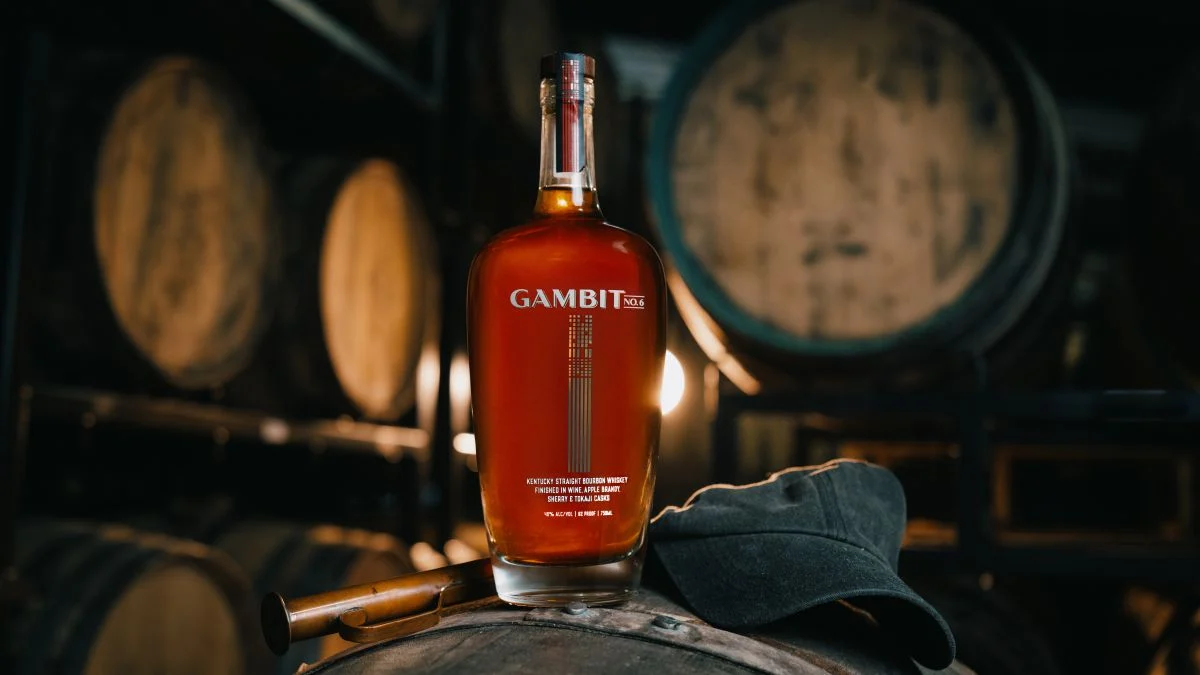
In the increasingly crowded landscape of American whiskey, the "cask-finished" label has become a hallmark of distinction. Traditionally, this process involves moving a spirit from its primary maturation vessel—usually a charred new American oak barrel—into a secondary container, such as a sherry butt or a port pipe, to impart nuanced flavor profiles. However, a new release from Foley Family Wines & Spirits (FFWS) is pushing the boundaries of what is technically and flavorfully possible.
Gambit No. 6, the latest offering from the company’s innovative spirits division, defies the conventional wisdom that suggests "less is more." By utilizing a staggering six different types of finishing barrels, the brand has created a bourbon that manages to avoid the muddy, over-oaked pitfalls typically associated with such experimental aging. Instead, it offers a masterclass in controlled complexity, standing as a testament to the vision of master distiller Chip Tate.
The Genesis of Innovation: The Foley Strategy
Foley Family Wines & Spirits, known for its extensive portfolio of luxury wineries, has increasingly leveraged its access to diverse viticultural assets to elevate its spirits program. Beyond the vineyards, the company oversees a growing stable of distilleries, including Minden Mill in Nevada, the Ampersand brand, and the prestigious Loch Lomond Group.
The architect behind Gambit No. 6 is Chip Tate, a luminary in the craft spirits world and the founder of the pioneering Balcones distillery in Texas. Tate’s transition to FFWS was predicated on a mandate for innovation. For Tate, the "Gambit" project is the realization of a two-decade obsession with the science of wood.
"The nuance of barrel finishing has piqued my interest since I started in the whiskey business more than 20 years ago, and access to these barrels opens a world of possibilities," Tate noted in a recent press statement. "Gambit No. 6 is a testament to the depths of innovation, flavor, and craftsmanship we can achieve in whiskey making at Foley, building on more than 30 years of heritage as a family-owned, fine wine and luxury estates company."
Chronology of a Complex Spirit: From Mashbill to Bottle
The creation of Gambit No. 6 is not merely a finishing project; it is an intricate logistical exercise in blending and secondary maturation. The journey begins with a core Kentucky straight bourbon comprised of 78 percent corn, 10 percent rye, and 12 percent malted barley. After an initial six-year maturation period in traditional American oak, the whiskey is transported to the Minden Mill facility in Nevada for the transformative phase of its life.
The process of "finishing" the whiskey is broken into two distinct tracks:
- The Cabernet Influence (15%): A portion of the bourbon is transferred into American oak barrels previously used to age Cabernet Sauvignon from the Ferrari-Carano Vineyards & Winery’s "PreVail" line. This 19-month stay imparts deep, tannic structure and dark fruit undertones.
- The Chardonnay and Dessert Wine Influence (85%): The bulk of the spirit spends an initial three months in French oak Chardonnay casks. Following this, the whiskey is subdivided into smaller parcels for targeted finishing periods of 12 to 16 months. These vessels include Oloroso sherry, muscatel, apple brandy, and Tokaji wine barrels.
Once these distinct components have matured, Tate oversees the final blending process. The resulting spirit is bottled at 92 proof without chill filtration, ensuring that the heavy oils and esters derived from the six-barrel exposure remain intact in the final glass.
Supporting Data: The Sensory Profile
For the consumer, the primary question is whether this aggressive approach to finishing creates a chaotic spirit. On the palate, Gambit No. 6 manages to harmonize its disparate parts. The result is a profile that is surprisingly balanced, showing bright, elevated notes of orange peel and summer plum, underscored by the deeper, richer profiles of toasted almond, coconut, and pipe tobacco.
The finish is long and lingering, dominated by cinnamon, baked apple, and the classic vanilla sweetness one expects from high-quality corn-based bourbon. It is a whiskey that rewards the patient sipper, as the influence of the Tokaji and muscatel barrels becomes more apparent as the spirit breathes. While the brand encourages its use in an Old Fashioned—where the sweetness of the sugar cube and the acidity of the bitters play off the wine-finished notes—the bourbon is robust enough to be enjoyed neat.

The Broader Landscape: The Trend Toward Multi-Cask Finishing
Gambit No. 6 does not exist in a vacuum. It is part of a growing movement among American producers to explore "cask-finished" complexity as a point of differentiation in a market saturated with standard-issue bourbon.
This spring, Frank August released "Case Study 07: French Connection," a blend of Kentucky bourbon and rye that was subjected to a trio of barrels: Calvados, Martinique rhum, and Caribbean rum. While it utilizes half the number of barrels as Gambit No. 6, the resulting complexity highlights the shift toward using global spirits barrels to change the narrative of traditional American whiskey.
Even more radical is the Blue Note Special Reserve from B.R. Distilling. In a move that pushed the boundaries of the category, they released a blend aged up to 19 years and finished in a staggering nine distinct casks, including various iterations of Cognac, madeira, port, and even winter bock beer. These releases suggest that the definition of "American Bourbon" is undergoing a quiet evolution, where the quality of the raw distillate is increasingly matched by the artistry of the post-distillation maturation phase.
Implications for the Industry and Consumers
The release of Gambit No. 6 signals several key shifts in the industry:
1. The Wine-Spirits Synergy
Foley Family Wines & Spirits is uniquely positioned to capitalize on the "winemaker’s touch" in whiskey. By utilizing proprietary barrels from their own high-end vineyards, they control the quality of the finishing medium, something smaller, non-vineyard-affiliated distilleries cannot do. This vertical integration is likely to become a template for other large-scale beverage companies.
2. The Premiumization of Finished Bourbon
With an SRP of $70, Gambit No. 6 sits in a competitive but accessible bracket. It offers the "luxury" experience of a multi-cask release without the triple-digit price tags often associated with limited-run experimental spirits. This pricing strategy suggests that the brand intends to build a loyal following rather than chasing the "hype" market of secondary-market collectors.
3. The Future of Transparency
As consumers become more educated about production methods, the trend toward "over-engineered" whiskey requires a higher level of transparency. Gambit No. 6 succeeds in its marketing because it is explicit about its methodology. By detailing the percentages, the specific wine sources, and the maturation times, the brand fosters a sense of trust with the consumer.
4. A New Definition of "Balance"
Perhaps the most significant implication is the changing perception of balance. Historically, whiskey purists viewed heavy finishing as a "masking" technique used to cover up poor-quality distillate. Gambit No. 6 challenges this by showing that even a high-quality six-year-old bourbon can be enhanced—rather than obscured—by a sophisticated, multi-layered barrel program.
Conclusion
Gambit No. 6 is an ambitious, calculated risk that pays off. By marrying the structural integrity of Kentucky bourbon with the diverse, fruit-forward profiles of European wine and brandy barrels, Chip Tate has created a whiskey that feels both modern and deeply rooted in tradition.
Whether this represents the "future" of bourbon or simply a compelling niche remains to be seen, but it is clear that for the adventurous drinker, the Gambit has paid off. For those interested in exploring this complex spirit, the brand has made it available through select retailers in 10 states, as well as through their digital storefront and national retailers like Total Wine. In a world of uniform products, Gambit No. 6 stands out as a bold experiment in how much flavor a single bottle can hold.
 rifanmuazin
 Laily UPN
 Suro Senen
