

As the United States marks its 250th anniversary, the cultural landscape is proving to be as fractious and surreal as the political climate it reflects. From the frantic, satirical energy of performance art in Times Square to the somber, structural questions surrounding historical statuary, the nation is currently grappling with a crisis of identity. This week, we examine the intersection of performance, protest, and the lingering specter of our founding myths.
The Absurdist Mirror: The Most American Pageant Ever!
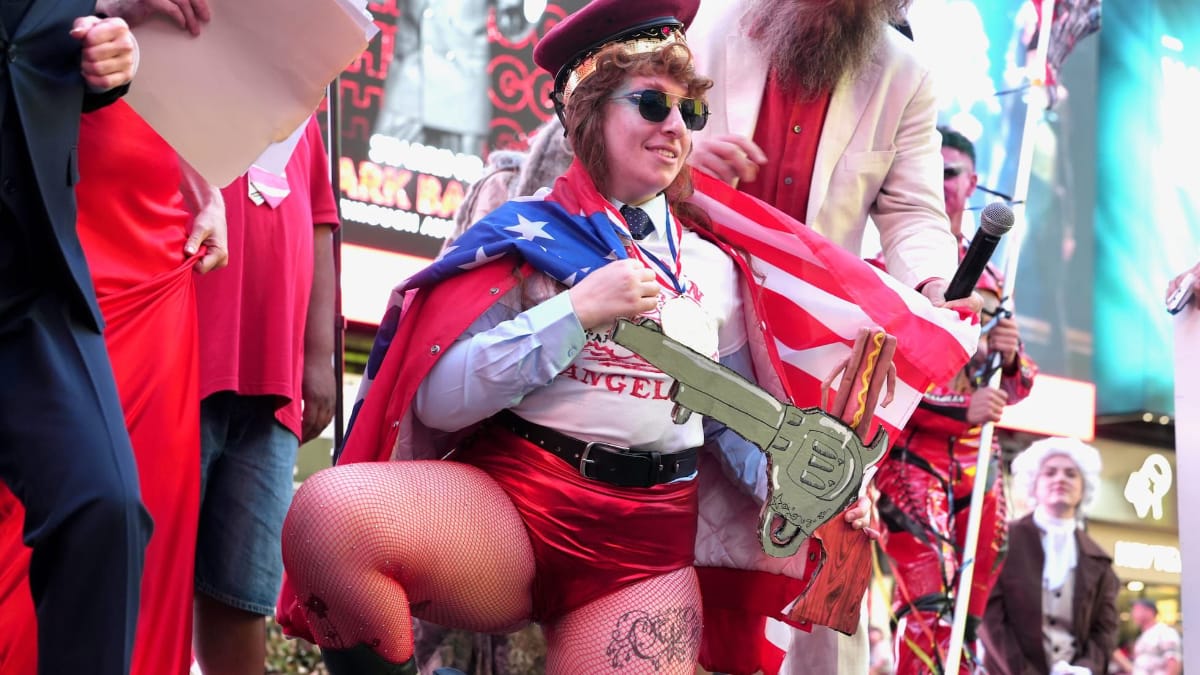
In the heart of Times Square, amidst the towering LED screens and the relentless hum of tourism, a peculiar brand of "sanity" recently took center stage. The Most American Pageant Ever!—a performance piece that functions as both a celebration and a scathing critique of the American experiment—offered a fever dream of the contemporary zeitgeist.
Hyperallergic’s Editor-at-Large, Hrag Vartanian, recently attended the event, describing it as a “renewed portrait of America” that felt, at times, more like an elegy for the nation’s semiquincentennial. The pageant’s lineup was a masterclass in chaotic satire: it featured a drag performance as Melania Trump, a character depicting a beleaguered UPS worker delivering boxes stuffed with "Epstein files," and a surrealist "clay woman" figure.

Perhaps most jarring was the inclusion of Curtis Sliwa, the former Republican mayoral candidate and founder of the Guardian Angels, who served as a juror. The spectacle reached a surreal crescendo when comedian Spike Einbinder—brother of Hacks star Hannah Einbinder and son of Saturday Night Live alum Laraine Newman—recreated the infamous 1992 kidnapping and shooting of Sliwa. Watching the real-life figure sit in the audience, critiquing a comedic reenactment of his own violent trauma, provided a haunting meta-commentary on the state of American political discourse. In this space, the line between celebrity, tragedy, and performance art was not just blurred; it was effectively erased.
The Broken Quill: Thomas Jefferson and the Burden of the Past
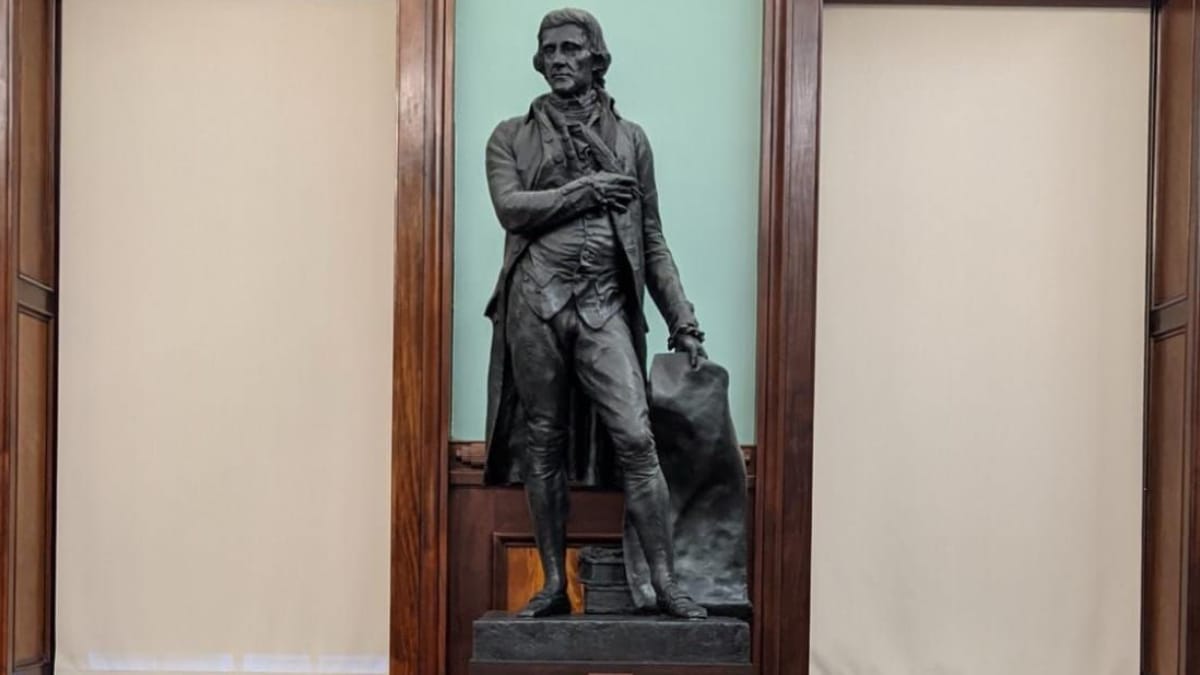
While the streets of New York hosted the avant-garde, the hallowed halls of local museums were dealing with the physical decay of history. An 1834 statue of Thomas Jefferson, a central figure in the American narrative, suffered a symbolic blow when its quill snapped during a transit maneuver within a New York institution.
The incident, while seemingly minor in terms of material damage, has ignited a significant debate regarding the ownership and ideological utility of historical public art. Scholar and activist Todd Fine has seized upon the moment, publishing an opinion piece urging Mayor Mamdani to reclaim the city-owned sculpture. Fine argues that the statue should be removed from its current institutional context and repurposed as a provocative symbol of resistance against what he characterizes as "MAGA and Silicon Valley authoritarianism."
This request highlights a growing trend: the push to move historical artifacts from the passive, "neutral" spaces of museums into the active, contested arenas of political protest. By demanding the statue be used as a tool for modern ideological confrontation, Fine suggests that the passive veneration of the Founding Fathers is no longer sufficient—or perhaps even ethical—in the current climate.
Chronology of Recent Cultural Shifts
To understand how we arrived at this moment of performance art in Times Square and debates over Jeffersonian statuary, it is necessary to look at the recent trajectory of American cultural institutions:
- Mid-2026: The nation enters its semiquincentennial year. Cultural programming across the country shifts from celebratory patriotism to critical introspection, with artists utilizing satire to process political polarization.
- July 2026: The Most American Pageant Ever! debuts, drawing national attention for its use of political figures and controversial historical figures in a public, theatrical setting.
- July 2026: An 1834 Thomas Jefferson statue is damaged during relocation. Public outcry regarding its preservation and future placement follows immediately.
- Late July 2026: Scholar Todd Fine formalizes the call for Mayor Mamdani to pivot the statue’s purpose, marking a shift from restoration to recontextualization.
Supporting Data: Art and Public Funding
The cultural sector remains a vital, if volatile, component of the national economy. Recent data shows a significant injection of capital into the New York arts scene, with 132 local artists receiving a combined total of $903,000 in grants. This funding, while essential for the survival of the creative class, raises ongoing questions about the role of the state in supporting art that is explicitly critical of the status quo.
The "Mixed Media" debate, as articulated by commentators like Ann Grasso, reflects this uncertainty. As artists move beyond traditional oil and canvas—incorporating iPads, AI, and digital manipulation—the definition of "art" itself is expanding. The conversation surrounding David Hockney’s iPad paintings is emblematic of a broader technological anxiety: if the tools change, does the value of the output change as well? This mirrors the Jefferson debate—if the context of a historical object changes, does the meaning of the object remain static, or does it transform into something entirely new?
Official Responses and Public Sentiment
The Mayor’s office has remained largely silent on the specific demand to reclaim the Jefferson statue, a standard position for municipal governments wary of wading into "culture war" disputes. However, the pressure is mounting from activist groups and academic circles who believe that silence is, in effect, a policy of preservationism.
In contrast, the response to events like The Most American Pageant Ever! has been one of polarized engagement. Proponents of such performances argue that satire is the only appropriate response to an increasingly erratic political reality. Critics, however, argue that such spectacles trivialize serious issues, reducing the trauma of events like the 1992 kidnapping to a punchline in a talent show.
Implications for the Future
The implications of these events are profound. We are witnessing a transition where:
- Satire is becoming the primary language of political discourse: When traditional debate breaks down, performance art steps in to fill the void, using shock and absurdity to process complex grievances.
- Historical objects are being mobilized: The "broken quill" incident serves as a metaphor for the fracturing of the American narrative. No longer content to let statues represent a static history, activists are demanding that these objects become active participants in the current political struggle.
- The definition of "Public Art" is being challenged: As the line between digital creation, performance, and historical relic blurs, cities are being forced to decide what they want to project to the world. Is a statue a piece of history to be preserved, or a prop to be used for social commentary?
Conclusion
As we look toward the remainder of this semiquincentennial year, the events in New York offer a microcosm of the national psyche. We are a country at once enamored with its own absurdity and haunted by the weight of its founding ideals. Whether it is the frantic energy of a drag Melania in Times Square or the quiet, broken stone of a Jefferson statue, the message is clear: the American portrait is being repainted.
The question remains whether this new portrait will be a cohesive work of art or a fragmented, chaotic collage. As the debate over our history continues to evolve, the tools we choose to tell our story—whether they are digital brushes, public protests, or the reclamation of marble men—will define the legacy of the next 250 years. As we move forward, one thing is certain: the conversation is only just beginning.
 Nana
Nana
 Iffa Jayyana
 Muslim
