

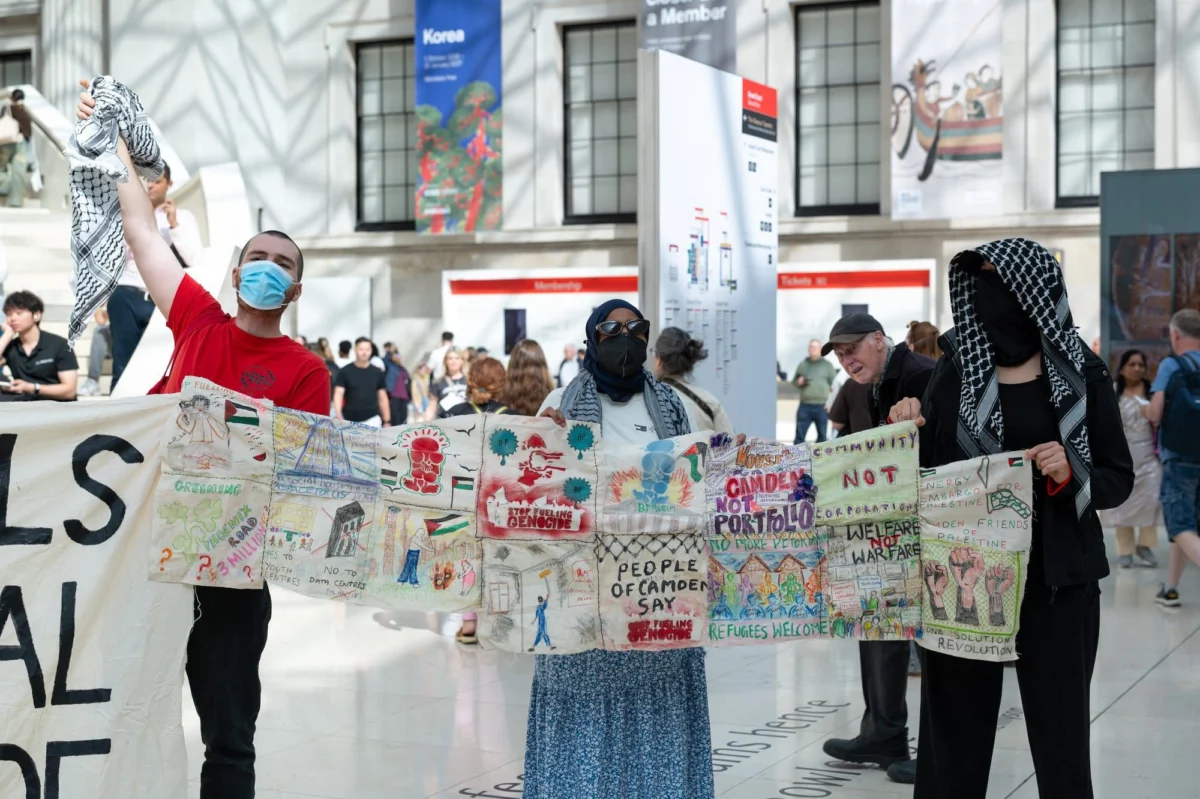
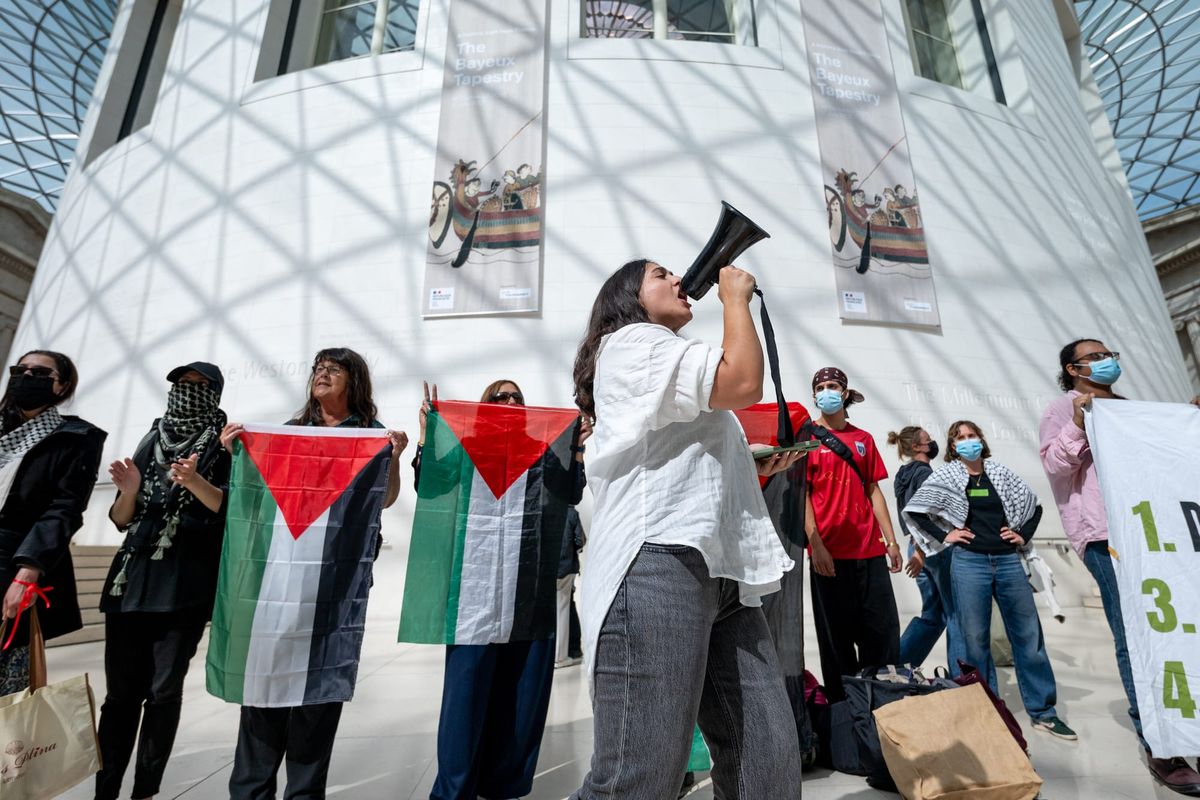
LONDON — Tensions boiled over in the heart of the British Museum on Saturday, September 12, 2026, as a coalition of pro-Palestinian and climate justice demonstrators staged a high-profile protest inside the institution’s iconic Great Court. The demonstration targeted hedge-fund billionaire Igor Tulchinsky over his financial backing of a high-profile upcoming exhibit, as well as the museum’s enduring corporate partnerships.
The action highlights a growing intersection between cultural philanthropy, geopolitical conflicts in the Middle East, and corporate accountability. Activists are increasingly scrutinizing how cultural institutions in the United Kingdom source their funding, questioning whether accepting money from wealthy donors linked to illegal activities or fossil fuels compromises the ethical standing of public museums.
Main Facts
The protests at the British Museum were organized primarily by the climate emergency group Energy Embargo for Palestine. Activists converged on the museum to decry two major issues:
- The Bayeux Tapestry Sponsorship: Igor Tulchinsky, a wealthy hedge-fund billionaire, has provided financial backing for the British Museum’s upcoming, highly anticipated exhibition of the historic Bayeux Tapestry.
- Settlement Financing: Recent investigative reporting revealed that Tulchinsky funded a "therapy yurt" and community center project in Efrat, the de facto capital of the Gush Etzion settlement bloc located in the Occupied West Bank—territory considered illegal under international law.
- The BP Partnership: Demonstrators also renewed their long-standing calls for the British Museum to sever its controversial £63 million partnership with multinational oil and gas giant BP, pointing to the dual threats of fossil fuel extraction and climate breakdown.
During Saturday’s demonstration, activists unfurled a custom-made banner titled the “People’s Tapestry” across the Great Court. The action drew widespread attention from museum visitors, international media, and online observers, sparking renewed legislative scrutiny over whether Tulchinsky’s financial activities breach current UK trade sanctions.
Chronology of Events
To understand how a regional real estate project in the West Bank sparked a major cultural confrontation in London, it is necessary to examine the timeline of events leading up to the September 2026 protests:
- November 2025: Igor Tulchinsky attends the official unveiling of a specialized "therapy yurt" in Efrat, a community center component within the Gush Etzion settlement bloc in the Occupied West Bank. At the inauguration, Tulchinsky dedicates the structure to "Israel’s heroes" and labels the tent "Israel’s inner Iron Dome," intended to provide group therapy and movement programs for Israeli civilians and reservists dealing with trauma.
- Early September 2026: British Foreign Secretary Ed Miliband outlines a firm government stance, announcing that the UK will take direct action against specific individuals and companies providing construction, infrastructure, real estate, or financing services that contribute to Israeli settlement expansion.
- Early September 2026: Investigative journalism outlet Middle East Eye publishes a comprehensive report exposing Tulchinsky’s financial ties to the Efrat community center, noting potential legal violations under the UK’s newly adopted sanctions and import bans on illegal settlements.
- Shortly After: Green Party leader and British politician Zack Polanski formally calls on the UK government to launch an immediate investigation into Tulchinsky, questioning the compatibility of his museum sponsorships with British law.
- Saturday, September 12, 2026: Energy Embargo for Palestine stages a direct protest inside the British Museum’s Great Court. Activists unfurl the "People’s Tapestry," demanding an end to museum sponsorships tied to climate breakdown and settler-colonialism, while reiterating opposition to the museum’s BP partnership.
Supporting Data and Financial Background
The controversy surrounding Igor Tulchinsky shines a spotlight on the complex financial networks connecting global capital markets to disputed territories in the Middle East.
- The Gush Etzion Settlement Bloc: Located just south of Jerusalem in the Occupied West Bank, Gush Etzion is a cluster of Israeli settlements. Under the Fourth Geneva Convention and numerous United Nations Security Council resolutions, Israeli settlements in the West Bank are considered a direct violation of international law.
- The Efrat Yurt Initiative: Funded directly by Tulchinsky, the structure serves as a therapeutic space offering trauma counseling, movement programs, and psychological support for individuals impacted by the October 7 attacks, ongoing military operations, and repeated military reservist deployments. While framed by supporters as humanitarian mental health care, its placement within an illegal settlement ties philanthropic spending directly to the infrastructure of occupation.
- The British Museum’s Funding Profile: The institution has faced years of public pushback regarding its donor base. Its controversial £63 million partnership with oil giant BP has long drawn the ire of environmental groups. The addition of Tulchinsky’s sponsorship for the upcoming return of the Bayeux Tapestry—which is set to travel to the UK for the first time in nearly 1,000 years—has expanded the friction points between museum management and activist networks.
Official Responses and Political Repercussions
The revelation of Tulchinsky’s settlement-linked philanthropy has triggered swift reactions from political figures and activist organizations alike.
The Activist Perspective
Energy Embargo for Palestine released a scathing critique via social media following the weekend demonstration. In an official Instagram post, the group stated:
“We will continue to push for a Museum that is led by the interests of its workers and the general public. We demand an end to collaboration and sponsorships by billionaires fueling climate breakdown and invested in ‘Israel’s’ settler-colonial occupation.”
The activists argue that public cultural institutions should not serve as reputation-laundering platforms for billionaires whose investments either violate international human rights norms or accelerate environmental degradation.

Political Scrutiny and Legislative Action
The political fallout has centered heavily on adherence to updated UK foreign policy frameworks. Green Party leader Zack Polanski seized on the Middle East Eye disclosures, urging regulatory bodies and government ministries to investigate whether Tulchinsky’s patronage violates the spirit and letter of recent British sanctions.
These calls align with statements made earlier in September by British Foreign Secretary Ed Miliband. Miliband formally stated that the UK government is prepared to penalize individuals and corporations contributing financial or infrastructural support to Israeli settlements. Because the UK has incrementally tightened restrictions on goods, services, and capital originating from West Bank settlements, legal experts are evaluating whether philanthropic investments in municipal infrastructure like community centers and therapy hubs fall within the scope of prohibited financial services.
Implications for Cultural Institutions
The protests at the British Museum carry profound implications for museums, galleries, and cultural centers across the United Kingdom and internationally.
- Heightened Donor Due Diligence: Cultural institutions are facing mounting pressure to conduct rigorous ethical audits of their major donors and corporate sponsors. As geopolitical tensions rise, accepting funds from individuals tied to contested territories, environmental exploitation, or human rights controversies carries severe reputational risks.
- The Weaponization of Cultural Heritage: High-profile exhibitions—such as the historic loan and display of the Bayeux Tapestry—are increasingly becoming focal points for political protest. When mega-exhibitions rely on controversial private wealth, they risk becoming lightning rods for broader societal grievances.
- The Rise of Public-Led Governance: Movements like Energy Embargo for Palestine are redefining what public accountability looks like for state-funded or nationally recognized museums. By demanding that museums answer directly to workers and local communities rather than elite donors, these demonstrations signal a long-term cultural shift in how public institutions derive their social license to operate.
As the UK government weighs potential investigations into settlement-linked financing, the British Museum finds itself at a critical crossroads, forced to navigate the delicate balance between securing private capital for blockbuster exhibitions and maintaining public trust in an increasingly polarized world.
 Nana
Nana
 Iffa Jayyana
