

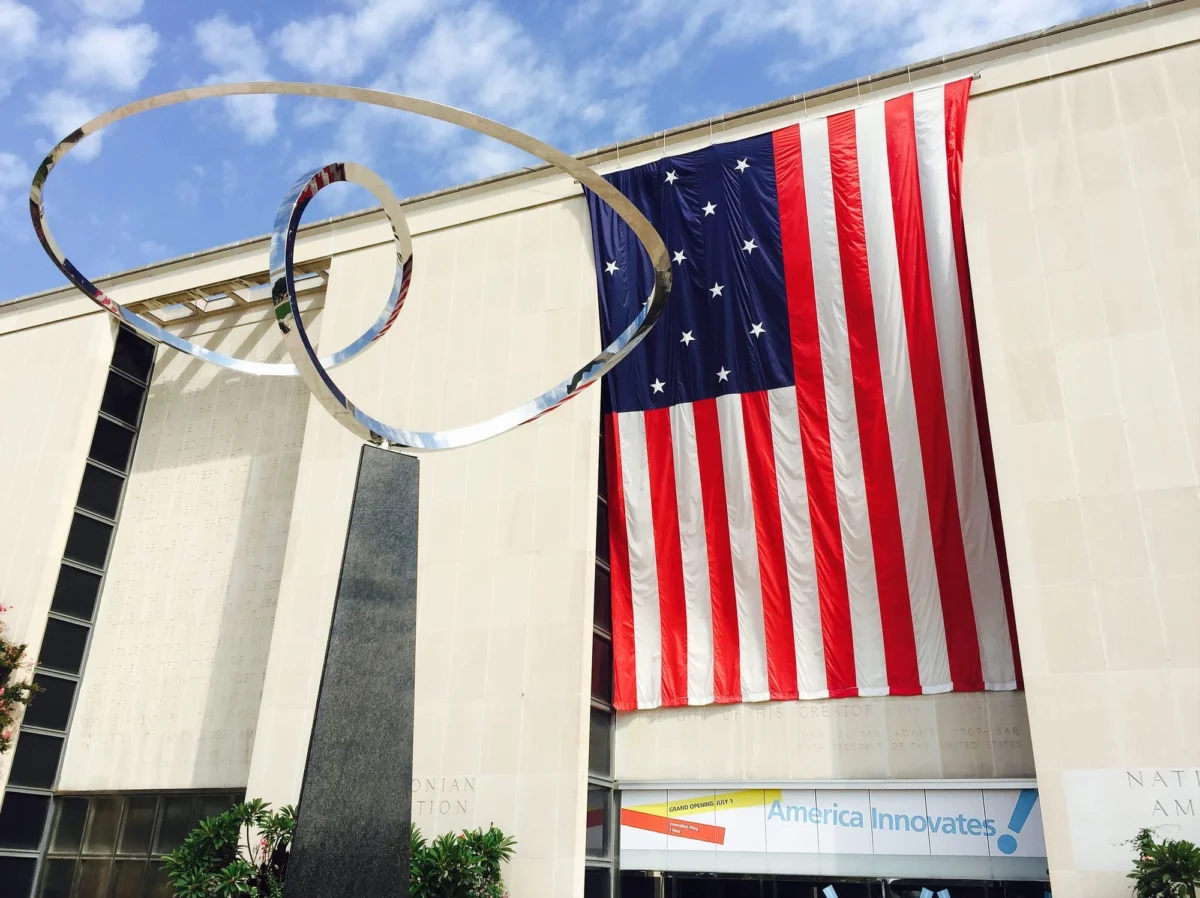
WASHINGTON — In a public escalation of his ongoing cultural critique of national institutions, President Donald Trump has targeted a foundational piece of mid-century modernist public art. In a series of posts on Truth Social, the president called for the removal of José de Rivera’s celebrated 1967 kinetic sculpture Infinity, which has stood outside the Smithsonian Institution’s National Museum of American History (NMAH) for nearly six decades.
In its place, Trump has proposed erecting a 30-foot-tall monument dedicated to George Washington, accompanied by an extensive, multi-year exhibition centered on the nation’s first president. The proposal has reignited fierce debates concerning the preservation of modernist public art, the architectural integrity of the National Mall, and the ideological boundaries of federal cultural institutions.
Main Facts
The controversy centers on a clash between federal oversight, historical commemoration, and artistic heritage in the nation’s capital.
- The Proposed Replacement: President Trump has proposed removing Infinity (1967), a stainless steel kinetic sculpture by American artist José de Rivera. The artwork, which features a continuous Möbius strip rotating on its vertical axis once every eight minutes, is historically significant as the United States government’s very first federally commissioned abstract public artwork.
- The Substitute Monument: The president has called for a 30-foot-tall statue of George Washington to take the sculpture’s prominent position outside the NMAH entrance facing the National Mall. Additionally, he has advocated for an existing 11-foot-tall statue of Washington to be displayed temporarily inside the museum’s Flag Hall for Constitution Day.
- The Timeline Argument: Trump has demanded the development of a five-year exhibition dedicated to Washington, framing it as early preparation for the founding father’s 300th birthday in 2032.
- Institutional Criticisms: The president framed the proposal as a corrective measure against what he characterized as the Smithsonian’s “ideological activism” and its purported neglect of traditional American heroes in favor of marginalized histories.
Chronology of Events
The push to alter the landscape of the National Mall follows a sequence of mounting political pressures on the Smithsonian Institution and its leadership.
- Late 2025 / Early 2026: Political tensions rise between the federal administration and the Smithsonian leadership, culminating in the retirement announcement of Smithsonian Secretary Lonnie Bunch III amid ongoing debates over institutional governance and public history initiatives.
- Friday, September 11: President Trump takes to Truth Social to air grievances regarding the Smithsonian’s historical programming. He targets the National Museum of American History’s America 250 initiatives, the now-defunct Center for Restorative History, and its Decolonization Working Group, accusing them of focusing disproportionately on the experiences of oppressed populations rather than traditional founding narratives.
- The Social Media Directive: In the same social media thread, Trump explicitly singles out José de Rivera’s Infinity, dismissing it as a “strange modernist sculpture” and calling for its removal in favor of a monumental tribute to George Washington.
- Upcoming Deadline (Thursday, September 17): The president’s initial directive urges the rapid integration of an 11-foot Washington statue into the museum’s Flag Hall to coincide with Constitution Day celebrations, setting an immediate test of administrative compliance for museum leadership.
Supporting Data and Context
To understand the weight of the administration’s proposal, cultural historians and art preservationists point to the unique historical pedigree of the targeted artwork and the broader portfolio of federal public art.
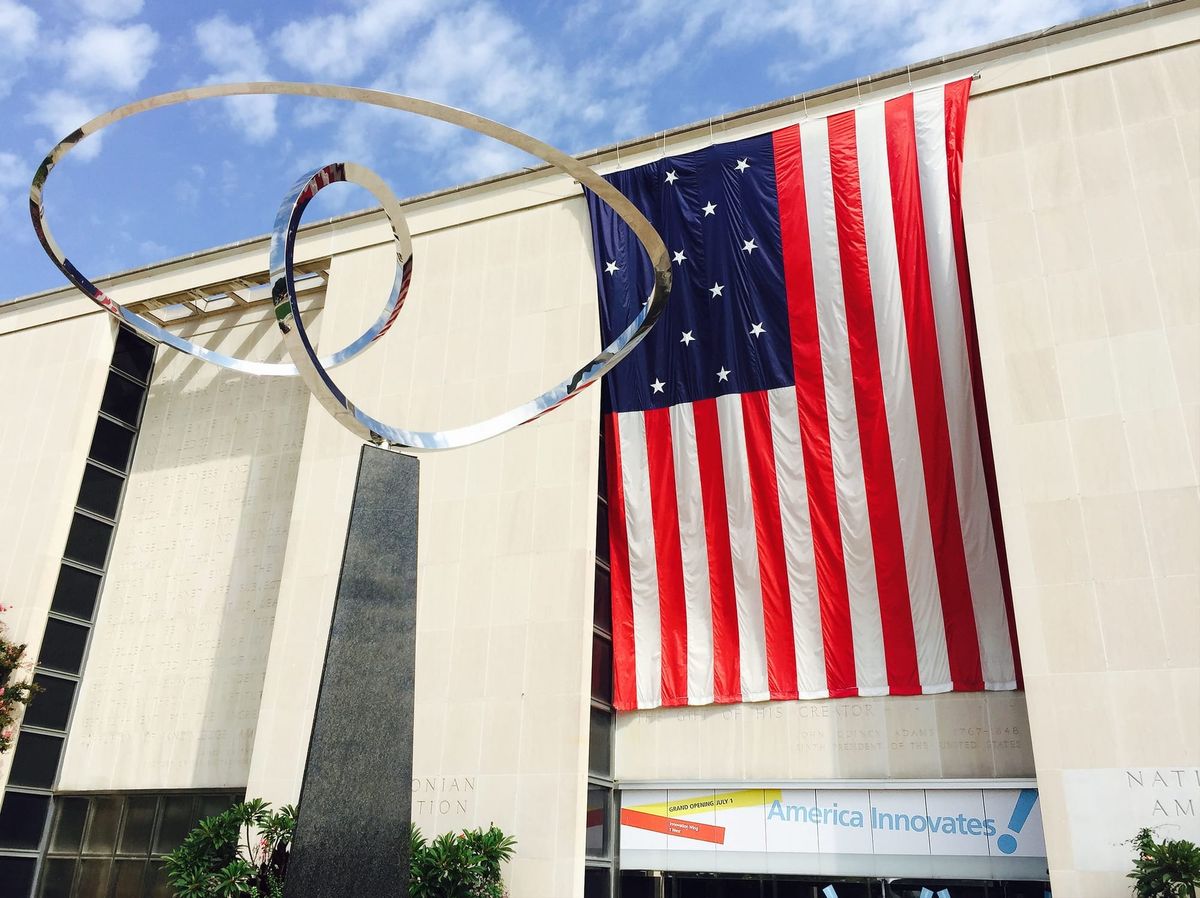
- A Milestone in American Art: Commissioned by the General Services Administration (GSA) under the federal Percent-for-Art program, Infinity broke new ground when it was installed in 1967. It marked a radical departure from traditional figurative monuments, introducing abstraction into the official iconography of the federal government.
- Material and Mechanics: Fabricated from hand-forged, hand-polished stainless steel, de Rivera’s sculpture is celebrated for its sleek, mathematical elegance. Its slow, continuous mechanical rotation was designed to interact with changing natural light and the movement of visitors on the National Mall.
- The Smithsonian’s Scope: The National Museum of American History houses millions of artifacts documenting the social, political, cultural, and technological history of the United States. Its curatorial framework has increasingly sought to balance traditional political narratives with social history, community-based projects, and the documentation of marginalized communities.
- Recent Institutional Shifts: The closure or restructuring of internal bodies like the Center for Restorative History reflects a shifting operational environment for the Smithsonian as it navigates changing political winds and congressional oversight.
Official Responses and Stakeholder Positions
Reactions to the president’s proposal have exposed deep divisions among federal officials, arts advocates, historians, and the public regarding the stewardship of public monuments.
The Administration’s Perspective
Supporters of the president’s initiative argue that the National Mall should serve as an unambiguous testament to traditional national heroes and foundational figures. In his public statements, Trump characterized works like Infinity as culturally disconnected from the everyday visitor, arguing that public art outside primary federal museums should explicitly honor figures like George Washington rather than venture into abstract, non-representational aesthetics.
Furthermore, the administration contends that federal institutions have drifted from celebrating core American heritage, asserting that large-scale figurative monuments provide a more direct and accessible educational experience for the millions of tourists visiting Washington, D.C., each year.
The Arts and Preservation Community Response
Art historians, museum professionals, and preservation organizations have expressed deep concern over the proposal, viewing it as a dangerous precedent for politically motivated art removal. Critics emphasize that Infinity is not merely a decorative piece, but a protected artifact of American cultural heritage with federal landmark significance.
- Preservation of Modernism: Advocates for modern art argue that replacing a pioneering abstract sculpture with a figurative monument undermines the historical diversity of the National Mall, which has intentionally integrated modernist and contemporary works alongside traditional neoclassical statues.
- Curatorial Independence: Museum advocates and academic historians have raised alarms regarding executive intervention in museum programming and collections management. They argue that exhibitions and permanent displays should be guided by professional curatorial standards, historical research, and peer review rather than direct executive directives issued via social media.
Broader Implications
The standoff over the fate of Infinity extends far beyond a single sculpture, touching upon fundamental questions about how American history is curated, who decides which narratives are elevated in public spaces, and how federal institutions maintain autonomy.
- The Future of Federal Public Art: If an established modernist masterpiece with nearly 60 years of residency on the National Mall can be displaced by executive decree, it establishes a volatile precedent for other mid-century and contemporary works across federal lands and properties.
- Politicization of Cultural Heritage: The debate highlights an intensifying ideological tug-of-war over public memory. As the nation approaches its 250th anniversary, the friction between traditional nationalist narratives and inclusive, multi-perspective historical frameworks remains a central battleground in American public life.
- Smithsonian Governance: With leadership transitions underway, the institution faces delicate institutional challenges. How the Smithsonian board, incoming administrators, and federal overseers navigate this directive will signal the resilience of institutional independence against direct political pressure in the years leading up to 2032.
 Nana
Nana
 Iffa Jayyana
 Muslim
