


Main Facts
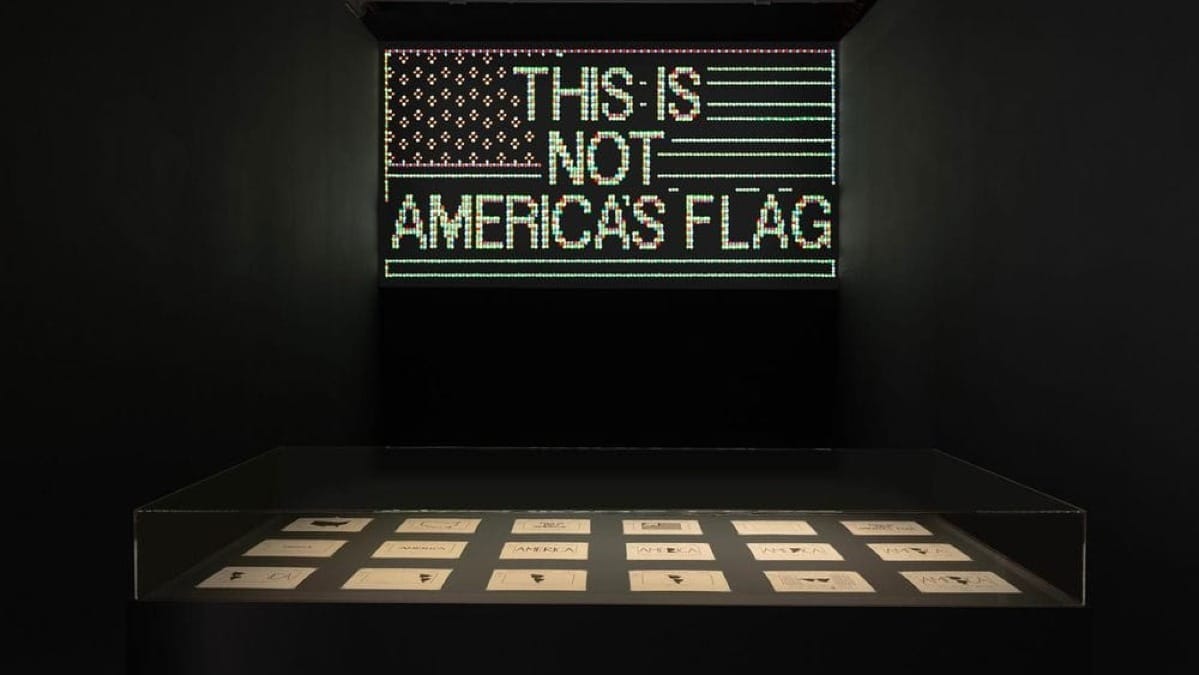
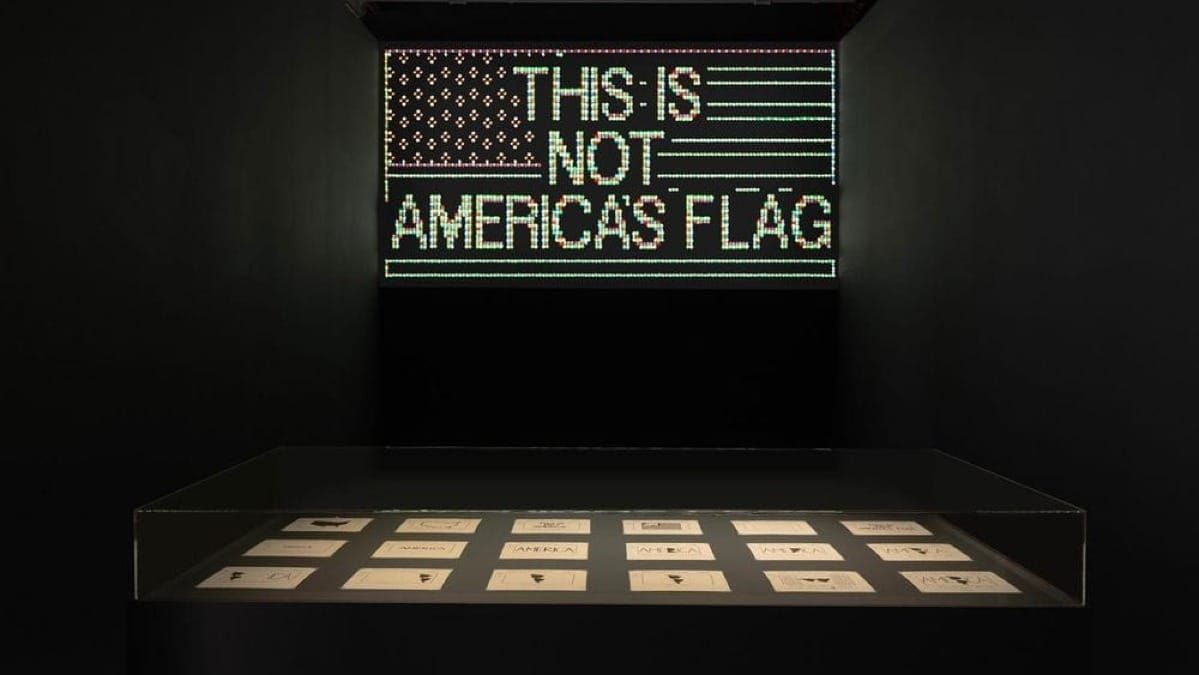
Nearly forty years after it first illuminated the nocturnal skyline of Times Square, Alfredo Jaar’s landmark public artwork A Logo for America has returned to New York City, sparking renewed discourse on nationalism, cartography, and identity. The 42-second LED installation, originally broadcast in April 1987, confronts a foundational linguistic and geopolitical bias in the United States: the habit of equating "America" with a single sovereign nation rather than an entire hemisphere comprising dozens of distinct cultures and countries.
As the iconic artwork resurfaces in the contemporary cultural landscape, it arrives at a time of acute political and artistic friction within the United States. Cultural battlegrounds are once again shifting into the spotlight. Most notably, political figures have reignited attacks on abstract and modern art. A prominent recent proposal targets José de Rivera’s rotating stainless steel Möbius strip outside the National Museum of American History in Washington, D.C., seeking its removal in favor of a traditional 30-foot-tall figurative statue of George Washington.

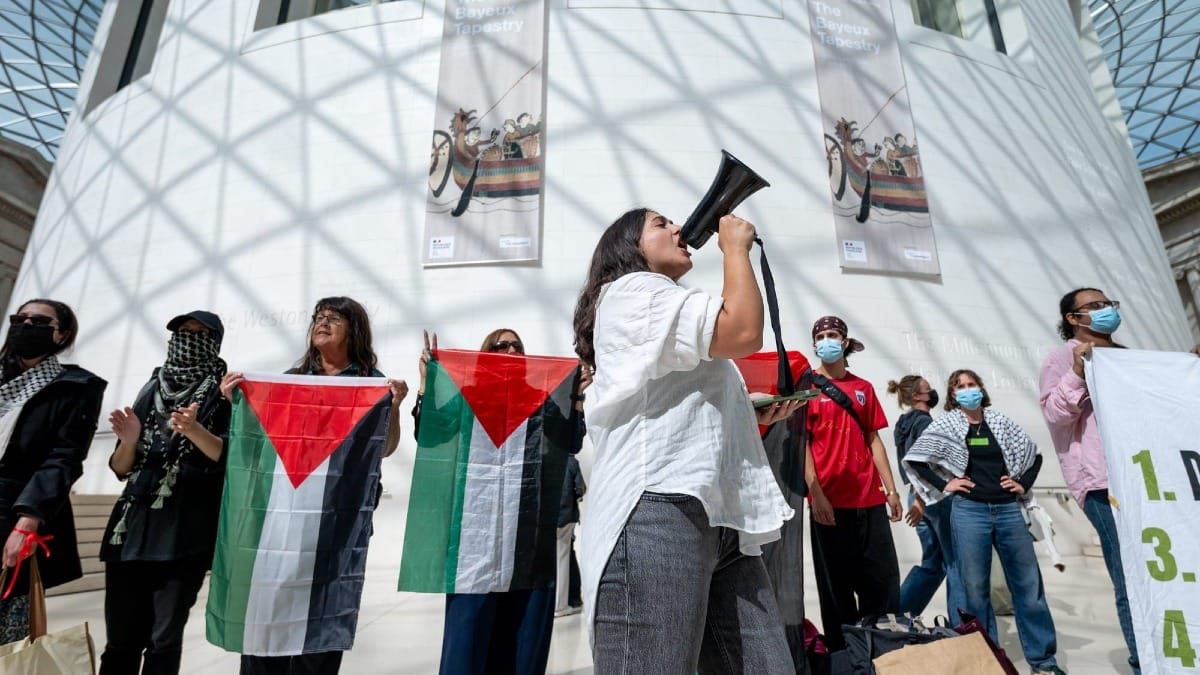
Beyond domestic art-politics collisions, the global arts community is grappling with profound ethical questions regarding sponsorship and geopolitical conflict. Protests have erupted over financial ties linked to the promotion of historical artifacts like the Bayeux Tapestry, drawing direct lines between European cultural heritage funding and real estate investments in illegal Israeli settlements in the Occupied West Bank. Meanwhile, museums and residencies across the globe—from David Hockney’s retrospective explorations in Massachusetts to James McNeill Whistler’s musical paintings at Tate Britain—continue to navigate the volatile intersection of creative expression and socio-political reality.
Chronology
- April 1987: Chilean artist Alfredo Jaar unveils his bold public intervention, A Logo for America, on an electronic billboard in New York City’s Times Square. The 31-year-old artist flashes the phrase "This Is Not America" over a map of the United States, followed by the U.S. flag, challenging the linguistic monopoly the country holds over the continental moniker.
- September 8, 2026: Mitchell Johnson’s career-spanning exhibition, Twenty-One Years in Truro (Selected Paintings 1988–2026), opens to the public at Castle Hill, highlighting decades of landscape explorations.
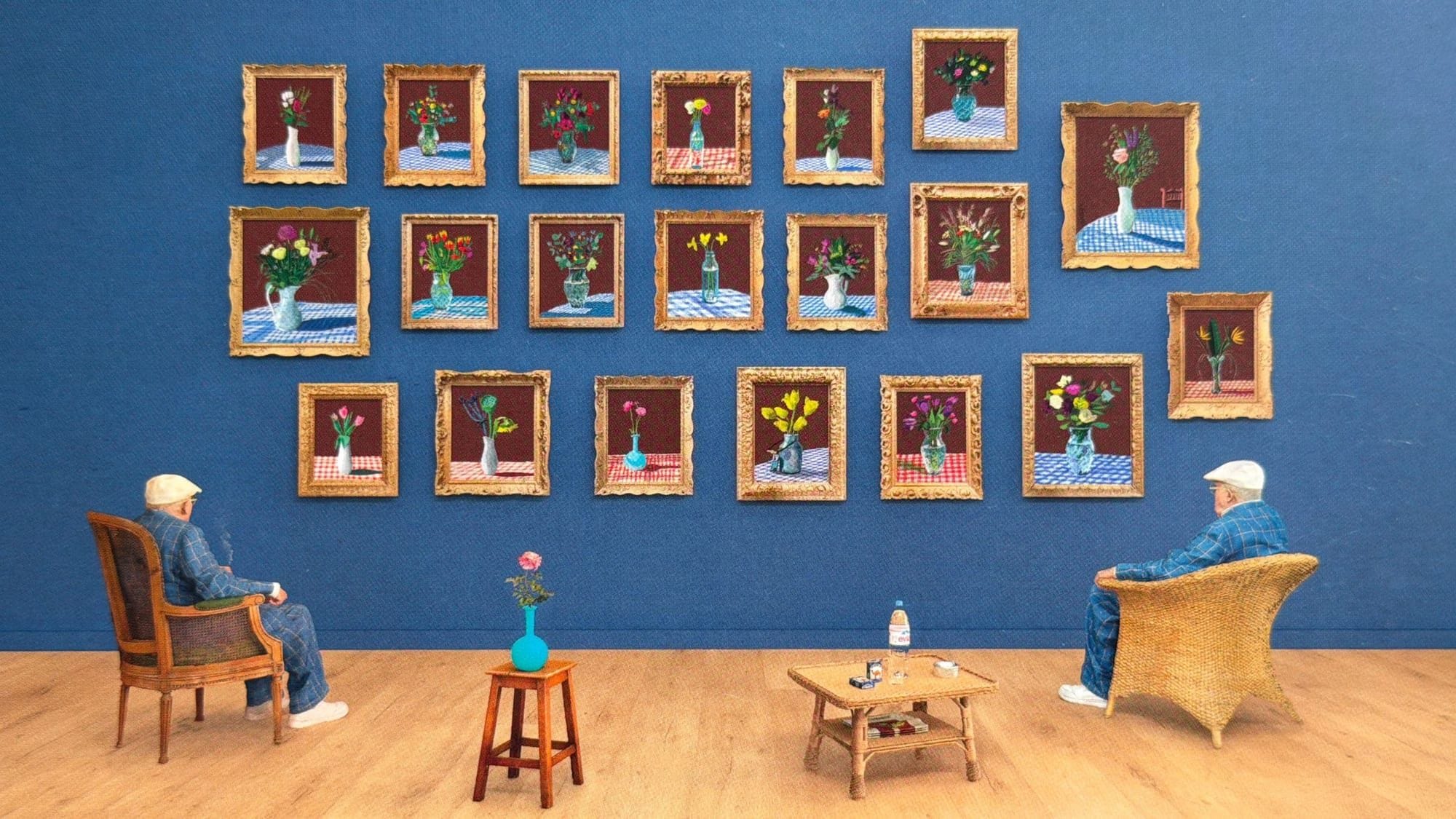
- September 11, 2026: The Manship Artists Residency in Gloucester, Massachusetts, launches Hockney Reproduction(s), an extensive exhibition examining six decades of David Hockney’s innovations in reproductive media.
- September 30, 2026: Hyperallergic hosts an exclusive member event featuring studio visits and intimate conversations with New York City-based artists selected for the International Studio & Curatorial Program’s (ISCP) Ground Floor Residency.
- Fall 2026: As Alfredo Jaar’s seminal work returns to New York exhibition spaces, critics, editors, and historians evaluate how the sociopolitical climate has evolved—or remained fundamentally stagnant—since the late 20th century.
Supporting Data
- Duration and Reach: Jaar’s original 1987 Times Square installation relied on a concise 42-second LED loop, strategically placed among commercial advertisements for everyday goods to subvert the passive attention of commuters and tourists.
- Scale of Proposed Replacements: Political demands to alter public spaces in the nation’s capital frequently target monumental abstract installations; a recent high-profile proposal calls for erecting a massive 30-foot-tall classical bronze or stone figurative monument to replace modernist works like José de Rivera’s mid-century kinetic sculptures.
- Global Exhibition Footprint:
- David Hockney’s featured retrospective spans over 60 years of artistic output, tracking the trajectory of reproduction technologies.
- Mitchell Johnson’s retrospective at Castle Hill encapsulates 28 years (1988–2026) of focused painting production in Truro.
- Institutional Involvement: Major international bodies, including Tate Britain (showcasing James McNeill Whistler’s tonalist works) and the Smithsonian American Art Museum (offering fellowships for 2027–2028), continue to shape the academic and critical frameworks through which these historical and contemporary tensions are analyzed.
Official Responses
The intersection of state power, institutional funding, and artistic autonomy has drawn sharp commentary from artists, critics, and cultural watchdogs alike:
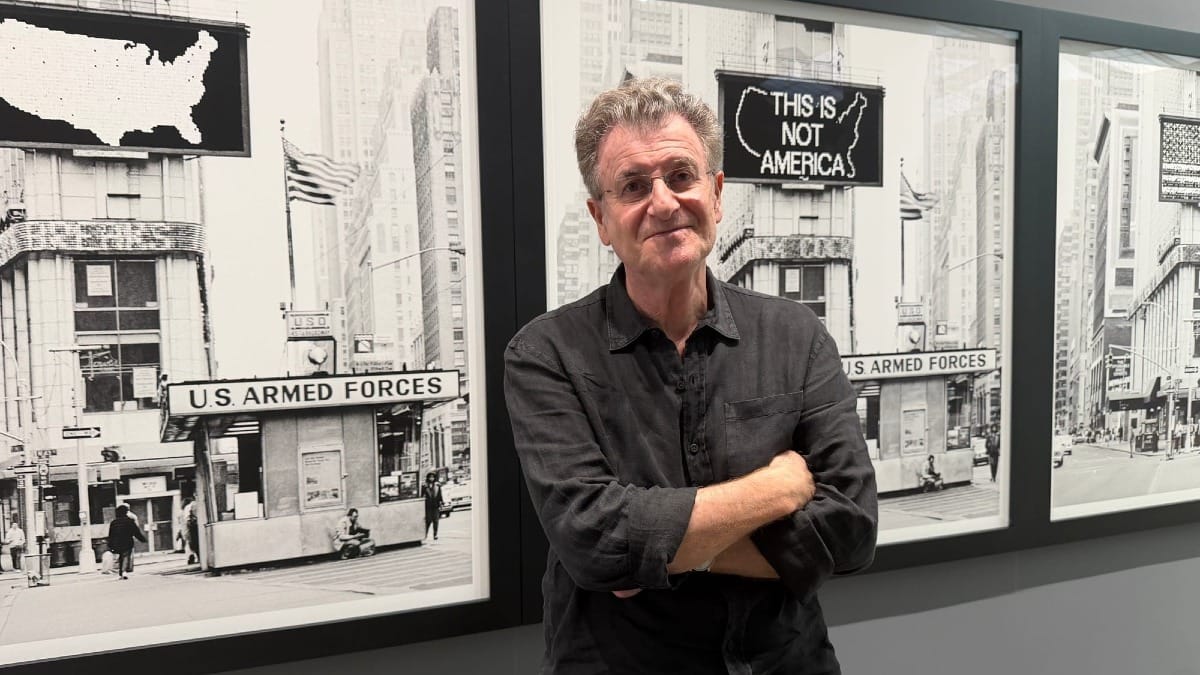
- On Artistic Monopoly and Nationalism: Reflecting on the re-emergence of A Logo for America, Editor-in-Chief Hakim Bishara and participating critics note that despite four decades of globalization, the underlying parochialism of treating the United States as the sole owner of the title "America" persists. Jaar characterizes the ongoing struggle with characteristic nuance, embodying a "pessimist of the intellect, but a warrior at heart."
- On Public Sculpture and Populist Aesthetics: Proposals to dismantle mid-century abstract public monuments have drawn swift rebukes from the arts community. Critics point out that calls to replace works like José de Rivera’s kinetic Möbius strip with literalist, hyper-traditional statues—under the rationale that abstract pieces "tell visitors nothing about America"—stem from a fundamental misunderstanding of how modernist art fosters civic contemplation rather than rigid ideological indoctrination.
- On Ethics in Cultural Sponsorship: Activist coalitions protesting the institutional backing of historic exhibitions, such as displays involving the Bayeux Tapestry, have demanded full transparency and ethical accountability from corporate and private donors whose financial portfolios intersect with controversial geopolitical developments, including the financing of community infrastructure in Occupied West Bank settlements.
Implications
The convergence of Alfredo Jaar’s political art, populist anxieties over abstract monuments, and activist scrutiny of museum sponsors points to a broader, systemic crisis within contemporary cultural institutions. Art is rarely a neutral backdrop; it is an active arena where questions of national identity, imperial legacy, and human rights are vigorously contested.
When political figures attempt to scrub public spaces of abstraction in favor of monumental, didactic statuary, they signal a desire to enforce a singular, uncritical historical narrative—one that resists ambiguity and pluralism. Conversely, the endurance of political interventions like Jaar’s work demonstrates that civic spaces remain vital grounds for dissent. By forcing viewers to reconsider their linguistic and geographical assumptions, artists disrupt the complacency of state-sponsored narratives.
Furthermore, the growing scrutiny over museum endowments and exhibition sponsors reveals an increasingly discerning public. Audiences, artists, and critics are no longer willing to separate the aesthetic brilliance of a gallery or historical artifact from the financial mechanisms that make its display possible. As institutions navigate these compounding pressures—balancing historical retrospectives of masters like David Hockney and James McNeill Whistler with the raw urgency of modern geopolitical protest—the art world finds itself at a critical crossroads. The choices made by museums, curators, and creators today will determine whether cultural spaces remain dynamic forums for free expression or become sanitized instruments of state and corporate compliance.
 Muslim
 Evan Lee Salim
 Jia Lissa
