

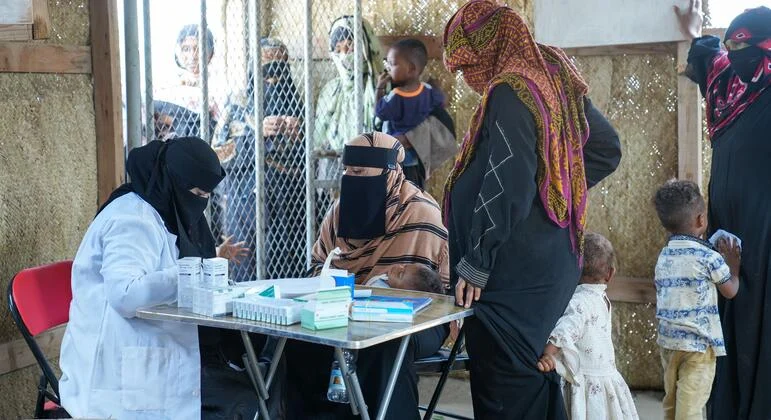
The humanitarian landscape in Yemen, already characterized by the United Nations as one of the world’s most catastrophic crises, has suffered a devastating blow. In the past two weeks alone, a fresh eruption of violence has uprooted more than 57,000 children, forcing families to abandon their homes and livelihoods in search of safety. As the conflict intensifies, reports of children killed, injured, or missing have begun to surface, signaling a grim regression for a nation that had enjoyed a fleeting period of relative stability.
UNICEF, the lead agency for child welfare within the UN system, has issued an urgent warning that the current escalation is stripping away the final vestiges of stability for millions of Yemeni youth. The renewed hostilities have not only caused immediate physical trauma but have effectively dismantled the fragile infrastructure—schools, clinics, and water systems—that remained functional for the most vulnerable.
The Chronology of Escalation: From Fragile Truce to Renewed Conflict
The conflict in Yemen, a complex theatre involving the internationally recognized government—backed by a Saudi-led coalition—and the Iran-aligned Houthi movement, has been ongoing since 2014. The war has historically been defined by cycles of extreme violence punctuated by sporadic diplomatic breakthroughs.
The 2022 Truce Period
For much of 2022 and 2023, Yemen experienced a relative, albeit fragile, calm following a UN-backed truce. During this period, the intensity of airstrikes and ground offensives waned, allowing international aid agencies to scale up food distribution and medical interventions. It was a time of cautious optimism, where families began to return to abandoned homes and children tentatively resumed their education.
The September 3rd Turning Point
The current wave of instability accelerated sharply around September 3. According to field reports, a specific attack on a transport artery connecting the western coast to the southern port city of Aden resulted in at least nine child fatalities, 12 injuries, and three children reported missing. This single incident served as a harbinger of the wider violence that has since rippled across governorates including Taiz, Hudaydah, and Marib.
The sudden military maneuvers have triggered a domino effect of displacement. Families who had spent years attempting to rebuild their lives in the relative safety of these regions were forced to flee with nothing but the clothes on their backs, joining the millions of internally displaced persons (IDPs) who have already been living in makeshift camps for years.
Supporting Data: A Nation on the Brink
The scale of the current crisis must be viewed against the backdrop of a pre-existing humanitarian catastrophe. UNICEF data indicates that even before this recent escalation, roughly 12.2 million children in Yemen—the vast majority of the child population—were in dire need of humanitarian assistance.
Healthcare and Educational Collapse
The conflict’s reach is not limited to the battlefield; it is felt most acutely in the institutions that sustain child development.
- Medical Facilities: UNICEF has confirmed that services at 26 health facilities, which previously relied on international support, have been fully disrupted. With only 60 percent of Yemen’s healthcare facilities functioning even before this surge, the loss of these 26 sites is a critical blow to maternal and child health.
- Education: The disruption to schooling is systemic. Approximately 243 schools have been forced to close or suspend classes indefinitely. This closure directly impacts more than 137,000 students, adding to an already staggering statistic: 3.2 million school-age children in Yemen were already out of the classroom prior to the recent fighting.
- Nutrition: The threat of malnutrition remains the silent killer of Yemeni children. Currently, more than 2.2 million children under the age of five suffer from acute malnutrition, with 515,000 of those classified as suffering from severe acute malnutrition—a life-threatening condition that leaves them vulnerable to common illnesses.
The Crisis of Water and Sanitation
Access to clean water is a luxury in a country where infrastructure has been decimated. Across Yemen, 17.8 million people lack adequate access to water and sanitation services. The current fighting has damaged water networks, necessitating urgent repairs to prevent the outbreak of waterborne diseases, which have historically claimed thousands of lives during previous spikes in the conflict.
Official Responses and Humanitarian Mobilization
In response to the deteriorating situation, UNICEF has launched an emergency expansion of its operations, aiming to reach up to 231,000 people with life-saving support.
Operational Interventions
UNICEF’s regional teams have deployed across the most affected governorates:
- Emergency Supplies: In Taiz and Marib, teams are distributing essential hygiene kits, water tanks, and supplemental food supplies to newly displaced families.
- Mobile Health Teams: Nine specialized health and nutrition mobile teams have been redirected to displacement sites and affected communities in Aden, Marib, and Taiz. These teams provide vaccinations, emergency trauma care, and nutritional monitoring.
- Child Protection: Perhaps most critically, UNICEF is deploying child protection teams tasked with providing psychosocial support. These experts are helping children process the trauma of displacement and violence, while also managing cases for unaccompanied and separated minors who have been lost in the chaos. These teams are also conducting community awareness campaigns regarding the lethal risks of unexploded ordnance (UXO), which often litters areas after military clashes.
International Outreach: The Djibouti Corridor
The crisis has extended beyond Yemen’s borders. Fearing for their lives, over 2,000 people—a significant portion of whom are children—have undertaken the perilous journey across the Bab el-Mandeb Strait to reach Djibouti. UNICEF is working in coordination with Djiboutian authorities to provide temporary shelter, medical screening, and basic necessities to these refugees, acknowledging that for many, the journey across the sea is the only path to safety.
Implications: The Long-Term Cost of Conflict
The implications of this latest escalation are profound. Edouard Beigbeder, UNICEF Regional Director for the Middle East and North Africa, articulated the despair facing the younger generation: “Children in Yemen were already living through one of the world’s most grave humanitarian crises, and many have known little but conflict and displacement. For children who have already endured years of hunger, displacement and disrupted schooling, this latest violence is eroding what little stability they had left.”
The Erosion of Potential
The cumulative effect of a decade of war is a lost generation. Children who have missed years of schooling are less likely to reintegrate into the workforce, and those who have suffered from chronic malnutrition face permanent physical and cognitive stunting. The psychological trauma of witnessing war, coupled with the instability of living in transit, creates a cycle of poverty and hopelessness that will take generations to break.
The Call to Action
UNICEF has echoed the United Nations Secretary-General’s urgent appeal to all parties involved in the conflict. The demands are clear:
- Protect Civilians: All military parties must adhere to international humanitarian law, ensuring that schools, hospitals, and civilian residential areas are not targets.
- Unimpeded Access: Parties must facilitate safe, neutral, and unimpeded access for humanitarian aid agencies to reach the most vulnerable populations, regardless of the front lines.
- End the Hostilities: There is no humanitarian solution to a military problem. The UN continues to press for a sustainable, nationwide ceasefire that allows for the restoration of public services and the beginning of a long-term reconstruction process.
As the international community turns its attention to other global hotspots, the situation in Yemen serves as a harrowing reminder of what happens when a conflict is allowed to freeze in place rather than being resolved. For the 57,000 children displaced in the last fortnight, the "relative calm" of 2022 is now a fading memory, replaced by the immediate, terrifying reality of survival. The world’s ability to respond to this latest surge in violence will determine whether these children have any hope of returning to a life that resembles anything close to normalcy.
 Nana Muazin
 Azzam Bilal Chamdy
 Layla Zulfa
