

By Global Tech Desk
Published: October 2026
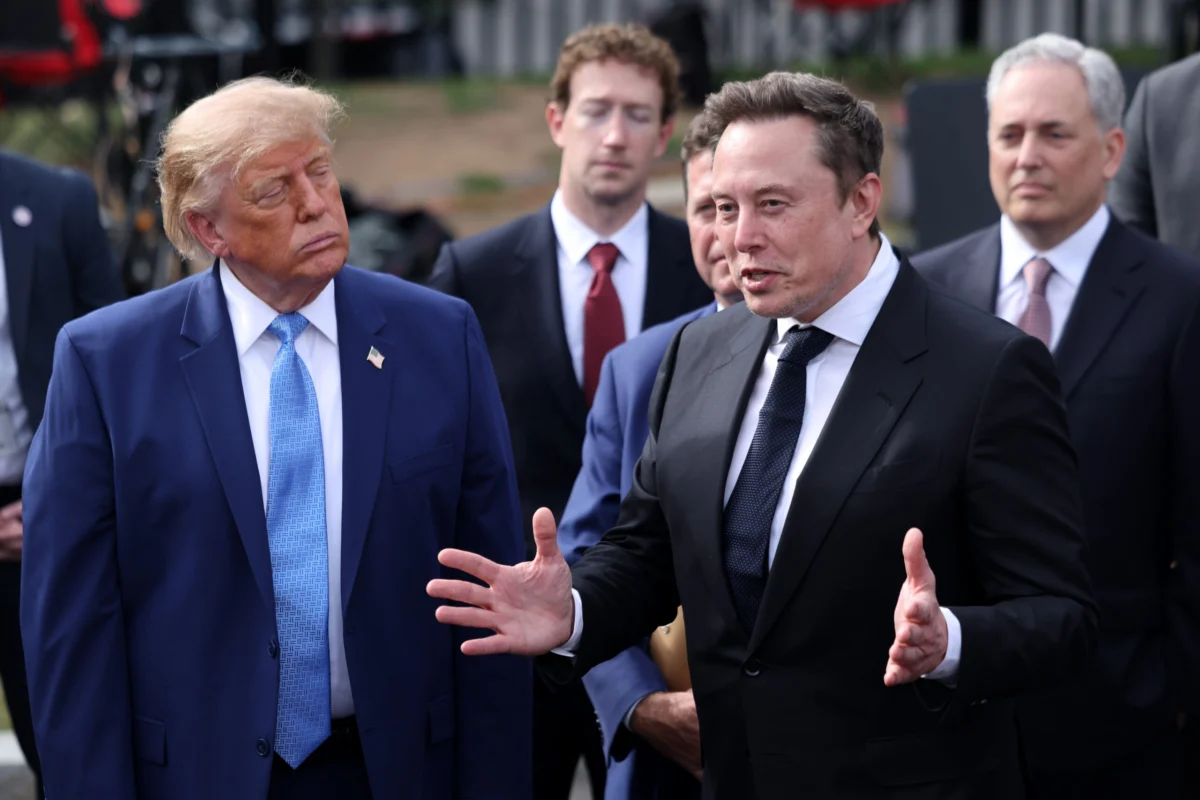
In a striking convergence of high-stakes geopolitics, linguistic engineering, and Silicon Valley pageantry, President Donald Trump recently welcomed the most powerful figures in artificial intelligence to Washington, D.C. The primary objective of the high-profile gathering was twofold: to unveil a voluntary safety pact known as the "Joint Commitment on Frontier Responsibilities," and to officially mandate that the federal government—and, by extension, official U.S. representatives—banish the term "artificial intelligence" from its lexicon entirely.
Moving forward, under executive order, the technology that has captivated and terrified the global economy is to be known exclusively as "super intelligence."
The announcement has sent shockwaves through both government agencies and tech boardrooms. To dissect the motivations, contradictions, and broader industry implications of the summit, TechCrunch’s Equity podcast hosts Anthony Ha, Kirsten Korosec, and Sean O’Kane convened a panel to break down what they characterized as an exercise in political theater, sudden policy reversals, and high-level corporate diplomacy.
1. Main Facts: The Summit, the Executive Order, and the "Super Intelligence" Mandate
The recent executive order signed by President Trump and top technology executives represents a dramatic pivot in federal terminology and policy posture. Key elements of the summit include:
- A Linguistic Shift: The term "artificial intelligence" (AI) is officially replaced by "super intelligence" across official U.S. government communications and representative discourse.
- The "Joint Commitment on Frontier Responsibilities": A coalition of tech executives signed a new frontier pact aimed at addressing safety, alignment, and responsible development. However, the document has already drawn heavy public scrutiny for a glaring clerical error—it notably misspells "United States."
- The Enforcement Reality: Despite the solemnity of the White House signing ceremony, the agreement is deeply non-binding from a legal perspective. When pressed on its enforceability, President Trump reportedly described the pact as "morally binding," introducing a novel framework of accountability to federal oversight.
- An Unprecedented Silicon Valley Assembly: The luncheon featured a rare alignment of fierce industry competitors, including Meta CEO Mark Zuckerberg, Amazon founder Jeff Bezos, Tesla and xAI head Elon Musk, and Anthropic CEO Dario Amodei.
2. Chronology: The Rapid Escalation Leading to the White House Gathering
The path to the Washington summit was neither smooth nor predictable. In fact, it materialized with breakneck speed, defying political norms and reversing established stances in a matter of days.
Early September: Anti-Regulation Posturing
Just weeks prior to the summit, President Trump adopted a staunchly deregulatory, anti-safety-pact stance. In interviews and public appearances, the president asserted that the United States needed to sprint ahead in the technological race without regulatory friction. He famously dismissed warnings regarding existential AI risks, suggesting that individuals highlighting such dangers were functioning as "Chinese or Democratic plants."
Late September: The Midnight Dinner and the Anthropic Thaw
The dynamic shifted abruptly following a surprise 10 p.m. dinner between President Trump and Anthropic CEO Dario Amodei. Anthropic had previously found itself deeply out of favor within the administration—particularly inside the Department of Defense, which viewed the company’s safety conditions and corporate philosophy as misaligned with national security priorities. Amodei’s late-night sit-down catalyzed a rapid diplomatic thaw, paving the way for the broader CEO summit.
The Summit and the "Super Intelligence Force"
Culminating a whirlwind week of high-level meetings, the executives gathered in Washington to sign the frontier pact. The rebranding effort did not stop at the conference room doors; over the subsequent weekend, the administration announced the formation of a brand-new "Super Intelligence Force," cementing the administration’s new terminology into operational federal strategy.
3. Supporting Data and Industry Context: Fractured Alliances
While the optics of the White House luncheon suggested a unified front between Silicon Valley and Washington, deep fractures remain beneath the surface.
- The Anthropic-Defense Department Divide: Despite Amodei’s invitation to the presidential dinner and subsequent summit, tensions persist. Figures within the Department of Defense and administration surrogates—such as Emil Michael, who has frequently criticized Anthropic on social media platform X—continue to cast suspicion on the company, labeling its policies overly restrictive and "woke."
- A Multi-Faced White House: Reporting indicates that different corners of the executive branch maintain vastly divergent views on frontier tech firms. While entities like the Treasury Department have historically maintained warm, collaborative relationships with companies like Anthropic, the defense and security apparatus remains deeply skeptical of corporate conditions placed on government technology usage.
- The Rushed Mechanics: The logistical friction of the summit was laid bare when sharp-eyed observers noted that the signed "Joint Commitment on Frontier Responsibilities" contained a misspelling of "United States." Analysts suggest this typo underscores how rapidly the administration rushed the summit together to capitalize on momentum following the Amodei-Trump dinner.
4. Official Responses and Industry Skepticism
The tech community and political commentators have met the administration’s new pact and terminology with a mixture of amusement, skepticism, and analytical detachment.
On the Equity podcast, Sean O’Kane pointed out the stark legal reality of the agreement:
"How much time do you have? … As far as the agreement and all of that, let’s be real, they misspelled the United States on the agreement that they all signed. It is also just deeply non-binding. I mean, it is completely voluntary. I think my favorite aspect about it was that Trump described it as quote ‘morally binding,’ which is just a level of abstraction and terminology that I’ve never heard of before."
Furthermore, O’Kane highlighted the disconnect between the White House photo-ops and ongoing operational friction:
"I think there’s still some distance there despite Dario showing up to this thing. For as much as there are clearly people trying to put those two groups together, the Defense Department is still very adamant that Anthropic is terrible and woke and a national security risk."
Anthony Ha noted that while the text of the agreement holds little legal weight, the gesture of the summit is telling:
"In terms of the agreement, it seems not super meaningful. What is meaningful is just the fact that they felt that this was something worth doing… The fact that this kind of gesture was needed seems significant, even if I don’t think the agreement itself is going to lead to any major changes."
5. Strategic Implications: Why "Super Intelligence"?
Why would an administration abruptly pivot from calling safety advocates "plants" to hosting a major safety-pact luncheon—and why rebrand the entire technological category?
According to Kirsten Korosec, the entire exercise should be viewed through the lens of strategic narrative control:
"The important and interesting thing is that just days ago, Anthropic was really in the doghouse… Kirsten suggested that the meeting’s real significance may have been as ‘a rebranding effort around AI.’ … For her, the big message was, ‘AI is going to kill us, it’s scary, it is going to take jobs — but super intelligence is not.’"
Shifting the Psychological Paradigm
By discarding the term "artificial intelligence"—which has become synonymous in the public consciousness with mass layoffs, copyright lawsuits, deepfakes, and dystopian existential risk—the administration is attempting a semantic reset.
- Neutralizing Public Fear: "Artificial intelligence" carries the baggage of current grievances: stolen art, automated job displacement, and unregulated digital chaos. "Super intelligence," conversely, evokes an aura of national dominance, manifest destiny, and monumental achievement.
- Aligning National Pride with Tech Monopoly: By framing the technology as an elite national project ("Super Intelligence Force"), the administration links corporate development directly to patriotic duty, making it harder for populist elements within the government to attack tech monopolies as anti-American.
- Bypassing Hard Regulation with "Moral" Pacts: By relying on voluntary, "morally binding" agreements rather than statutory frameworks, the administration satisfies public demands for oversight without imposing actual compliance costs or operational slowdowns on the companies building the models.
Conclusion
Whether the "Joint Commitment on Frontier Responsibilities" evolves into a meaningful framework or remains a footnote in the history of tech policy, the summit marks a psychological turning point in the relationship between the U.S. government and Big Tech.
By fiat and executive order, the era of artificial intelligence in Washington is over. As the industry marches forward under its new federal moniker, the true test will be whether "super intelligence" can bridge the gap between White House photo-ops, Pentagon security demands, and the messy, unpredictable reality of frontier technology deployment.
 Basiran
 Nana Muazin
