

As the robotics industry transitions from traditional, highly deterministic algorithms to sweeping generative artificial intelligence models, a monumental engineering and philosophical dilemma has taken center stage. Giving humanoid robots and industrial arms the autonomy of modern generative AI transforms them from rigid, pre-programmed machines into adaptive agents capable of reasoning, learning, and improvising.
Yet, this shift introduces a severe Achilles’ heel: unpredictability.
Unlike legacy software governed by strict, linear if-then rules, generative AI is probabilistic. It calculates likelihoods rather than absolute certainties. This statistical nature makes it extraordinarily difficult to mathematically verify whether a brand-new humanoid robot will behave safely when deployed into a chaotic, unstructured human environment.
Enter Safeworld, a groundbreaking startup emerging from stealth today with a formidable $12 million seed funding round. Led by Shine Capital and a16z Speedrun, alongside participation from Box Group, the Carnegie Mellon University Endowment, Innovation Endeavors, and SV Angel, Safeworld is positioning itself as the ultimate safety net for the burgeoning physical AI economy.
Main Facts
- The Core Problem: Generative AI-driven robotics lack the predictability of traditional algorithms, making it nearly impossible to mathematically prove their safety in real-world scenarios.
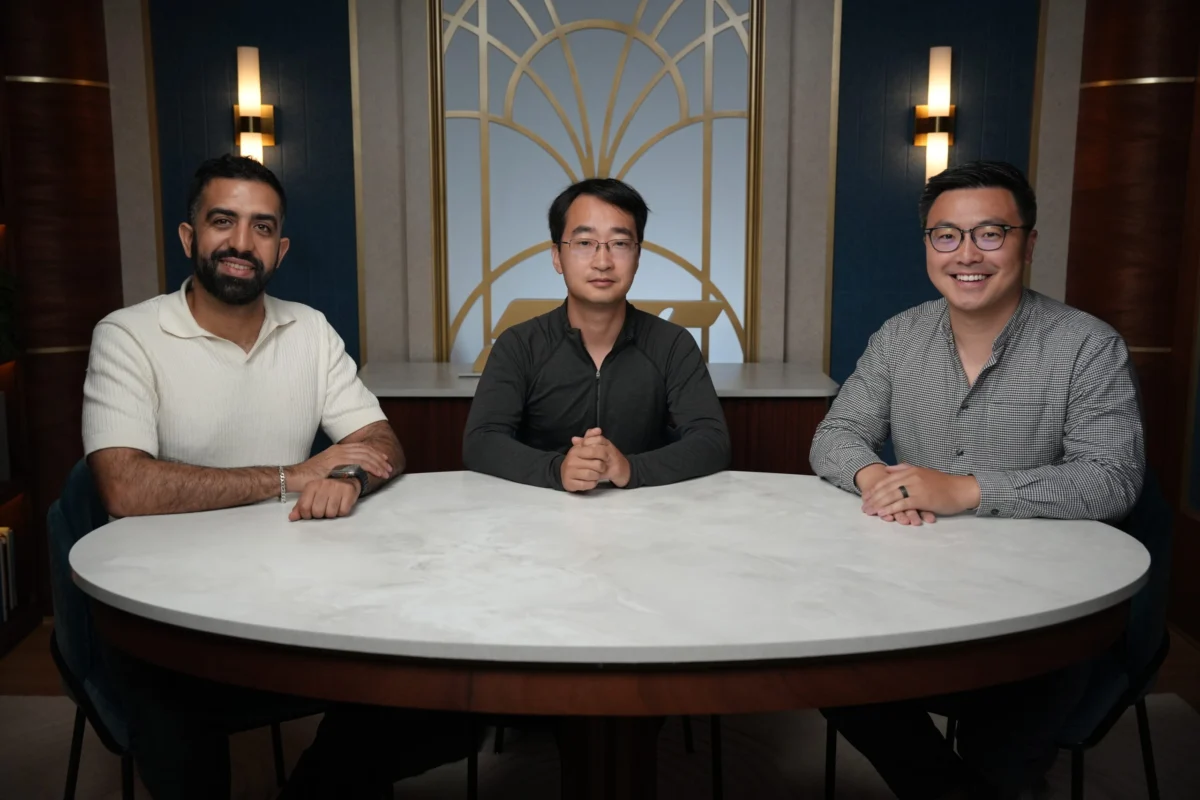
- The Founders: Founded by Dr. Ding Zhao (Director of the Safe AI Lab at Carnegie Mellon University), veteran startup executive Kyle Wong, and machine learning engineer Simo Rachidi.
- Funding Milestone: Safeworld is launching publicly with more than $12 million in seed capital from top-tier venture firms, including a16z Speedrun and Shine Capital.
- The Solution: A specialized simulation-based testing platform that evaluates robotic control software using hyper-realistic virtual environments populated by unpredictable human models.
- Early Validation: The company is already partnering with industry players like Gritt Robotics, whose heavy machinery operates alongside human workers on solar farm installations.
The Genesis of Safeworld: Chronology and Background
For Dr. Ding Zhao, the safety challenges of autonomous systems are not a recent realization—they have formed the focal point of his academic and professional career. Spending years directing the Safe AI lab at Carnegie Mellon University, Zhao watched helplessly as the broader tech ecosystem rushed headfirst into large language models (LLMs) and vision-language-action (VLA) models without establishing adequate guardrails for physical deployment.
The limitations of traditional verification methods became painfully obvious. Historically, engineers could write equations, execute static math proofs, and assert that a system was verified. However, when an AI model dictates a robot’s immediate physical actions based on real-time sensory input, formal verification breaks down completely.
Recognizing that the industry was hurtling toward a crisis, Zhao joined forces with Kyle Wong and Simo Rachidi to establish Safeworld. The founders identified a gaping hole in the market: while individual robotics manufacturers were building internal simulation tools to test their code, no independent, third-party arbiter existed to validate safety standards, stress-test probabilistic edge cases, and establish universal benchmarks across competitors.
Today’s public debut caps months of stealth development, cementing a crucial milestone not just for the founders, but for the entire venture ecosystem backing them.
Supporting Data and Technical Architecture: Simulating the Unpredictable
Safeworld’s proprietary platform attacks the safety challenge through hyper-advanced simulation. By utilizing state-of-the-art physics engines like Genesis and MuJoCo, the company constructs digital twins of real-world environments—down to the exact dimensions of a blind factory corner, a narrow warehouse aisle, or a complex solar construction site.
The process involves importing a robot’s literal, unedited production software into the simulation, then subjecting it to thousands of randomized stress tests.
Tackling Human Edge Cases
The primary obstacle in these simulations is not the machine itself, but the dynamic, erratic nature of human behavior. People do not walk in straight lines; they trip, fall, crouch, run, carry bulky objects, and exhibit wildly diverse physical appearances, clothing styles, body types, and skin tones.
As Kyle Wong points out, testing these edge cases physically is practically impossible.
"Tripping and falling is also a good example of something that we do a lot of testing with the simulation," Wong explains. "Otherwise, you would have to go and trip and fall for the robot, which is like a hard thing to be doing all the time."
Similarly, blind corners present massive operational hurdles. If a human worker rounds a corner while carrying a stack of boxes, will the robot’s generative vision-language model detect them instantly? What are the exact stopping distances and deceleration speeds required to prevent a collision? Safeworld’s platform runs thousands of randomized iterations of these exact scenarios to underwrite the risk before a single piece of hardware ever touches a factory floor.
Official Responses and Industry Perspectives
The urgency behind Safeworld’s mission is echoed by investors and early industrial adopters who witness firsthand the friction between cutting-edge AI and physical safety realities.
The Investor Viewpoint
Jonathan Lai, a partner at a16z Speedrun, emphasizes that the window to establish industry safety standards is narrowing rapidly.
"The time to build an industry safety standard is now while robots are being designed and deployed," Lai told tech analysts. "By the time you have robots in households colliding with kids and causing safety incidents, that’s way too late."
The Industrial Partner Viewpoint
Vishal Dugar, Chief Technology Officer of Gritt Robotics, understands the limitations of theoretical safety checks all too well. Gritt builds the AI brains for industrial robots deployed to install photovoltaic panels at utility-scale solar farms, with ambitions to scale into even more complex construction domains.
"The difficulty with most of our systems is it’s very hard to formally prove it by doing some math, writing some equations, and saying yeah, the system is verified to be safe," Dugar notes. "It necessarily has to be done empirically."
Dugar points out that his team’s robots operate hand-in-hand with human laborers in environments characterized by constant movement. Ensuring that a heavy robotic arm never compromises human safety requires accounting for infinite variations in human morphology and behavior. Safeworld’s simulation platform offers Gritt Robotics the rigorous empirical testing framework needed to scale their deployments with confidence.
Broader Implications: Navigating the Road Ahead
As generative AI transitions from text generators on glowing screens to embodied agents operating heavy machinery in homes, hospitals, and factories, the stakes have never been higher.
The robotics industry faces a critical crossroads. If early deployments are plagued by safety failures, regulatory backlashes could severely stifle innovation, setting the physical AI revolution back by decades. Conversely, proactive third-party validation could foster public trust and accelerate widespread adoption.
Dr. Zhao and his team at Safeworld are navigating these uncharted waters with absolute clarity regarding their business model and market necessity. Whether Safeworld ultimately evolves into a direct software-as-a-service (SaaS) platform for external developers or adopts a specialized, service-oriented validation consultancy model, the founders remain uniquely optimistic about their trajectory.
"We’ll probably be the first profitable company in this field," Zhao declares boldly. "Because if anyone wants to deploy, they need to pay us to handle the situation."
Ultimately, Safeworld is building more than just a testing suite; it is constructing the foundational trust required for humans and machines to safely share the physical world.
 Basiran
 Lina Irawan
 Nana Muazin
