

By Sean O’Kane
Published in Automotive & Tech News
Introduction: The Anatomy of a Slumping Production Cycle
Lucid Motors, once heralded as one of the most promising technological heavyweights in the burgeoning electric vehicle (EV) sector, is facing a severe reality check. The luxury EV maker built just 2,954 electric vehicles in the third quarter of this year, representing a stark 54% decline compared to the same period a year prior.
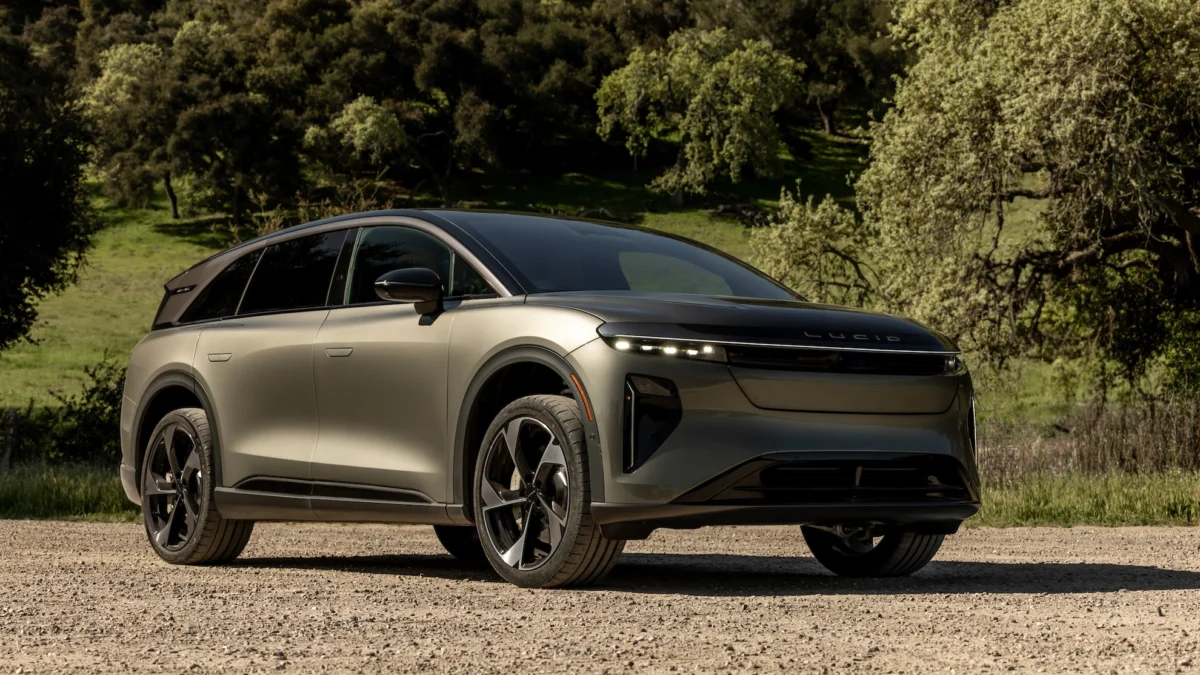
This dramatic contraction is not entirely accidental; the company has intentionally throttled back manufacturing to better align output with sluggish market demand. However, the optics are difficult to ignore. This latest report marks the third consecutive quarter in which Lucid’s production volume has dropped. Furthermore, it records the lowest quarterly output since the first quarter of 2025—a period that immediately followed Lucid’s commercial launch of its second major vehicle, the Gravity SUV.
As traditional automakers and EV pure-plays alike navigate shifting consumer appetites, high interest rates, and intensifying pricing pressure, Lucid finds itself at a critical crossroads. Under the stewardship of a newly appointed leadership team, the company is frantically pivoting from aggressive, high-risk scaling to a conservative, cost-cutting survival strategy.
Chronology of a Crisis: From SPAC-Fueled Ambitions to Reality
The 2021 Highs and Broken Promises
To fully understand Lucid’s current predicament, one must look back to its public market debut in 2021. During the height of the special purpose acquisition company (SPAC) boom, Lucid Motors merged with Churchill Capital Corp IV, raising an astonishing $4 billion in fresh capital.
At the time, management painted an intensely bullish picture for investors. The company’s forward-looking guidance projected that it would manufacture and ship as many as 90,000 EVs by the year 2024 alone. Backed by heavy funding from Saudi Arabia’s Public Investment Fund (PIF), Lucid positioned itself as a legitimate "Tesla killer," promising unprecedented battery efficiency, luxurious interior aesthetics, and unmatched luxury performance through its flagship Lucid Air sedan.
However, execution proved infinitely more difficult than drafting investor presentations. Supply chain disruptions, production bottlenecks, engineering hurdles, and a high-end price tag that alienated the mass-market consumer base quickly chipped away at those lofty projections.
Slow Deliveries and Inventory Imbalances
The gap between ambition and execution manifested clearly in the delivery metrics. In the recently concluded third quarter, Lucid managed to deliver 3,806 EVs. While this figure remained roughly flat compared to the second quarter, it reflects a decrease of roughly 200 vehicles from the third quarter of the previous year.
More alarmingly, chronic structural overproduction has plagued the company: in five out of the last six quarters, Lucid has manufactured more vehicles than it has successfully delivered to buyers. This persistent inventory imbalance points to a fundamental struggle in finding enough consumers willing to purchase its luxury EV lineup, which now spans the Lucid Air sedan and the newer Gravity SUV.
Supporting Data: Production vs. Deliveries and Market Contradictions
A granular look at the data highlights the widening chasm between Lucid’s manufacturing metrics and broader industry benchmarks:
- Third-Quarter Production: 2,954 EVs built (a 54% year-over-year drop).
- Third-Quarter Deliveries: 3,806 EVs shipped to customers (flat quarter-over-quarter, down slightly year-over-year).
- Production Trend: Three consecutive quarters of declining manufacturing volume.
- Financial and Restructuring Target: A targeted $1.4 billion in total cost savings spearheaded by new CEO Silvio Napoli.
- Workforce Reduction: Layoffs impacting approximately 1,500 employees (roughly 18% of the total workforce).
The Rivian Contrast
Lucid’s struggles become even more glaring when evaluated against its direct competitors. Just days before Lucid released its bleak third-quarter numbers, rival EV startup Rivian announced the best quarter in its corporate history.
Driven by strong consumer reception of the R2—its newly launched, more affordable mid-size SUV—Rivian shipped nearly 20,000 vehicles in the third quarter. This is a dramatic leap from the 12,194 vehicles it delivered in the second quarter, marking the first full operational quarter with the R2 firmly on assembly lines. While Rivian has also encountered its share of financial speedbumps, its successful pivot toward a more accessible price point stands in sharp contrast to Lucid’s ongoing sales stagnation.
Official Responses and Strategic Pivots: The Turnaround Plan
Recognizing the existential threat posed by persistent operating losses and low sales velocity, Lucid’s board brought in a new chief executive, Silvio Napoli, to overhaul operations. Over the past few months, Napoli has led an aggressive campaign to "simplify the company."
Radical Cost-Cutting and Operational Restructuring
Napoli’s turnaround plan is centered around aggressive capital preservation. To achieve a targeted $1.4 billion in cost savings, Lucid has:
- Eliminated approximately 1,500 positions, shrinking its workforce by 18%.
- Streamlined corporate leadership to accelerate decision-making processes.
- Scaled back manufacturing operations at its flagship factory in Casa Grande, Arizona, including the elimination of a second production shift.
- Delayed the commercial release of its critical third vehicle model, the Cosmos, which was intended to be a mass-market offering priced under $50,000.
Candid Admissions from Leadership
During Lucid’s second-quarter earnings call in August, Napoli offered a candid, brutally honest assessment of why the luxury automaker has failed to secure a meaningful foothold in the broader electric vehicle landscape.
"While there is no question that Lucid brought leading innovations and outstanding products to the market, we have disappointed on several fronts, and for far too long," Napoli told investors and analysts.
"We have not executed consistently. We missed commitments, launched products before they were ready, underinvested in service, responded too slowly to quality issues, and allowed complexity to slow decisions down."
These admissions represent a radical departure from the hyper-optimistic messaging typical of early-stage EV startups. Napoli’s strategy explicitly rejects the "move fast and break things" ethos that has burned through billions of dollars across the automotive sector.
Addressing the delayed launch of the lower-cost Cosmos SUV, Napoli cautioned shareholders that rushing products to market simply to chase volume targets is a trap the company cannot afford to fall into again.
"We will not repeat the mistakes of the past by bringing a product to market before it is ready," Napoli emphasized during the call.
Implications for the Future of Lucid Motors
The implications of Lucid’s current operational trajectory extend far beyond a single weak quarterly report. They pose fundamental questions about the viability of independent luxury EV pure-plays in an increasingly crowded and cost-conscious automotive market.
1. The Danger of Niche Positioning
By stubbornly focusing primarily on ultra-luxury price tiers—where competition from legacy luxury brands like Mercedes-Benz, BMW, and Porsche, alongside Tesla’s Model S and X, is fierce—Lucid severely constrained its total addressable market. Without an affordable high-volume vehicle on the road today, the company relies heavily on deep-pocketed backers to subsidize operating cash burns.
2. The Lifeline of Sovereign Wealth Support
Lucid’s primary financial safety net remains Saudi Arabia’s Public Investment Fund (PIF), which has poured billions into the company over the years. Without this immense financial backing, Lucid’s path forward would look precarious. However, even state-backed sovereign funds demand accountability and a clear sightline toward operational self-sufficiency over the long term.
3. The Stakes for the Cosmos SUV
Ultimately, Lucid’s long-term survival hinges on the successful execution and eventual launch of the Cosmos. By targeting a price point under $50,000, Lucid aims to unlock a vastly larger demographic of everyday EV buyers. Yet, by deliberately delaying the vehicle to ensure rigorous quality control and manufacturing readiness, Napoli is playing a high-stakes waiting game. If the company cuts costs too aggressively or delays the Cosmos for too long, consumer mindshare could drift permanently toward competitors like Rivian, Tesla, and traditional original equipment manufacturers (OEMs) rolling out wave after wave of new electric options.
Conclusion
Lucid Motors stands at a critical historical juncture. The days of unbridled optimism and inflated SPAC-era projections are firmly in the rearview mirror. Under Silvio Napoli’s pragmatic, restructuring-focused leadership, Lucid is shedding its bloat, accepting past missteps, and choosing discipline over reckless growth. Whether this painful contraction will successfully birth a leaner, durable luxury EV maker or simply mark a protracted descent remains one of the most compelling narratives in modern industrial technology.
 Basiran
 Nana Muazin
 Evan Lee Salim
