

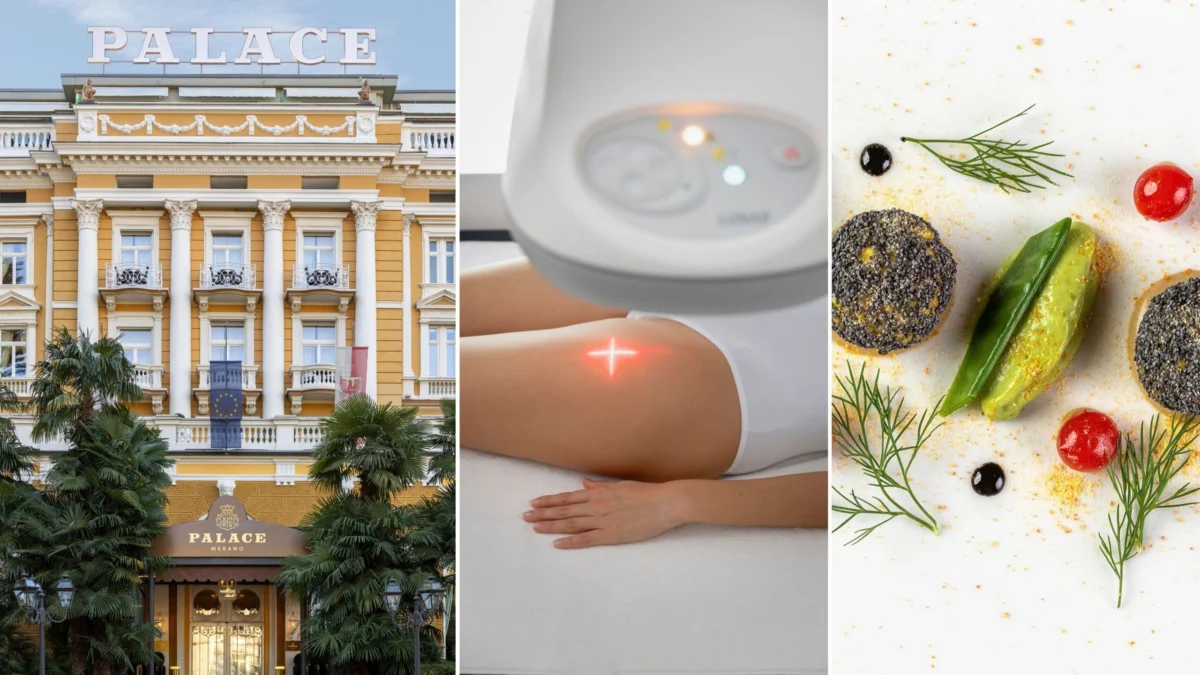
Nestled in the sun-drenched valley of South Tyrol, beneath the jagged, snow-dusted peaks of the Italian Dolomites, sits the Palace Merano. Since its inception in 1906, this Belle Époque landmark has served as a sanctuary for the European elite. However, the modern iteration of the hotel has pivoted from simple aristocratic leisure to the vanguard of regenerative medicine. At the heart of this transformation is the "Revital Method," a rigorous, medically-supervised detox protocol designed not just to cleanse, but to re-engineer the body’s internal landscape.
For the modern traveler, Palace Merano represents a paradox: it is a place of profound deprivation and exceptional luxury. It is a destination where one arrives hungry—famished from the rigors of travel and the excesses of daily life—only to find that the "mini-bar" contains nothing more than mineral water and herbal infusions. Yet, for those seeking to optimize their biological potential, it is perhaps the most sophisticated laboratory in Europe.

The Science of the Revital Method
The Palace Merano experience is overseen by Dr. Massimiliano Mayrhofer, a physician specializing in regenerative medicine. The program’s core philosophy—the Revital Method—is built on the premise that the body’s aging process can be slowed through precise, targeted interventions that restore metabolic and neurological equilibrium.
Unlike the increasingly common trend of "spiritual wellness" retreats that focus on group breathwork or silent meditation, the Palace operates with clinical precision. Guests are not here to find their inner child; they are here to repair their cellular machinery. A standard four-day program, which excludes accommodation costs, begins at approximately $3,900, with prices scaling significantly based on the complexity of the medical diagnostics and the duration of the stay.
.jpg)
A Chronology of the Stay: From Arrival to Optimization
Day 1: The Diagnostic Baseline
Upon arrival, the experience is immediate and immersive. The initial step is a comprehensive consultation with the medical staff, such as Dr. Sabrina Ebner, to establish a baseline. There is no guesswork here. The guest is handed a small, unassuming brown binder—the "passport" to their five-day journey. Every practitioner, from the nutritionist to the physiotherapist, will update this document, ensuring a continuous, data-driven narrative of the guest’s progress.
The schedule is a tightly curated sequence: morning acupuncture, specialized hydrotherapy, and therapeutic massage, followed by afternoon cognitive-wellness labs.
.jpg)
Days 2–3: The Physiology of Detox
The mid-week period is dedicated to the "cleansing" phase. This involves a medically supervised, low-calorie nutrition plan. While the term "detox" often carries a negative connotation of starvation, the culinary execution at the Palace is masterful. Dishes like sumac-dusted couscous with broccoli, raisins, and almonds are designed to mobilize toxins without inducing the stress response that often accompanies caloric restriction.
The experience in the hydro-mud therapy wing provides a surreal highlight. Here, staff—many of whom are local to Merano—administer essential oil-infused baths. During these sessions, guests are served magnesium-potassium elixirs, affectionately referred to by the staff as "champagne," reinforcing a culture of lightheartedness that permeates the otherwise serious medical facility.
.jpg)
Days 4–5: Cognitive Calibration
The final days focus on the "neuro-wellness" aspect of the retreat. This is where the Palace differentiates itself from the broader wellness market. Guests engage in cognitive performance testing, utilizing advanced light-and-symbol apparatuses designed to measure reaction time, memory, and sustained attention.
Supporting Data and Medical Methodology
The cognitive labs are a window into the future of longevity. In an era where "brain health" is the new frontier, the Palace avoids the static, passive monitoring of traditional brain mapping. Instead, they utilize dynamic, active-state testing.
.jpg)
"Our cognitive tests are part of a broader approach to brain health, prevention, and wellbeing," explains the sports and recovery coaching staff. "Through exercises involving attention, concentration, and memory, we keep cognitive functions active while increasing awareness of individual capacity."
The data is precise. For instance, an attention score of 251 milliseconds—a metric generated by the LED pod system—provides a tangible, quantitative benchmark for cognitive speed. This shifts the focus from subjective feelings of "being well" to measurable markers of neurological efficiency. Furthermore, the hotel provides remote access to these exercises, ensuring that the work begun in the Dolomites can be integrated into a guest’s home life.

Official Perspectives: The Philosophy of Balance
The medical team at Palace Merano is acutely aware of the "optimization trap"—the modern tendency to obsess over health numbers to the point of anxiety. Dr. Claudia Arganini, a biologist and nutritionist at the property, emphasizes that the goal is not to attain a "perfect" body composition, but to foster a sustainable, healthy relationship with oneself.
"A healthy weight is not defined by a number," Dr. Arganini notes. "It is about finding balance, feeling good in your body, and building a healthy relationship with food. It is more about learning to treat yourself with greater acceptance and love than anything else."

This philosophy acts as a corrective to the intensity of the program. It suggests that while science provides the tools, the ultimate outcome of the retreat should be a psychological shift in how the guest views their own aging process.
Implications: The Future of Wellness Tourism
The success of the Palace Merano model suggests a major shift in the luxury travel sector. The modern, high-net-worth traveler is moving away from passive relaxation and toward active, science-backed self-improvement.
.jpg)
- Medical Integration: The blurring of lines between a luxury hotel and a clinical laboratory is becoming the new standard for elite wellness destinations.
- Cognitive Longevity: As the global population ages, there is a clear demand for "neuro-wellness" that goes beyond mindfulness to include measurable cognitive maintenance.
- The End of "Spiritual" Overload: The lack of forced group rituals at the Palace is a response to a growing segment of the market that values privacy, agency, and secular, evidence-based care.
Ultimately, the Palace Merano offers a rare commodity: clarity. By stripping away the distractions of daily life and replacing them with a rigorous, data-driven framework, the hotel allows guests to confront their own biology.
As the guest leaves the valley, the takeaway is not just the memory of the Dolomites or the taste of the "magnesium champagne," but a quantifiable assessment of their own mental and physical health. When that final cognitive report shows a score in the higher range of the average population, it is not merely a "win"—it is the baseline for a more intentional, optimized future. In the quiet, high-altitude air of Merano, the message is clear: aging is inevitable, but the quality of that journey is a project that can be managed, measured, and mastered.
 Asro
Asro
 Siti Muinah
