

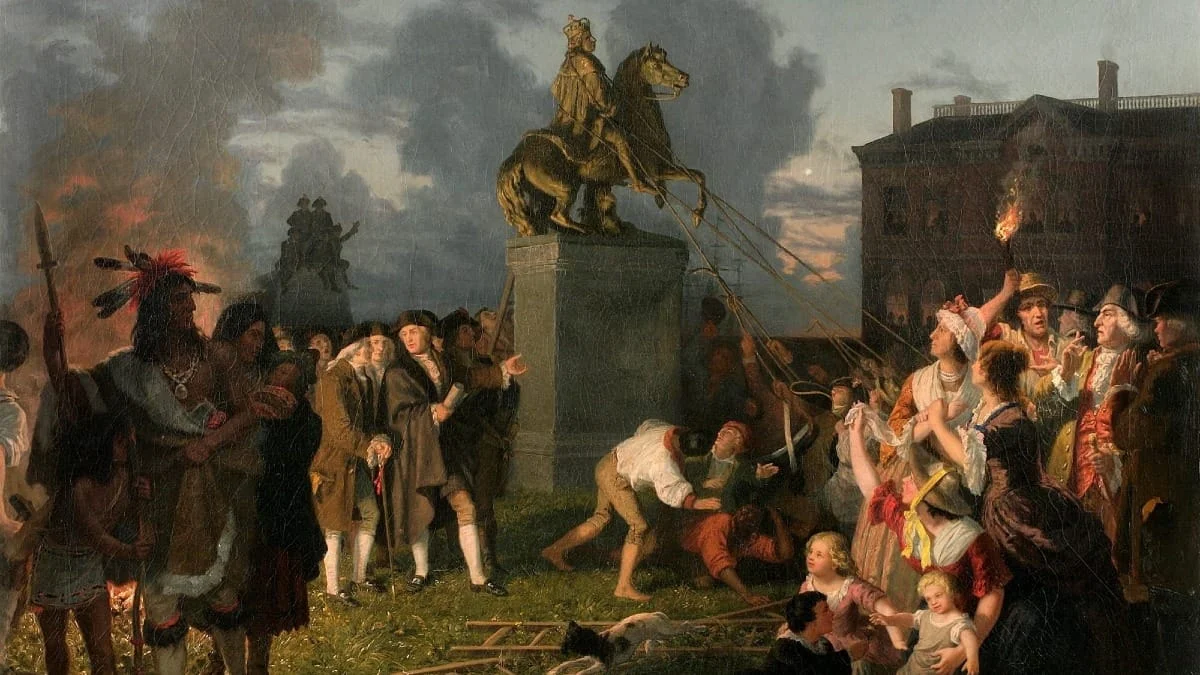
As the United States marks its 250th anniversary, the cultural landscape is saturated with patriotic fanfare. Yet, for many in the artistic community, this milestone serves not as a moment for uncritical celebration, but as an opportunity to dissect the national myths that have shaped—and often constrained—the American identity. This Fourth of July weekend, Hyperallergic turns its gaze toward the intersection of art, history, and political dissent, exploring how the symbols of our past are being reclaimed, challenged, and reimagined by contemporary voices.
The Statue of Liberty: A Tool for Dissent
The Statue of Liberty, arguably the most recognizable symbol of American democratic ideals, has long occupied a complex space in the national imagination. While often presented as a static, neutral beacon of "liberty," art critic Aruna D’Souza argues that the monument has served as a potent site of protest and political expression for generations of artists.
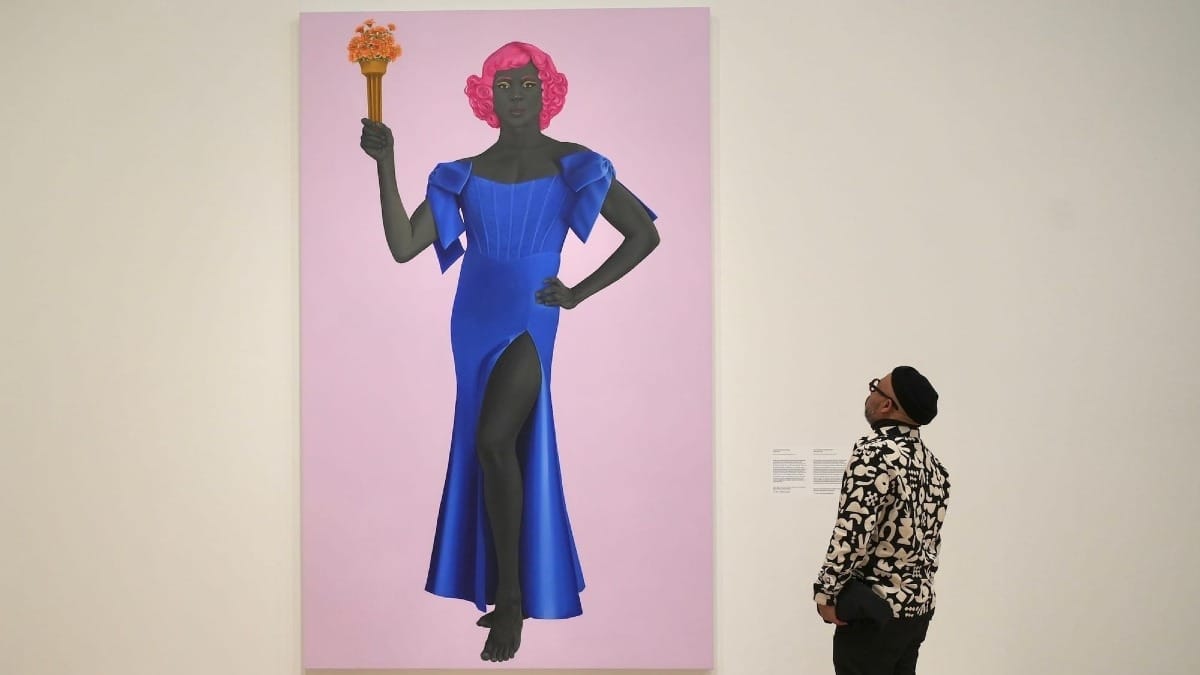
The discourse around the monument gained renewed urgency last July when acclaimed artist Amy Sherald withdrew her solo exhibition, American Sublime, from the Smithsonian’s National Portrait Gallery. The decision followed reports that the institution had attempted to censor a specific painting: a portrait of Arewá Basit, a Black trans woman depicted as the Statue of Liberty. By stripping the monument of its traditional historical context and re-situating it within the body of a marginalized individual, Sherald challenged the Smithsonian’s narrow interpretation of "American values."

D’Souza notes that Sherald is far from alone in this endeavor. From Faith Ringgold’s biting social critiques to the conceptual interventions of Marta Minujín, artists have consistently wielded the image of Lady Liberty to hold the state accountable. In an era where political rhetoric seeks to stifle dissent, these artistic interventions act as a vital reminder that the "liberty" the statue represents is a fluid, contested concept, not a fixed historical truth.
Chronology of a Contested Symbol
To understand why the Statue of Liberty remains such a lightning rod for debate, one must look at its evolving role in the American consciousness:
- 1886: The Dedication. Gifted by France, the statue was originally intended to celebrate the abolition of slavery and the success of the Union in the Civil War.
- Early 20th Century: The Gatekeeper. The statue transitioned from an abolitionist symbol to an emblem of mass immigration, though its interpretation remained heavily curated by federal authorities.
- 1960s–1980s: The Protest Era. Artists began explicitly subverting the statue to address racial inequality, gender politics, and the Vietnam War, moving it away from state-sanctioned narratives.
- 2025–2026: The Censorship Crisis. The Smithsonian’s attempt to restrict depictions of the statue reflects a broader national anxiety regarding historical representation, pitting institutional gatekeepers against contemporary artists who insist on a more inclusive, intersectional vision of America.
The Hudson River School: Mythologies of the Landscape
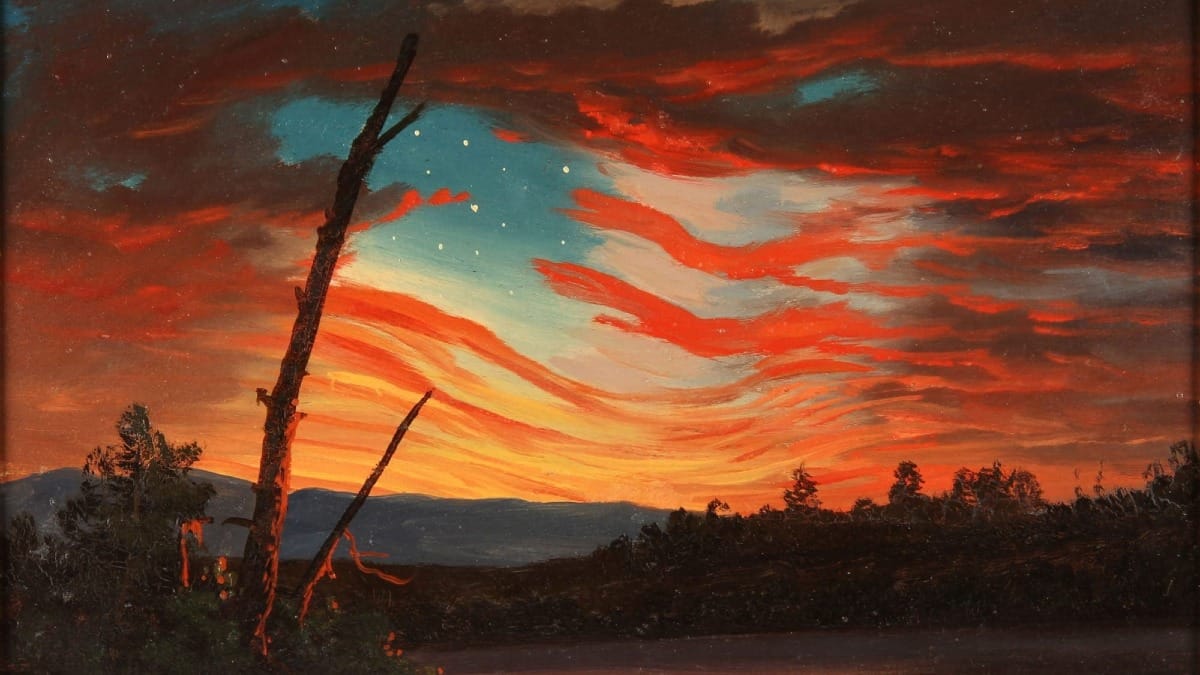
While D’Souza examines the urban monument, Ed Simon explores the rural American landscape through the lens of the Hudson River School. These 19th-century painters, including Thomas Cole and Frederic Edwin Church, are often credited with establishing the "American aesthetic." Their sweeping, romanticized vistas of the wilderness were intended to foster a sense of national pride and manifest destiny.
However, as we reach the 250th anniversary, these works demand a critical re-read. Simon invites us to consider these paintings not just as "marvels of the natural world," but as artifacts of settler colonial fantasy. By erasing the presence of Indigenous peoples and framing the land as an empty, waiting resource, these painters helped construct the mythologies that justified westward expansion. Two centuries later, the "allure and anxiety" of these works persist; they are simultaneously beautiful depictions of the continent and blueprints for the exploitation of the environment.
Institutional Shifts: The MFA Boston
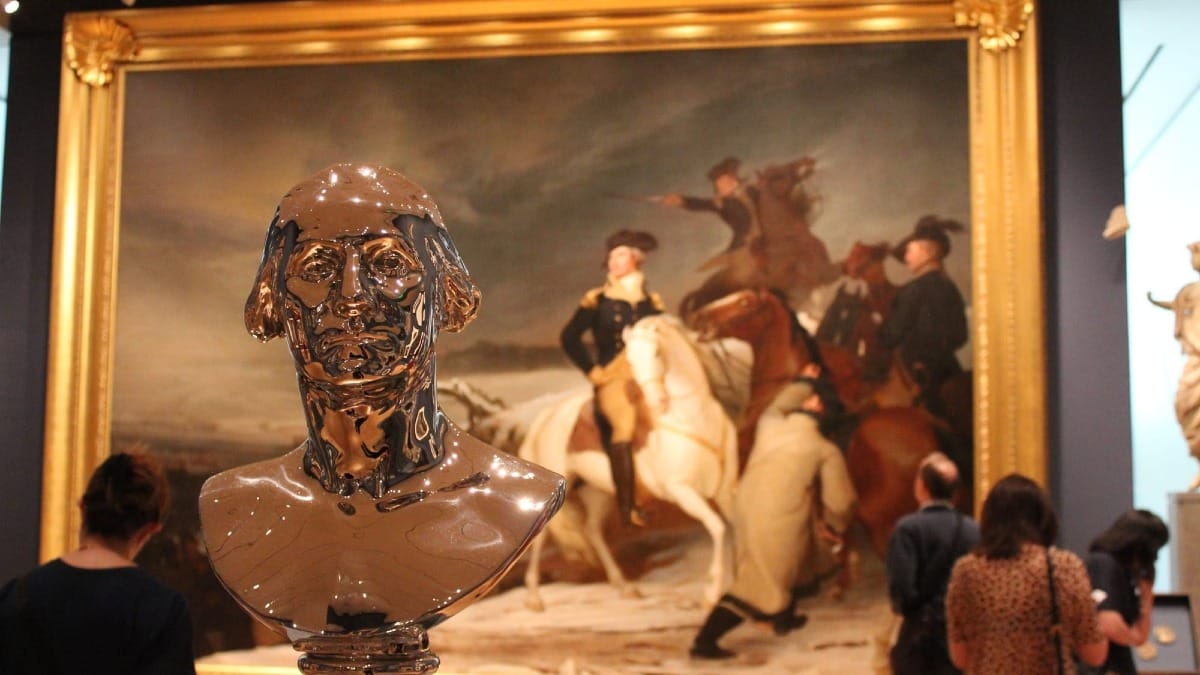
The dialogue around the 250th anniversary is not confined to theory; it is manifesting in the physical reinstallation of museum galleries. The Museum of Fine Arts (MFA) Boston has recently debuted its "Art of the Americas" galleries, a project aimed at reimagining how we tell the story of the nation. By centering voices that were previously relegated to the margins—and by contextualizing colonial-era artifacts alongside contemporary responses—the MFA is signaling a departure from the "great man" theory of history.
This move is part of a broader trend among major institutions attempting to reconcile their collections with modern sociopolitical realities. However, as the Smithsonian/Sherald controversy proves, this process is fraught with tension. When museums attempt to expand the narrative, they often encounter pushback from stakeholders who view these changes as a threat to traditional American identity.
Supporting Independent Discourse
The ongoing debate over these artistic representations underscores the necessity of independent, critical journalism. In an age where cultural institutions are increasingly susceptible to political pressure, the role of the art press becomes even more critical. Reporting on these issues requires a commitment to transparency—one that is often at odds with the public relations strategies of major museums and government-funded entities.
By becoming a paid member of the Hyperallergic community, readers support the kind of in-depth analysis that goes beyond the headlines. Whether it is tracking the censorship of contemporary artists or dissecting the colonial history of landscape painting, independent reporting ensures that the arts remain a space for uncomfortable truths rather than comfortable propaganda.
Implications for the Future of Art
The intersection of the 250th anniversary, the rise of institutional censorship, and the reclamation of historical icons presents a crossroads for the arts sector.
- The Threat of Self-Censorship: When prestigious institutions like the Smithsonian attempt to sanitize exhibitions to avoid political controversy, it creates a chilling effect across the industry. Artists, fearful of losing institutional support, may self-censor, thereby diluting the critical power of their work.
- Decolonizing the Collection: The efforts of museums like the MFA Boston to pivot toward more inclusive narratives are a step forward, but they remain incomplete. True change requires more than just new wall labels; it requires a structural overhaul of how collections are acquired, displayed, and funded.
- The Artist as Historian: Contemporary artists are increasingly stepping into the role of the public historian, using their work to fill the gaps left by traditional archives. Their ability to "talk back" to history—as seen in the works of Sherald and others—is perhaps the most vital tool we have for ensuring that the next 250 years are more equitable than the last.
Conclusion: Looking Ahead
As we look toward the future, the lessons from this July are clear: the symbols of our past are not set in stone. They are living, breathing entities that shift in meaning depending on who holds the brush and who writes the history.
Whether we are observing the cosmic, absurd diagrams of Steve DiBenedetto or contemplating the stark, challenging portraits of Amy Sherald, the task remains the same: to look past the pedestal and confront the reality of the American experience. Art will continue to be a site of contention, a mirror of our anxieties, and, most importantly, a tool for our liberation. As we navigate the complexities of this 250th year, let us hold onto the art that makes us think, the art that makes us uncomfortable, and the art that demands we build a better, more honest future.
For those interested in further exploring these themes, our monthly list of opportunities, including residencies and grants from the Paul & Daisy Soros Foundation and Ucross, is available on our portal. We encourage all our readers to participate in the ongoing conversation, supporting the artists and writers who continue to challenge the status quo.
 Neng Nana
 Ali Ikhwan
 Basiran
