

By Taliesin Thomas
For decades, the “white cube” has dictated the terms of artistic engagement: pristine walls, hushed lighting, and a deliberate detachment from the chaotic textures of the everyday world. Yet, as the seventh annual Upstate Art Weekend (UAW) concluded this June, it became clear that a growing contingent of artists and curators are interested in a different kind of dialogue—one that prioritizes landscape, community, and the unpredictability of the open air.
Held from June 25 to 29, this year’s UAW served as a sprawling, decentralized manifestation of creativity, stretching across the Hudson Valley and deep into the rural expanses of Upstate New York. With over 160 organizations, individual artists, and collectives participating, the event challenged the traditional gallery-goer to trade the climate-controlled silence of a museum for the wind-whipped hillsides and repurposed industrial barns of the region.
Main Facts: The Decentralized Canvas
The seventh iteration of Upstate Art Weekend was defined by its defiance of traditional exhibition boundaries. Eschewing a centralized headquarters, the event functioned more as an organic network than a curated festival. Participants ranged from established non-profits like Scenic Hudson to independent practitioners converting their personal vehicles, backyards, and agricultural outbuildings into temporary exhibition spaces.
The fundamental premise of UAW remains consistent: to highlight the interconnectedness of the Hudson Valley’s artistic ecosystem. By inviting the public into spaces that are not traditionally designated as "art venues," the event forces a reconsideration of the relationship between art and the environment. Whether it is a sari installation swaying in the breeze or a trunk show held in a parking lot, the art is presented as an additive layer to the existing geography, rather than an object removed from it.
Chronology: A Weekend of Discovery
The weekend began with a profound statement on global ecological precarity. At Scenic Hudson’s River Center on Friday, the installation Museum of Fishes & Greens offered a somber, resonant start to the proceedings. Organized by Eve Morgenstern, the founder of the arts-climate nonprofit Soon is Now, the exhibition featured vibrant saris hanging from clotheslines—a domestic, tactile medium used to highlight the fragility of life.
The installation was a direct collaboration with local artists in the Sundarbans forest of India. Visitors were invited to watch a short documentary detailing the daily navigation of climate change and economic hardship faced by these communities. The juxtaposition of the serene, wind-swept saris against the urgent, high-stakes narratives of the film underscored the UAW’s intent to bridge the gap between regional leisure and global reality.
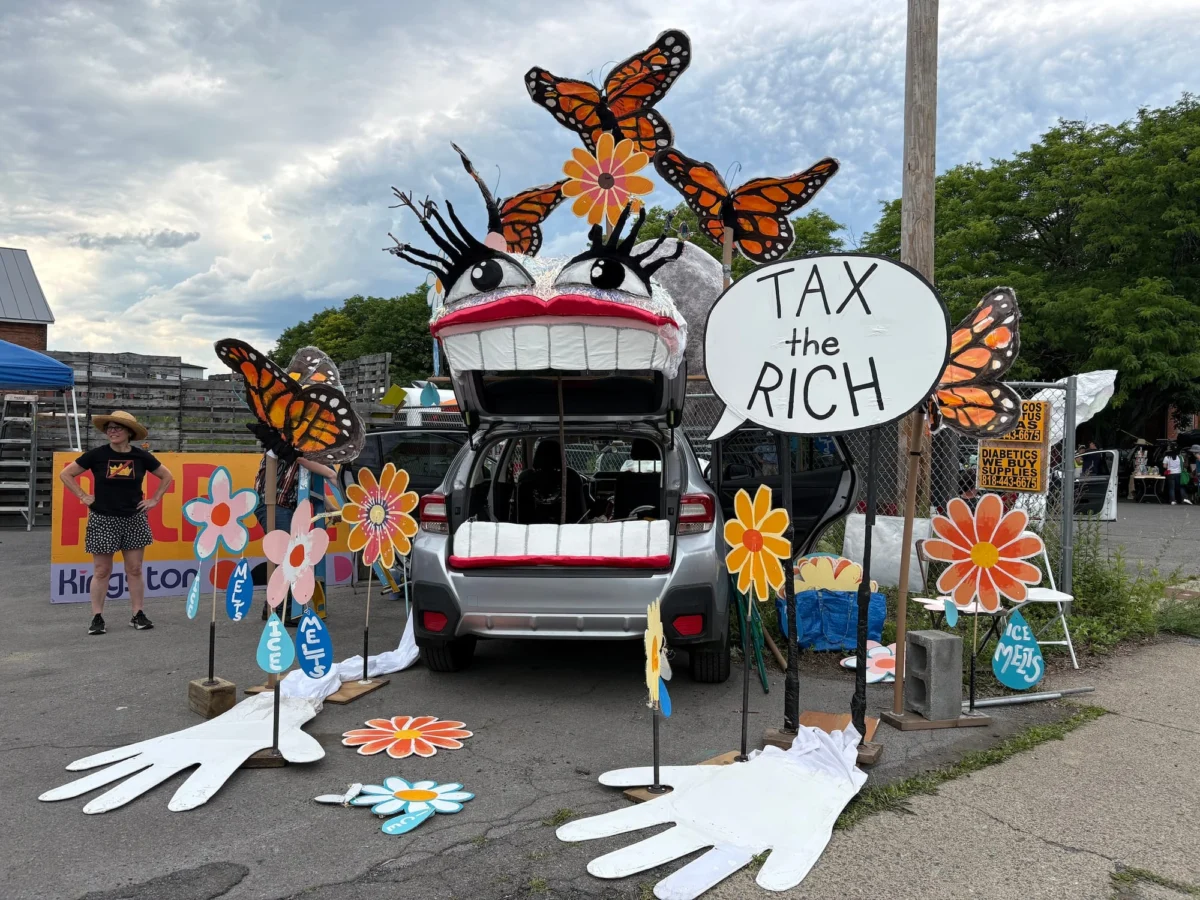
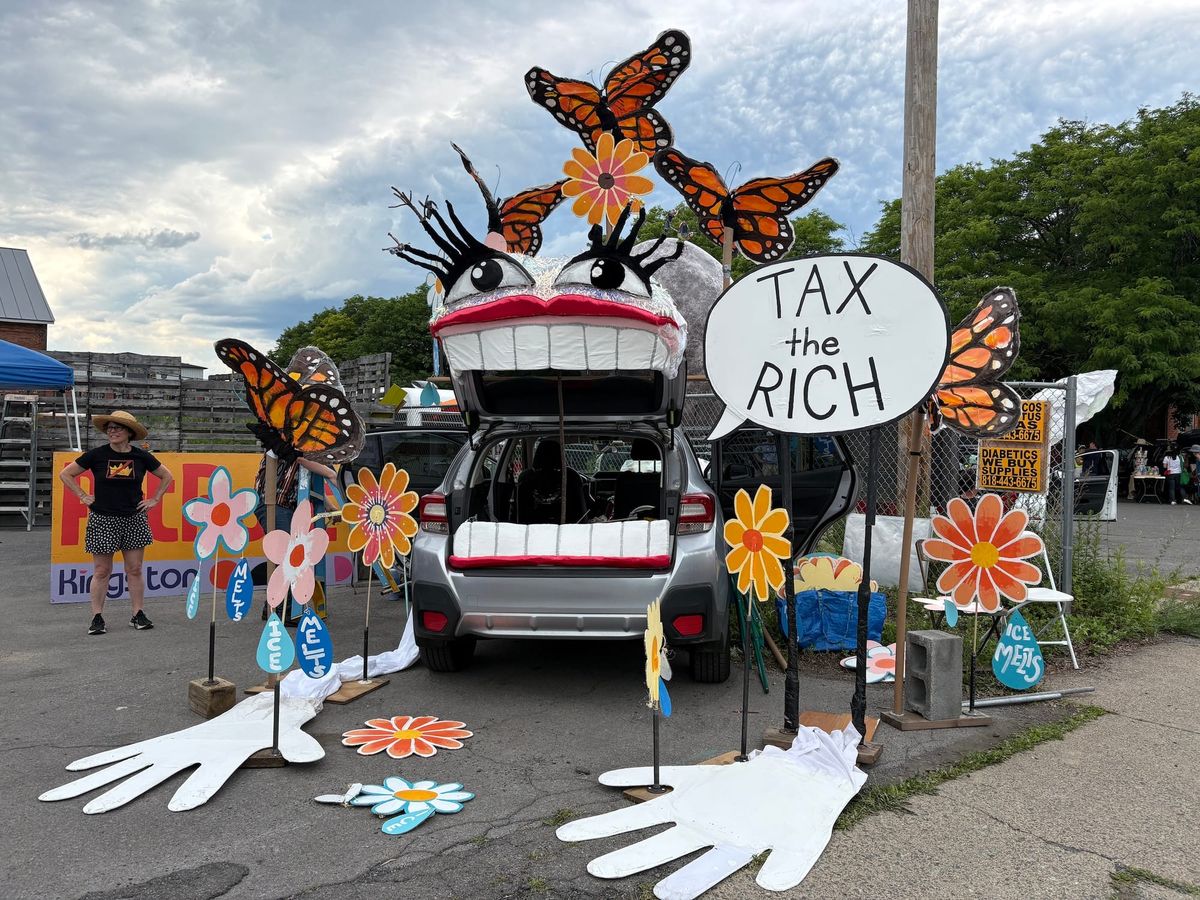
As the weekend progressed, the scale of the event expanded. Saturday and Sunday saw a surge in "pop-up" activity. In Kingston, Julie Peppito transformed the concept of a "trunk show" into a sculptural performance, inviting audiences to view artwork integrated directly into the body of her vehicle. This "part-tailgate, part-trunk show" approach typified the weekend’s ethos: mobility, accessibility, and the dismantling of the barrier between the viewer and the creative process.
By Sunday, the event had evolved into a mosaic of workshops, site-specific performances, and open-studio tours. The geography of the weekend encouraged a "choose-your-own-adventure" style of engagement, where the travel between sites—navigating the rolling hills of the Hudson Valley—became as much a part of the aesthetic experience as the art itself.
Supporting Data: Mapping the Ecosystem
The scale of the 2026 Upstate Art Weekend is indicative of a broader migration pattern within the art world. With over 160 participating entities, the event represents a significant departure from the centralized New York City gallery model.
- Geographic Reach: The event spanned the entire Hudson Valley region, utilizing both natural landscapes and industrial architectural heritage.
- Diverse Methodologies: Installations varied from traditional sculpture and painting to digital media, performance art, and documentary film.
- Sustainability and Scope: By utilizing existing spaces—barns, parking lots, and outdoor preserves—the event minimized the carbon footprint associated with constructing temporary, single-use exhibition structures.
These data points reflect a structural shift. The "white cube" is no longer the sole arbiter of value. Instead, the regional ecosystem—comprising non-profits, independent artists, and local stakeholders—is asserting that "art-adjacent" spaces can hold as much weight as a metropolitan gallery.
Official Responses and Curatorial Intent
Curators and participants alike have voiced a shared commitment to the "outside-the-system" philosophy that defines UAW. Eve Morgenstern’s work with Soon is Now is perhaps the most salient example of this shift. In statements regarding Museum of Fishes & Greens, the focus is consistently on "ecological precarity"—a theme that requires a setting more expansive than a gallery wall.
"The art is not just what is hanging," one organizer noted during the weekend, "it is the environment in which it breathes." This perspective is shared by many of the 160+ organizations involved. The prevailing sentiment is that by moving art out of the museum, the work becomes more approachable, more relevant, and more deeply integrated into the fabric of the community.
Local stakeholders, including municipal leaders and local business owners, have increasingly embraced UAW as an economic and cultural engine. The event provides a platform for small-town venues to command the attention of the regional art press, effectively decentralizing the influence of urban art centers and proving that cultural significance can be generated anywhere.
Implications: The Future of the "Gallery"
The success of the seventh Upstate Art Weekend raises critical questions about the future of art presentation. Are we witnessing the permanent erosion of the "white cube" model?
- Democratization of Space: When art is presented in barns or on the street, the intimidating, exclusive nature of the gallery is stripped away. This is crucial for audience development in rural and semi-rural areas.
- The Environmental Turn: Art is increasingly being used as a tool to discuss climate change. Hosting these discussions in nature-focused settings, like the River Center, adds a layer of authenticity to the work that a sterile gallery cannot replicate.
- Community-Led Infrastructure: UAW demonstrates that an arts ecosystem does not require a massive endowment or a permanent brick-and-mortar footprint. It requires connection, collaboration, and a willingness to utilize the existing landscape.
The implications for the art market are equally significant. As collectors and enthusiasts increasingly look for "experiences" rather than just static objects, the decentralized model of UAW offers a blueprint for future art fairs and festivals. The event proves that when you remove the velvet rope, you don’t lose the art—you gain a public.
Conclusion
As the sun set on the final day of Upstate Art Weekend, the lingering image was not of a pristine painting on a wall, but of the wind moving through the saris at the River Center—an image that was simultaneously an artwork, a commentary on climate, and a piece of the regional landscape. By refusing to conform to the traditional "white cube," the hundreds of artists involved in this year’s UAW have proven that art is not a thing to be kept in a box, but a vital, living component of the world around us.
In a time when the art world is searching for new ways to remain relevant and sustainable, the Upstate model offers a compelling path forward: one that is as expansive, rugged, and resilient as the landscape that hosts it.
 Neng Nana
 Ali Ikhwan
 Basiran
