

By Trelani Michelle
2025 Craft Archive Fellow, in collaboration with the Center for Craft
Main Facts: The Iron Tapestry of the American South
Walk down the historic streets of Savannah, New Orleans, or Charleston, and you are immediately enveloped by an unspoken language cast in iron. Elaborate gates, twisting stair rails, sturdy window bars, and delicate balcony fences frame the architecture of the American South. For generations, these metalworks have been admired primarily for their aesthetic contributions to antebellum and Victorian streetscapes. Yet beneath the black paint, the rust, and the decorative flourishes lies a deeper, enduring narrative—one written not with ink, but with fire, hammer, and anvil.
Blacksmiths across the American South have long embedded West African symbolism, cosmological beliefs, and cultural motifs into their ironwork. Far from being mere decorative patterns adopted from European pattern books, these designs serve as silent testaments to an unbroken lineage of memory, resilience, and resistance.
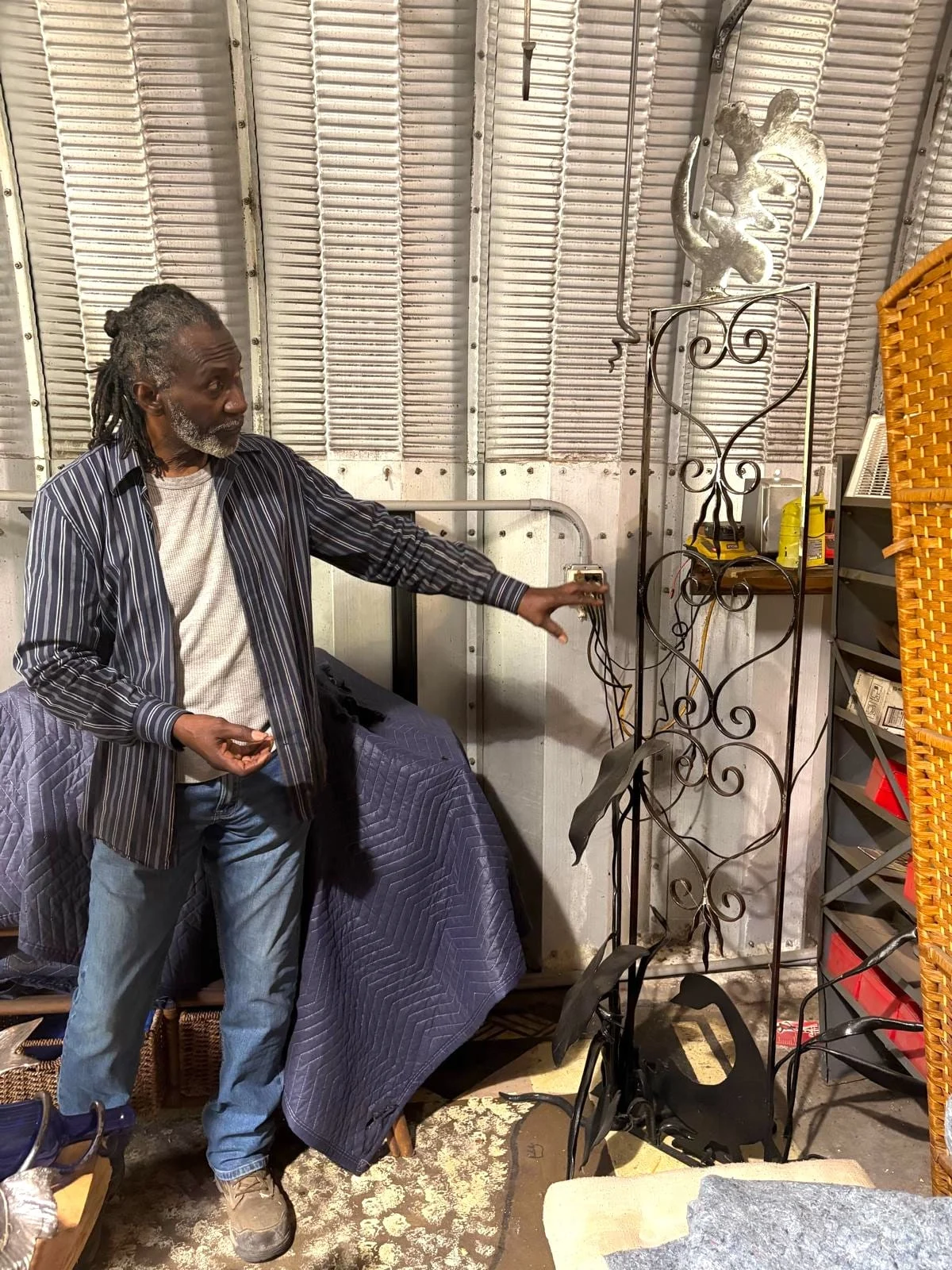
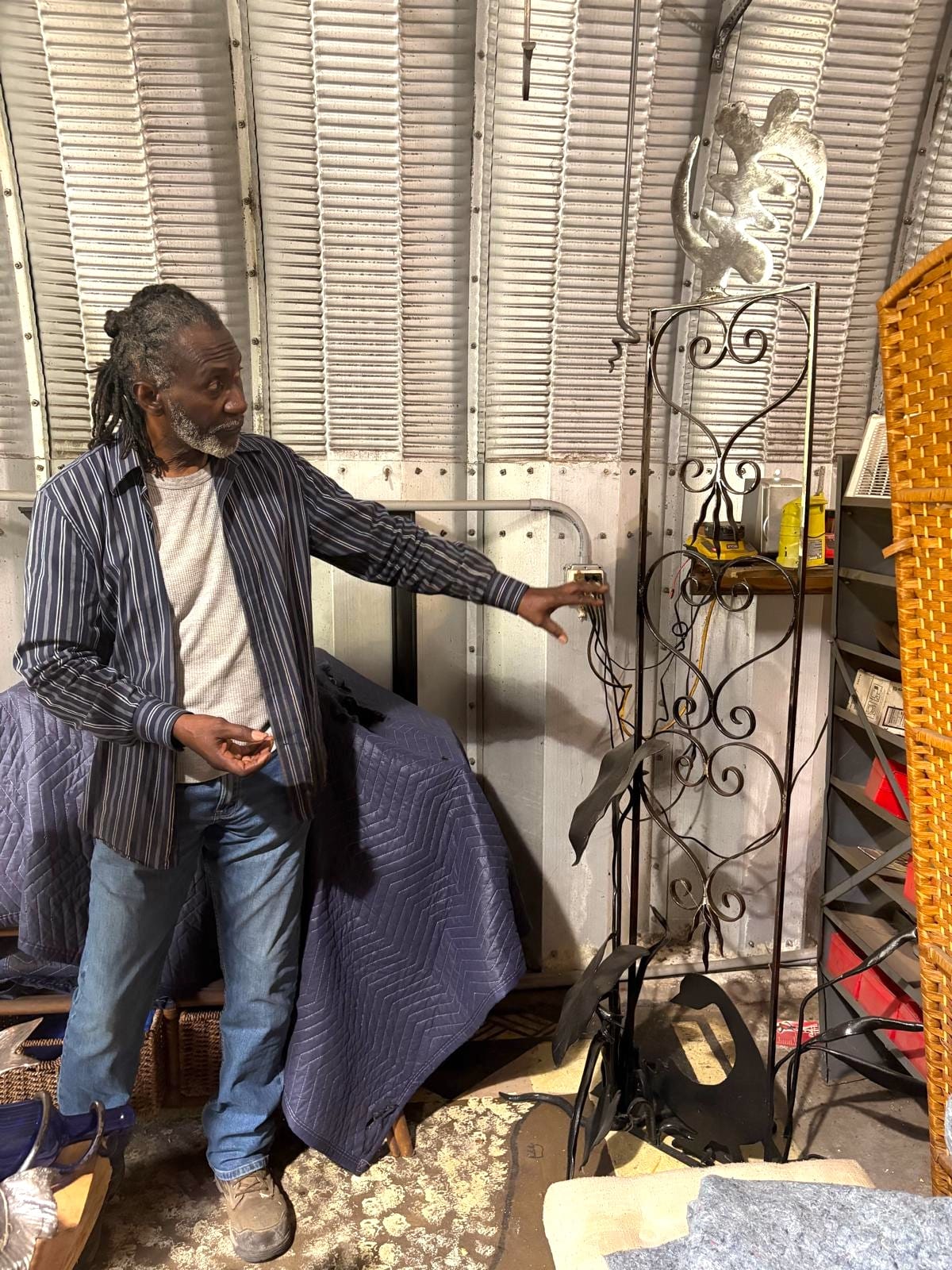
At the center of this visual vocabulary is the Sankofa—an Adinkra symbol originating from the Akan people of West Africa. Translating roughly to "go back and fetch it," the Sankofa is an exhortation to look to the past to retrieve what has been left behind, using historical wisdom to navigate the present and shape the future. Often depicted as a stylized heart with inward-spiraling coils or as a mythical bird turning its head backward to pluck an egg from its spine, the Sankofa appears with astonishing regularity in Southern ironwork.
Whether integrated into the scrollwork of a New Orleans balcony or standing guard over a Savannah courtyard, these symbols are proof that the craft of blacksmithing evolved dynamically with every hand that held the hammer. They represent a sophisticated transatlantic dialogue that survived the brutal disruptions of the transatlantic slave trade and the systemic erasures of the Jim Crow era.
Chronology: From West African Forges to Southern Plantations
To understand how West African symbols traveled to the American South, one must trace a complex historical arc defined by forced migration, forced labor, and clandestine cultural retention.
Pre-Colonial Roots in West Africa
Long before European contact, West Africa boasted a rich, highly sophisticated iron-working tradition. Societies such as the Yoruba, the Mande, and the Akan viewed blacksmiths not merely as laborers, but as spiritual intermediaries, culture-keepers, and metallurgists of immense power. The mastery of fire and ore was closely tied to cosmological views, where patterns and symbols carried profound protective, spiritual, and communal meanings.
The Transatlantic Era and Enslaved Labor
During the 18th and 19th centuries, European enslavers systematically targeted regions of West Africa—frequently referred to by slave traders as the "Rice Coast"—specifically because the local populations possessed advanced agricultural and metallurgical expertise. Enslaved Africans brought to the American South were immediately put to work constructing the infrastructure of the plantation economy.
Blacksmiths were among the most critical artisans in the slave labor system. They forged tools for agriculture, architectural hardware for grand homes, and structural components for industrial enterprises. While Southern plantation records frequently whitewashed or minimized the identities of these skilled laborers, listing them only as nameless property on inventories, these artisans were quietly preserving their heritage. Operating under the constant threat of violence, they coded their worldviews into the very gates and fences they were forced to build.
Reconstruction to the 20th Century
Following the abolition of slavery, Black blacksmiths transitioned from bondage to independence, establishing shops that served as anchors for newly freed communities. Masters of the craft passed down techniques, secrets, and aesthetic traditions through familial apprenticeships.
In the 20th century, legendary figures like Philip Simmons in Charleston, South Carolina, and modern practitioners like Gilbert Walker—often celebrated as the "Gullah Smith" in Savannah, Georgia—kept these traditions alive. They bridged the gap between historical utilitarian ironwork and contemporary fine art, ensuring that the visual language of their ancestors remained visible on the American landscape.
Supporting Data: The Science and Scholarship of Cultural Continuity
Research into African-American blacksmithing has historically faced institutional hurdles. Mainstream art history long attributed Southern ironwork exclusively to European influences, crediting Spanish, French, or British design lineages while ignoring the African hands that physically shaped the metal.

However, recent scholarship, archival recovery projects, and museum exhibitions are challenging these Eurocentric narratives.
The Metal Museum Exhibition (2022)
A watershed moment in this academic shift occurred with the 2022 exhibition curated by Dr. Earnestine Jenkins at the Metal Museum in Memphis, Tennessee. Titled Artisan to Artists: History of African-American Blacksmiths, the exhibition brought together rare historical artifacts, oral histories, and contemporary metalwork to map the profound contributions of Black artisans.
Dr. Jenkins’s research underscored the methodological challenges of tracing non-linear craft histories. "Whenever people migrate," Dr. Jenkins explained during interviews for this project, "naturally, they don’t do the things the same way they did them in their homeland. They have to make adaptations."
Data compiled by craft historians and cultural preservationists highlights several key findings:
- Technological Syncretism: Blacksmiths combined European hammer-and-anvil techniques with West African design sensibilities, creating hybrid forms that were distinctly Southern yet fundamentally African in spirit.
- Geographic Concentration: The highest concentrations of African-influenced ironwork in the United States are found in port cities with deep historical ties to the transatlantic trade, particularly Charleston, Savannah, and New Orleans.
- Symbolic Survival: Adinkra symbols, cosmograms (such as the Bakongo Yowa cross), and protective apotropaic marks appear consistently across centuries of Black-crafted architectural metalwork, proving that these motifs were intentionally preserved rather than accidentally replicated.
Official Responses: Preserving the Craft and Honoring the Artisans
As awareness of these hidden histories grows, cultural institutions, academic fellows, and master craftspeople are stepping forward to formalize the preservation of Black blacksmithing legacies.
The Center for Craft, through initiatives like the Craft Archive Fellows program, has actively funded research into underrepresented craft histories. By supporting scholars, oral historians, and artists like Trelani Michelle, these institutions are working to correct historical omissions in American design archives.
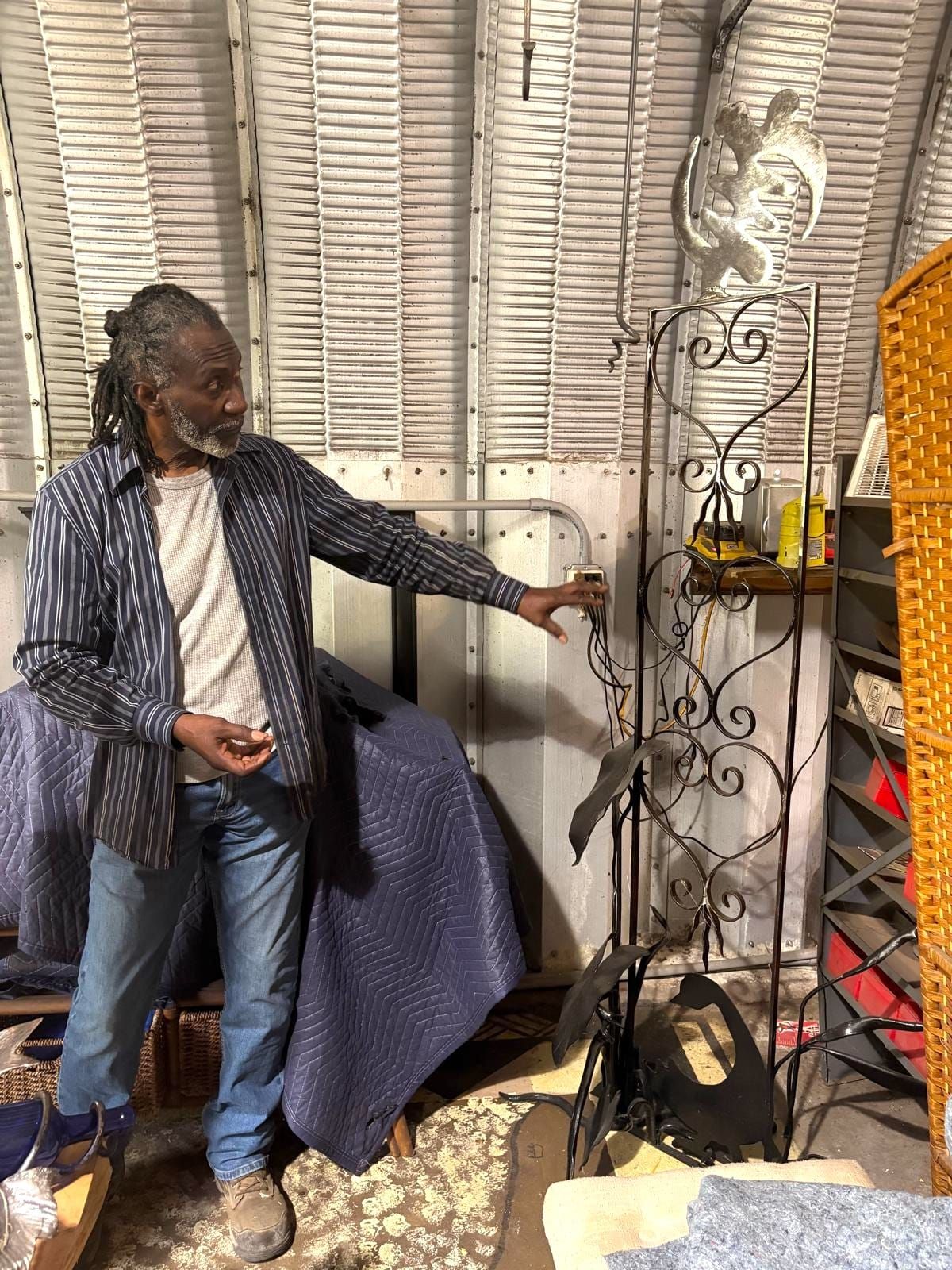
Master blacksmith Gilbert Walker, working from his historic forge in Savannah, continues to educate the public on the deep cultural roots of his trade. Interviewed about his work incorporating the Sankofa and other traditional motifs, Walker emphasizes that the forge is a classroom. "When you strike iron, you aren’t just shaping metal; you’re echoing the rhythms of the people who came before you," Walker notes. "The hammer remembers what the history books tried to forget."
Museum directors and heritage preservation societies in Charleston and New Orleans have also expanded their walking tours and permanent exhibits. Sites such as the Avery Research Center for African American History and Culture in Charleston now prominently feature the hand-drawn nameplates and personal tools of masters like Philip Simmons, ensuring that their names are honored alongside their physical creations.
Implications: Re-reading the American Landscape
The recognition of West African symbolism in Southern ironwork carries profound implications for how we understand American material culture, heritage preservation, and identity.
1. Decolonizing the Built Environment
For too long, the architectural beauty of the historic American South has been romanticized through a lens that whitewashes the labor and intellectual contributions of enslaved and marginalized people. Recognizing ironwork as a medium of coded communication forces a radical re-reading of our urban landscapes. A balcony rail in the French Quarter or a window bar in downtown Savannah is no longer just a relic of European aesthetic colonization; it is a monument to survival, autonomy, and transatlantic memory.
2. Redefining Cultural Continuity
As Dr. Earnestine Jenkins noted, cultural continuity is not a rigid museum specimen trapped in amber; it is dynamic, fluid, and adaptive. The evolution of the Sankofa—blending with local flora, fauna, and European motifs like the fleur-de-lis—demonstrates how diasporic communities maintain their core identity while navigating new environments. It challenges scholars to look beyond linear timelines and appreciate how cultural knowledge travels through practice, apprenticeship, and muscle memory.
3. Empowering Contemporary Artisans
For contemporary Black metalsmiths and craft artists, this lineage provides a powerful foundation. Knowing that their predecessors encoded resilience and philosophy into structural ironwork offers inspiration for modern artistic expression. The hammer remains a tool of reclamation—a way to "go back and fetch" the stories of the past to forge a more inclusive, accurate, and richly textured understanding of American history.
 Muslim
 Evan Lee Salim
 Jia Lissa
