

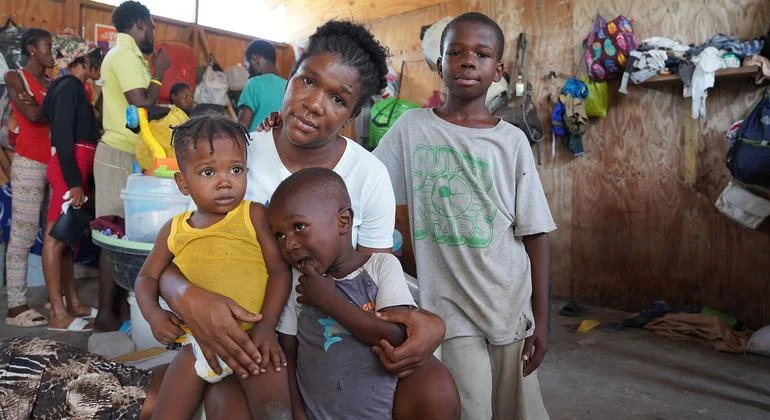
Executive Summary: A Silent Emergency
Haiti is currently grappling with one of the most severe humanitarian crises in its modern history, as an escalating cycle of gang violence, forced displacement, and economic collapse converges to create a catastrophic malnutrition emergency. A comprehensive assessment released by the Haitian Ministry of Public Health and Population, in collaboration with UNICEF, the Food and Agriculture Organization (FAO), and the World Food Programme (WFP), paints a harrowing picture of a nation where the most vulnerable—children and expectant mothers—are paying the highest price for systemic instability.
Current projections indicate that over a quarter of a million children are at risk of acute malnutrition. This is not merely a statistical anomaly but a developmental disaster that threatens to permanently impair the physical and cognitive futures of an entire generation. As the security situation continues to deteriorate, the ability of humanitarian agencies to provide life-saving interventions is being tested to its breaking point.
The Chronology of Collapse: How Haiti Reached the Tipping Point
The current nutritional crisis is the culmination of years of institutional erosion and the rapid expansion of armed groups. To understand the gravity of the situation, one must look at the timeline of the recent descent:
- Pre-2024: Long-standing socio-political instability and repeated natural disasters left Haiti’s agricultural infrastructure fragile and its healthcare system chronically underfunded.
- Early to Mid-2025: An escalation in gang violence across the Port-au-Prince metropolitan area led to the widespread closure of schools and health centers, effectively cutting off thousands from regular nutrition programs.
- May 2026: Official data confirms that 1.47 million people are internally displaced. These families, having fled their homes, find themselves in makeshift camps with little to no access to clean water, sanitation, or stable food sources.
- December 2026 – May 2027 (Projected): Analysts warn that the upcoming six-month window will be the most dangerous period for the population. As food stocks dwindle and violence persists, 29 municipalities are expected to hit “Serious” levels of acute malnutrition, with Cite Soleil and Cabaret entering a “Critical” (Phase 4) state.
Supporting Data: The Anatomy of the Malnutrition Crisis
The numbers provided by the humanitarian assessment are stark, revealing the scale of the intervention required to prevent a surge in preventable mortality.
The Breakdown of Need
- Severe Acute Malnutrition (SAM): 93,873 children. These individuals require immediate, life-saving therapeutic care to survive.
- Moderate Acute Malnutrition (MAM): 159,852 children. Without intervention, these children are at high risk of progressing to severe malnutrition, which drastically increases the risk of mortality from common childhood illnesses like pneumonia or diarrhea.
- Maternal Health: 25,750 pregnant and breastfeeding women are categorized as requiring urgent nutritional support. Maternal malnutrition directly contributes to low birth weight, stunted development in infants, and a weakened immune system for both mother and child.
Regional Vulnerabilities
The classification of municipalities using the IPC (Integrated Food Security Phase Classification) acute malnutrition scale highlights the geographic concentration of the crisis. While the entire country is struggling, the urban centers of Cite Soleil and Cabaret are identified as the "epicenters of suffering." In these areas, the presence of armed gangs has effectively created a blockade on the distribution of humanitarian aid, leaving families trapped in a cycle of hunger.
Official Responses: A Call for Unified Global Action
In the wake of these findings, the leaders of the primary UN agencies involved have issued a unified call for immediate, flexible, and robust international support.
The UNICEF Perspective: Early Intervention
Geeta Narayan, UNICEF Representative to Haiti, emphasized that the statistics represent human lives, not just abstract figures. “Behind these figures are children whose lives can change when they receive the right care at the right time,” Narayan stated. She urged stakeholders to move away from reactive aid models and toward a proactive strategy: “Now we must use that evidence to reach children earlier, prevent malnutrition and make sure no child is left without the support they need.”
The FAO Strategy: Strengthening Resilience
Pierre Vauthier, the FAO Representative in Haiti, highlighted that the crisis is as much about food systems as it is about food availability. He argued that international aid must move beyond the delivery of emergency rations to include the protection of local agricultural livelihoods. By supporting local farmers, the FAO believes that Haitian families can be better equipped to withstand future economic and climatic shocks.
The WFP Mandate: Investing in the Future
Lauren Landis, WFP Representative and Country Director, warned that the current path leads to long-term social and economic ruin. She advocated for a holistic approach, which includes investing in school meal programs and comprehensive healthcare. For Landis, school meals are not just about nutrition; they are a vital mechanism for keeping children in school and off the streets, providing a semblance of normalcy in a chaotic environment.
Implications: The Long-Term Cost of Inaction
The failure to address the nutritional needs of Haiti’s population will have ramifications that extend far beyond the current crisis.
The Developmental Toll
Chronic malnutrition in early childhood is linked to irreversible developmental damage. Stunting—the impaired growth and development that children experience from poor nutrition, repeated infection, and inadequate psychosocial stimulation—will permanently lower the future productivity of the Haitian workforce. This effectively traps the nation in a cycle of poverty that could span generations.
Economic and Social Instability
As the hunger crisis deepens, social unrest is likely to follow. Competition for dwindling resources, such as water and food, often fuels further gang recruitment, as young men and women turn to armed groups as a means of survival. Consequently, the nutritional crisis acts as a threat multiplier, making the security situation harder to resolve and the political environment more volatile.
Humanitarian Access
The most significant hurdle remains the issue of humanitarian access. Even if sufficient therapeutic food supplies were available, the inability to transport these goods through gang-controlled corridors remains a primary obstacle. Donors are being urged to not only provide funding but to use their diplomatic influence to advocate for "humanitarian corridors" that allow aid to reach the most affected municipalities without interference.
The Road Ahead: Recommendations for Urgent Action
To avert the worst-case scenario predicted for early 2027, the coalition of agencies has outlined a multi-pronged approach:
- Expansion of Screening: Establishing decentralized community screening programs to identify malnourished children before they require hospitalization.
- Supply Chain Integrity: Ensuring a continuous, uninterrupted pipeline of ready-to-use therapeutic foods (RUTF) to health centers across the country.
- Water, Sanitation, and Hygiene (WASH): Recognizing that malnutrition cannot be treated in isolation, the UN calls for investment in clean water access to prevent water-borne diseases that exacerbate the effects of hunger.
- Flexible Funding: International donors must provide "unearmarked" or flexible funding, allowing agencies to pivot their resources quickly as the security landscape shifts.
- Protection of Livelihoods: Supporting small-scale farmers through the distribution of seeds, tools, and technical assistance to restore local food production chains.
Conclusion: A Moral Imperative
The situation in Haiti is a stark reminder of the fragility of human security in the face of unchecked violence. As the country approaches the critical period of December 2026 to May 2027, the international community faces a moral imperative to act. The data is clear, the warnings are documented, and the needs are defined. Whether or not Haiti descends further into a state of mass malnutrition will depend entirely on the speed and efficacy of the global response. The lives of nearly 250,000 children hang in the balance, waiting to see if the world will intervene before the next phase of this tragedy becomes irreversible.
 Lina Hope
 Asro
Asro
 Layla Zulfa
