

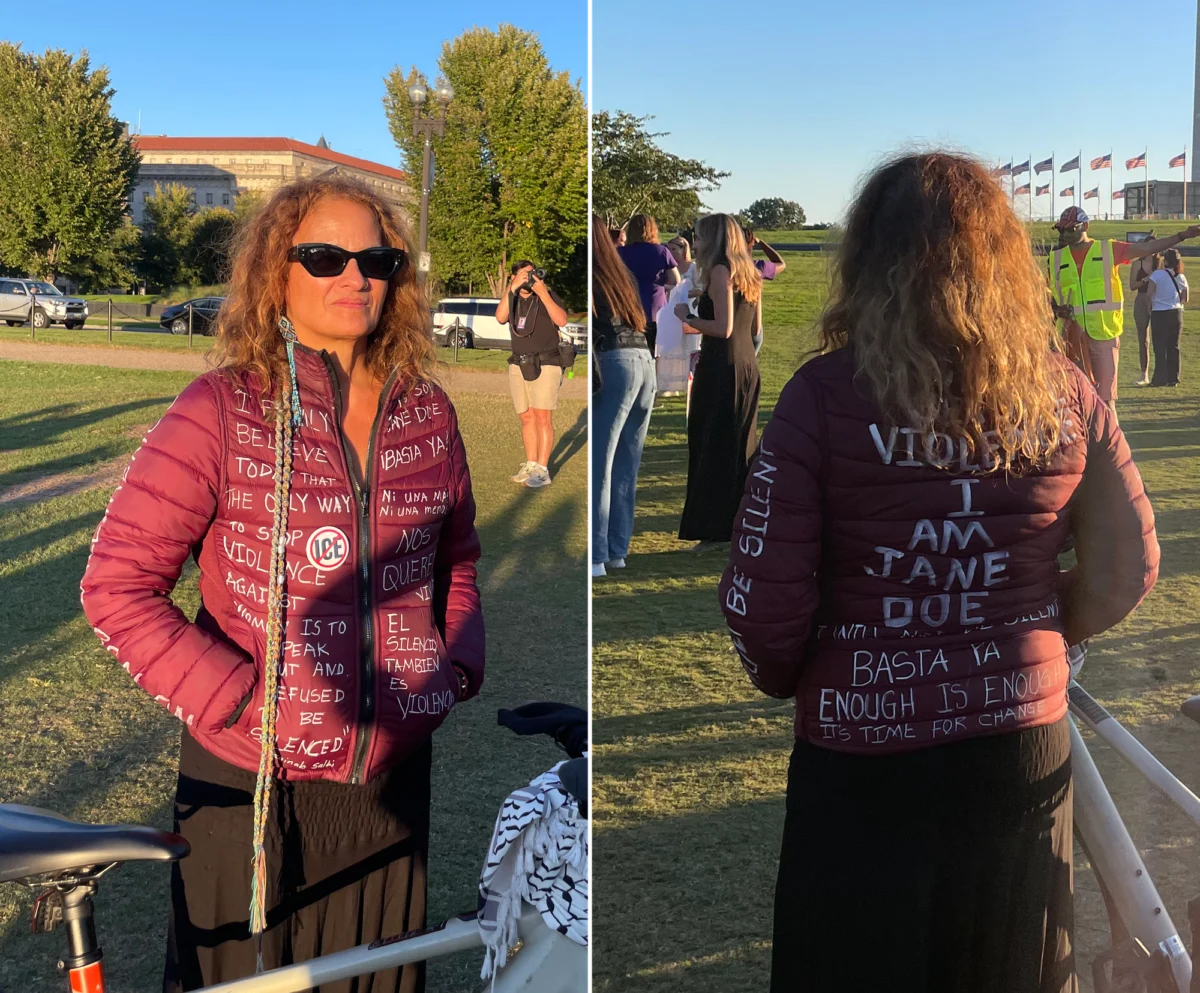
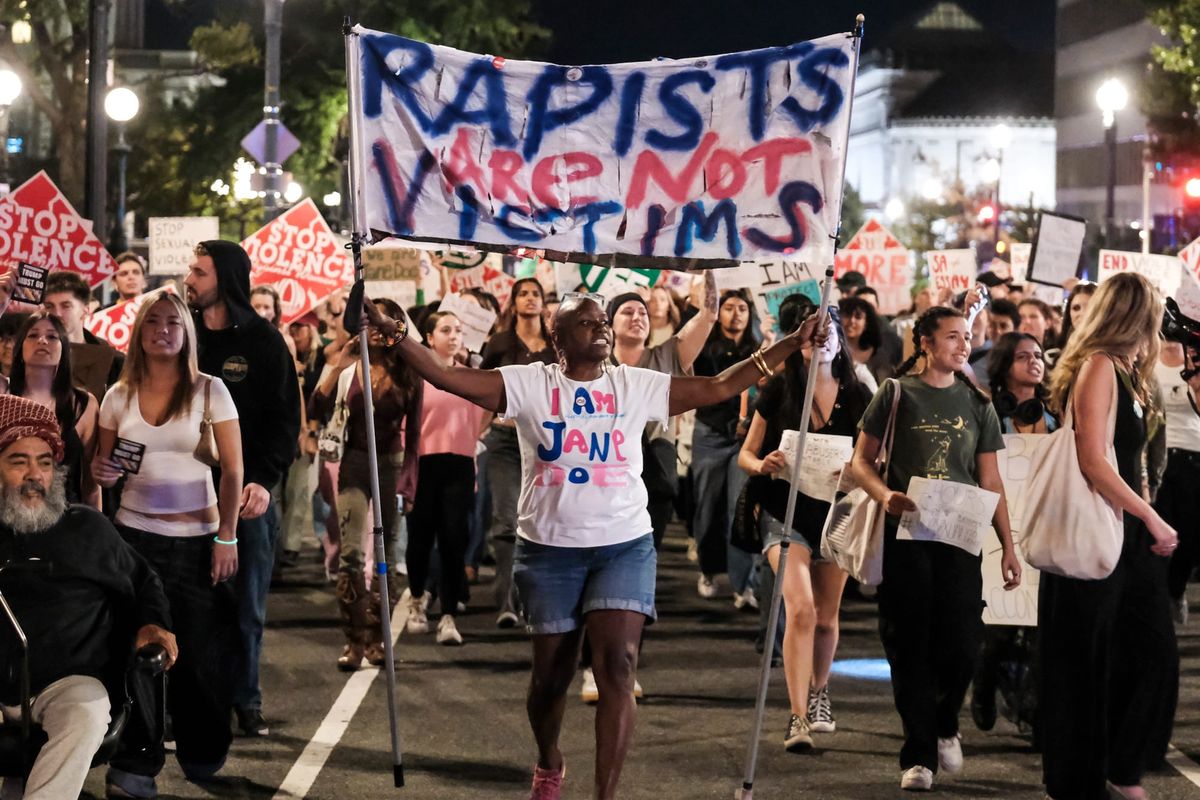
WASHINGTON, DC — On October 8, a nationwide day of action drew thousands of artists, activists, survivors, and community members into the streets for a collective reckoning against institutional complacency regarding sexual violence. From the National Mall in Washington, DC, to Foley Square in Manhattan and the Boston Common, more than a dozen "I Am Jane Doe" demonstrations echoed a singular, unyielding message: systemic protection of abusers must end, stretching "from the frat house to the White House."
The mobilization was galvanized by outrage over the handling of a high-profile gang-rape case at Cornell University involving a student now referred to in legal proceedings as Jane Doe. Protesters utilized art, powerful speeches, and direct political action to demand legislative reform, university accountability, and a cultural shift away from the systemic trivialization of sexual assault.
Main Facts
The October 8 National Day of Action was organized primarily in response to the "Cornell 7" case—a severe sexual assault scandal that has sparked nationwide campus protests and renewed legal battles. Two years ago, a female Cornell University student reported that she had been gang-raped by seven male students, an ordeal the perpetrators allegedly broadcast within a fraternity Snapchat group.
Cornell’s initial disciplinary response drew fierce condemnation: only two of the accused men were expelled, while the remaining five were permitted to remain enrolled on the condition that they write reflective essays. In late 2026, two years after the university’s lenient administrative reaction, Jane Doe’s legal team filed a new lawsuit against the institution, citing severe institutional failures, harassment, and threats directed at the survivor.

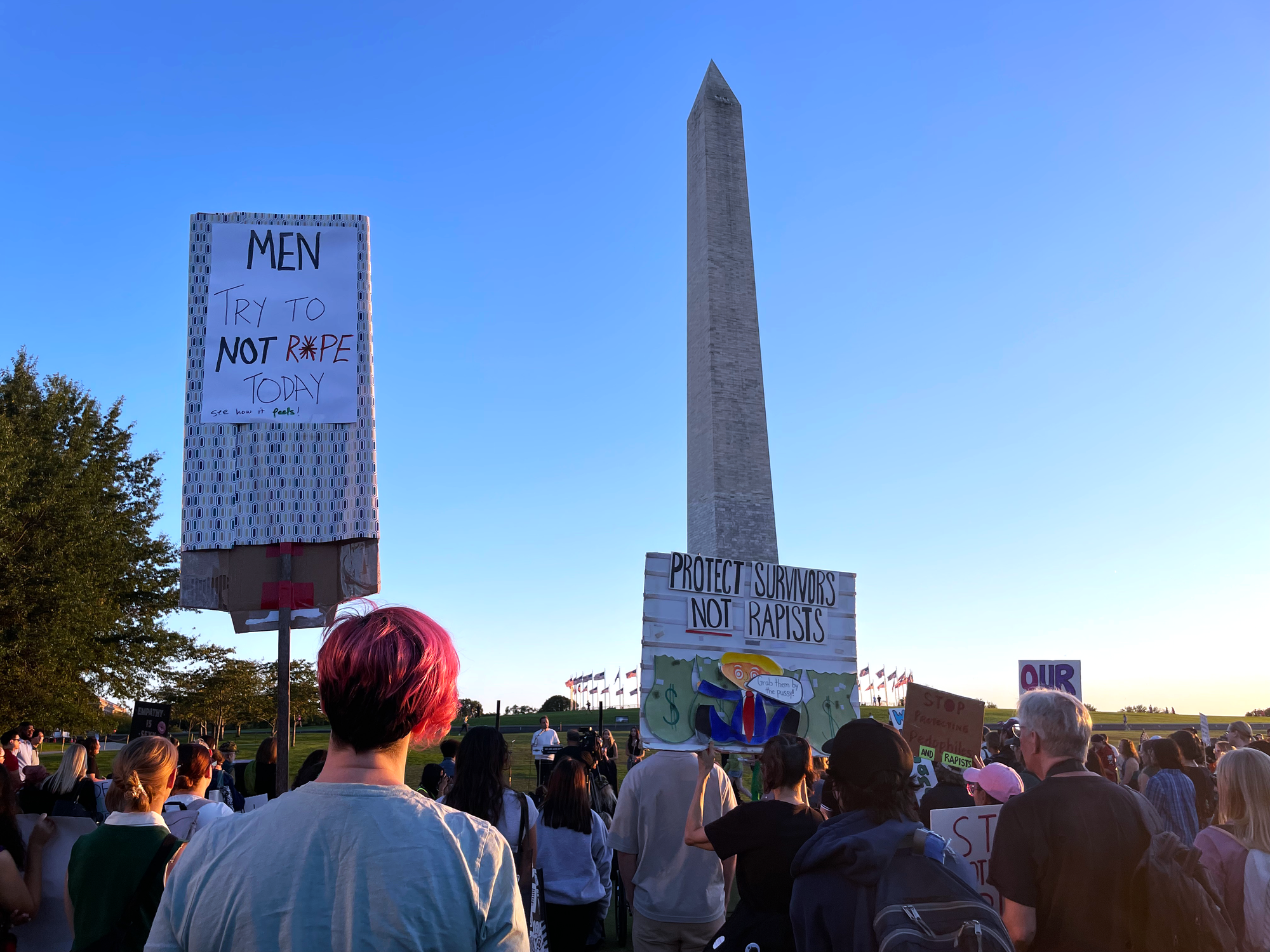
The resulting "I Am Jane Doe" movement quickly evolved beyond campus boundaries, connecting localized anger over Greek-life culture and administrative impunity to national political structures. In Washington, DC, roughly 250 protesters congregated near the Washington Monument, strategically positioned between the obelisk and the White House. Organizers deliberately chose this backdrop to challenge executive leadership and systemic abuses of power at the highest levels of government.
Chronology of Events
The escalation of protests leading up to and during the October 8 Day of Action followed a rapid timeline of public outrage and grassroots organizing:
- Two Years Prior: Jane Doe officially reports the alleged gang rape by seven fraternity members to Cornell University authorities. The subsequent disciplinary action—punishing only two men with expulsion and requiring the remaining five to write essays—sets off simmering frustration within the student body.
- Late September / Early October 2026: Jane Doe’s attorney files a new lawsuit against Cornell University, exposing ongoing administrative shortcomings and triggering renewed media scrutiny.
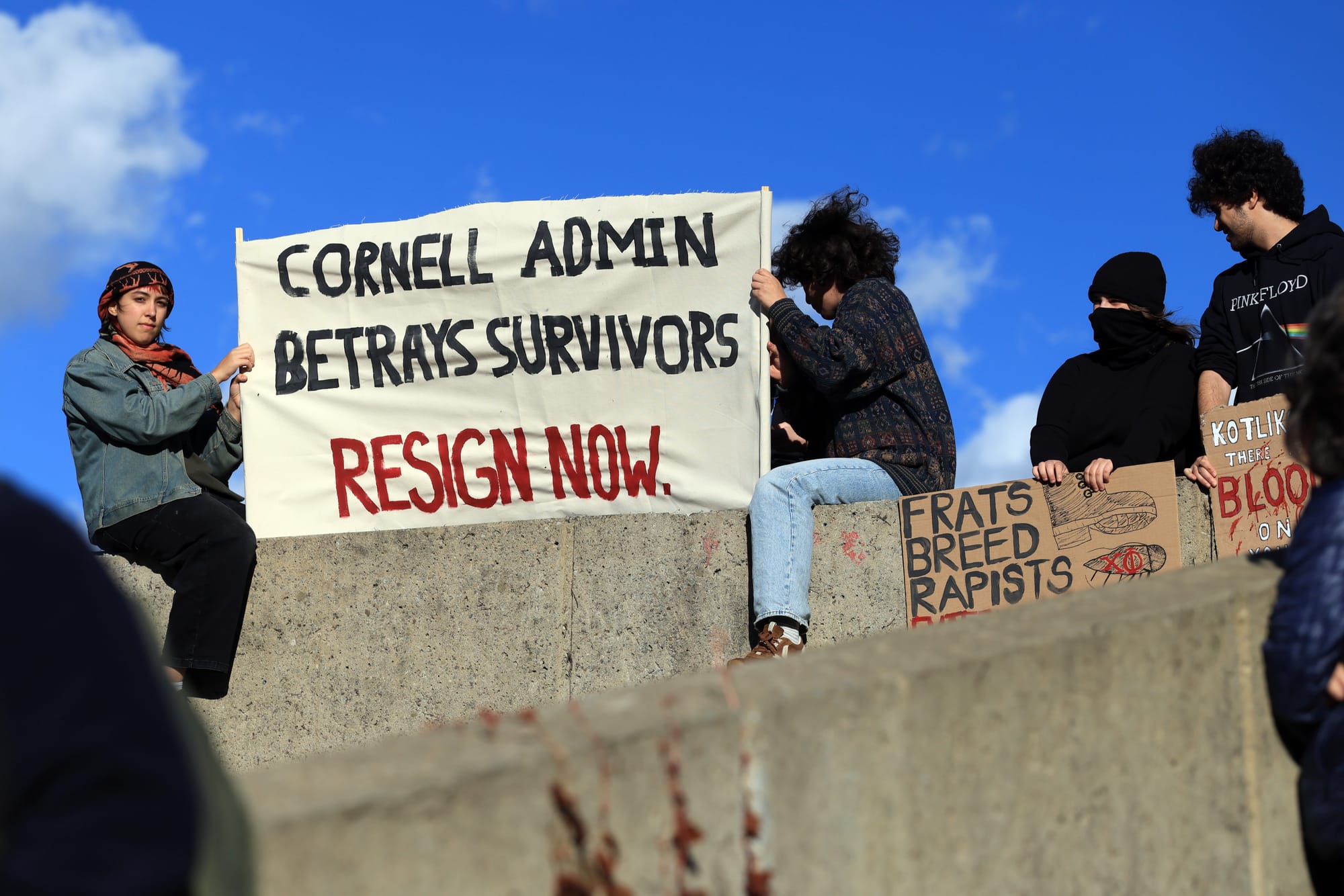
- October 5, 2026: Hundreds of Cornell students stage a massive anti-rape rally directly outside the university administration buildings, denouncing toxic fraternity culture and demanding structural transparency.
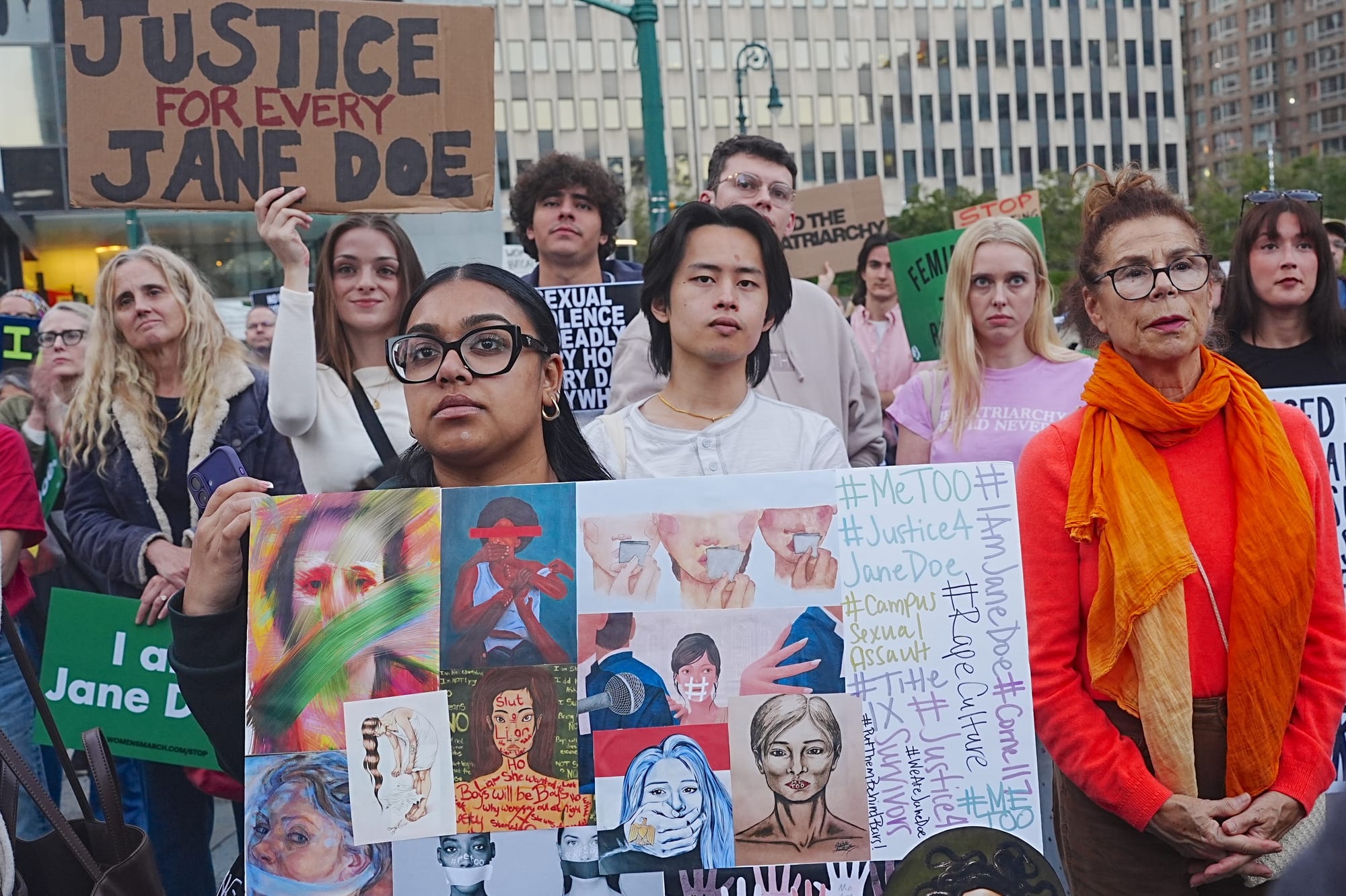
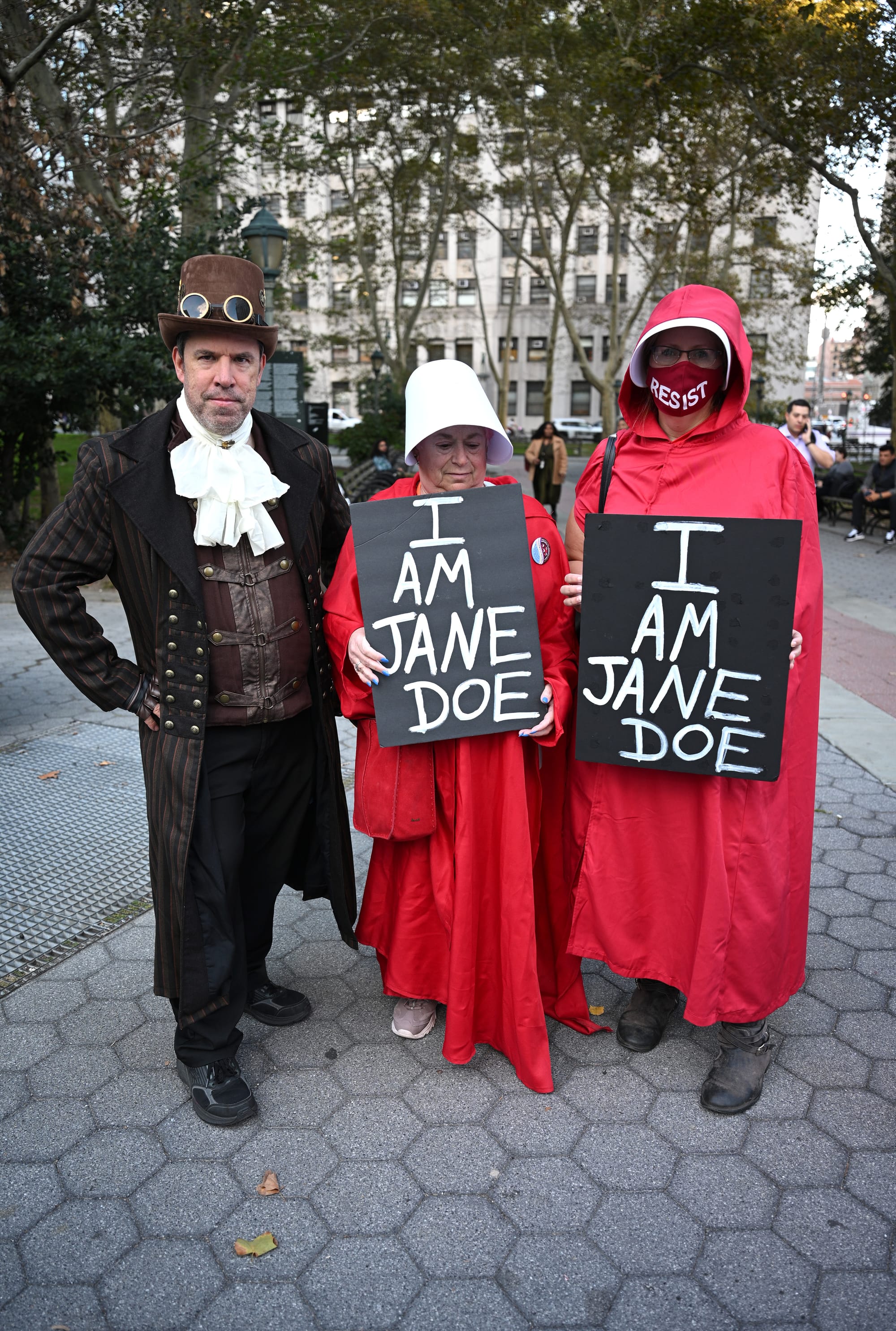
- October 8, 2026: Over a dozen "I Am Jane Doe" demonstrations take place nationwide. In Washington, DC, artists, activists, and prominent speakers gather on the National Mall. Concurrently, rallies unfold in major metropolitan areas, including New York City’s Foley Square—where demonstrators don Handmaid’s Tale attire—and the Boston Common.
- Post-Rally March (October 8): DC protesters march toward the White House, culminating a two-hour event featuring musical performances, survivor testimonies, and calls for sweeping political and institutional change.
Supporting Data and Voices
The rally featured a coalition of high-profile advocates, legal scholars, and survivors who articulated the pervasive nature of institutional failure. Dani Bensky, a prominent survivor and advocate who previously spoke out regarding Jeffrey Epstein, addressed the crowd, declaring, "We are in a moment of reckoning."
The speaker lineup also included Alva Johnson, a former 2016 campaign staffer who publicly filed a lawsuit accusing Donald Trump of sexual assault, and Claire Barnett, a Juris Doctor candidate and president of Advocates Against Sexual Violence at Georgetown Law.
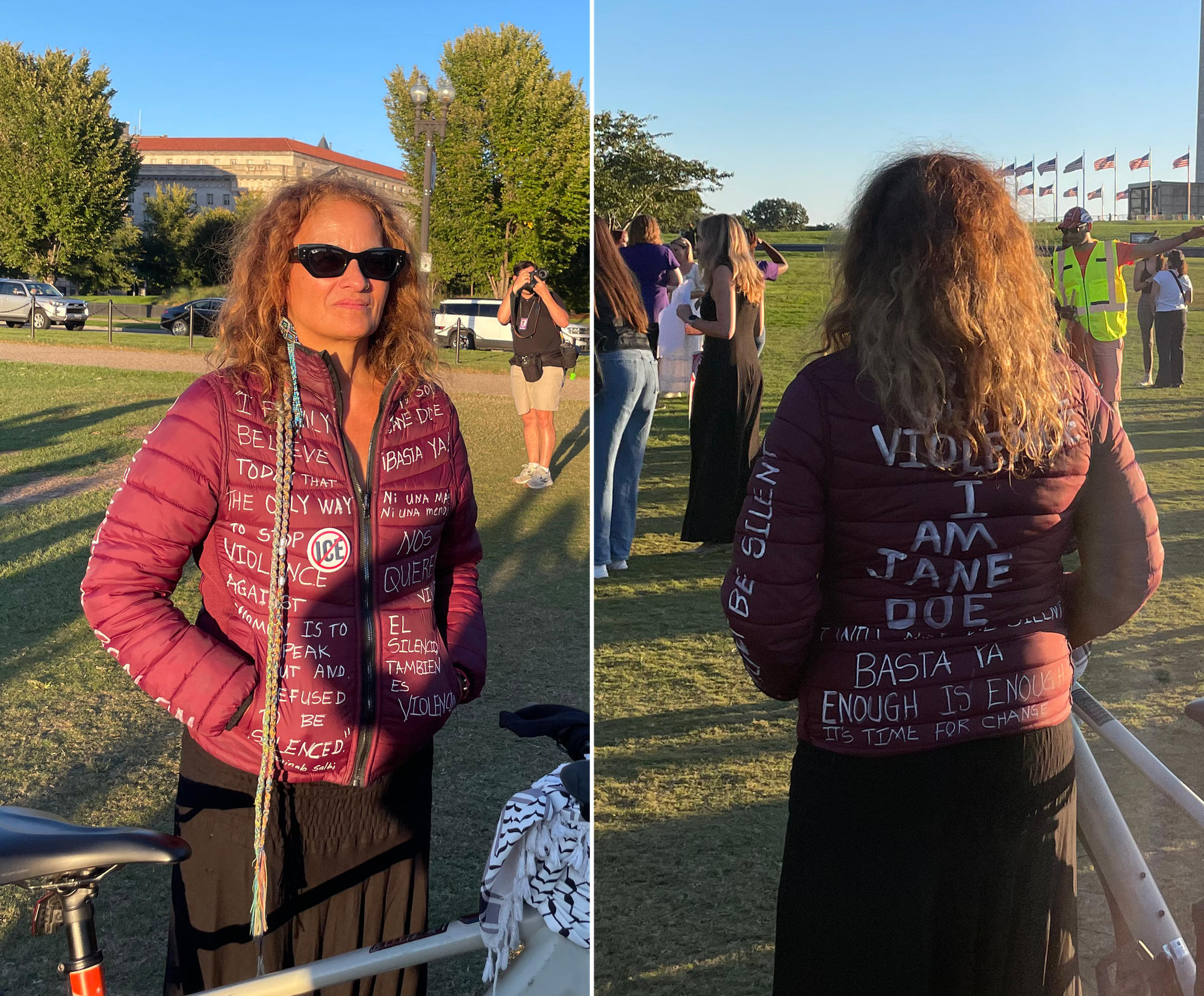
Art and visual demonstration played a central role in the mobilization. Nadine Seiler, an artist and activist widely recognized for her preservation work on the Black Lives Matter memorial fence, carried a dual-sided poster reading "I Am Jane Doe" on one side and "rapists are not victims" on the other. Seiler’s message directly targeted the rhetoric employed by the Cornell 7 and their defenders, who complained that public exposure of the men’s names and photographs severely disrupted their lives.
"I am a victim of sexual assault, and so are many people. Our experiences are important and life-changing," Seiler told Hyperallergic. Rejecting the archaic "boys will be boys" defense, she emphasized that public accountability is a necessary counterweight to institutional secrecy.
Riley Reed, a primary organizer of the DC protest, explained the spatial symbolism of the National Mall rally. "It’s a big statement [that] we will not accept sexual abusers in the White House, and we have one currently in the White House," Reed stated, referencing the multiple historical sexual misconduct allegations leveled against President Trump. "We want to hold the leaders at the top accountable for their actions, and this is a pretty poetic and powerful spot between the Monument and the White House, which are symbols of power."
Official Responses and Institutional Reactions
Universities and political bodies have faced mounting pressure as the fallout from the Cornell 7 case ripples across the higher education landscape. Cornell University’s administration has faced unrelenting criticism from students, faculty, and legal experts for opting for restorative-style writing assignments over criminal referrals or sweeping expulsions for the majority of the accused students.
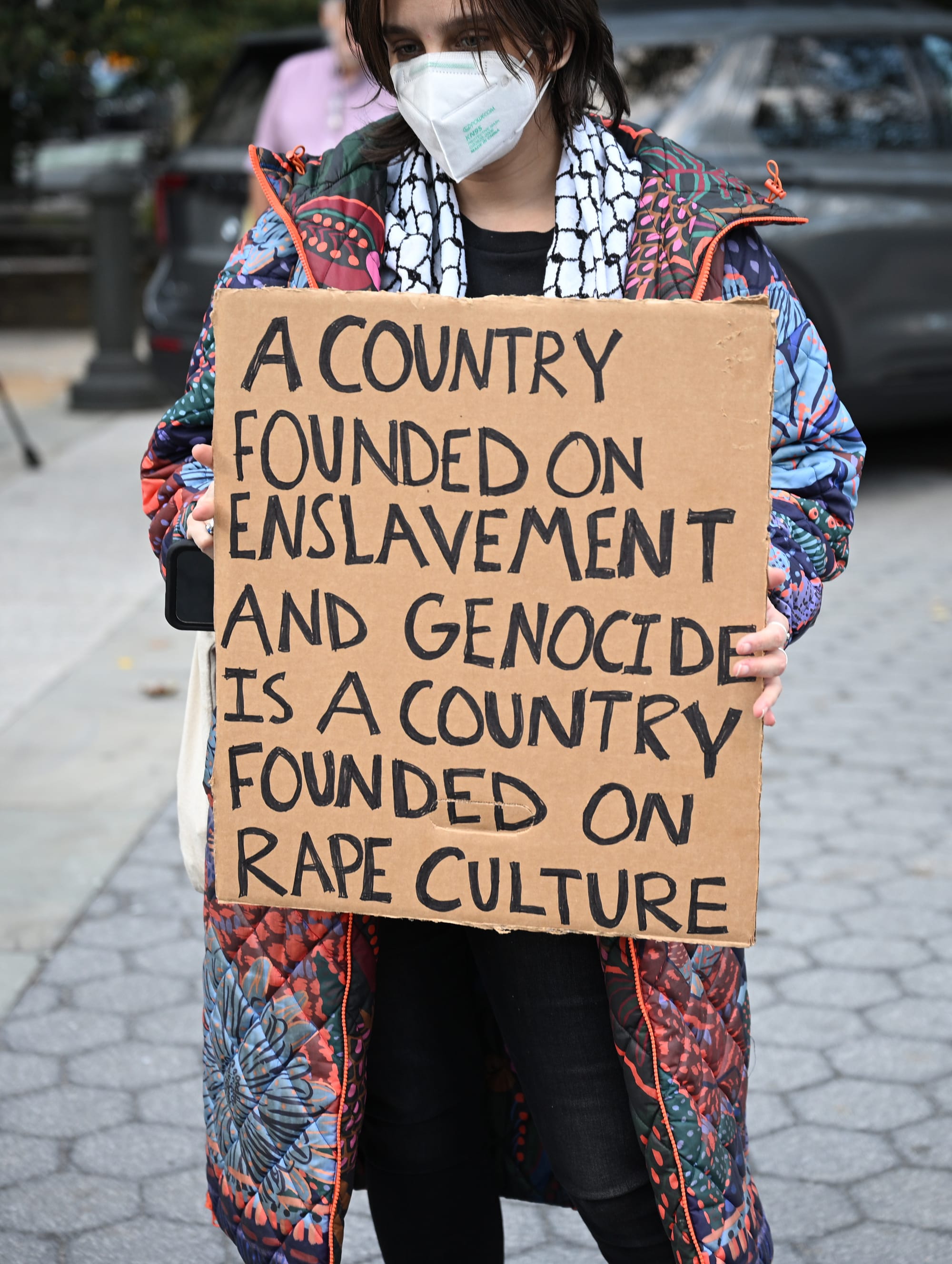
While academic administrators maintain that internal Title IX and student conduct procedures were followed according to institutional guidelines, civil rights attorneys and student activists argue that these internal processes are fundamentally designed to protect elite institutions from liability rather than to secure justice for victims.
On a federal level, the inclusion of speakers like Alva Johnson and the deliberate choice of the White House perimeter as a march destination underscored the movement’s broader indictment of state and national authorities. Critics of current federal policies point to ongoing resistance against strengthening Title IX protections, enhanced campus safety protocols, and the statutory windows required for survivors to seek civil remedies. To date, major political figures and institutional leaders named or implied during the protests have offered varied responses, ranging from blanket denials to defensive silence regarding systemic reform.
Implications for the Future
The October 8 National Day of Action marks a critical inflection point in contemporary movements against sexual violence. By bridging the gap between localized Greek-life misconduct on Ivy League campuses and national political offices, the "I Am Jane Doe" movement has successfully reframed sexual assault not as an isolated interpersonal crime, but as a systemic crisis perpetuated by institutional protectionism.
The legal strategy accompanying the movement—exemplified by Jane Doe’s renewed lawsuit against Cornell—signals a growing willingness among survivors and legal advocates to dismantle the legal shields universities and corporations use to suppress accountability. Furthermore, the integration of artists, cultural workers, and grassroots organizers ensures that the movement maintains high public visibility through powerful iconography, protest art, and theatrical demonstration.
As Alva Johnson reminded the crowd before the march dissolved into the DC streets, the ultimate objective of the mobilization is the eradication of systemic fear: "I am not afraid. They feed off fear, so we starve them with courage." Whether this national day of action translates into lasting legislative reform, stricter federal oversight of university disciplinary boards, and a permanent shift in institutional culture remains to be seen, but the baseline of public expectation has fundamentally shifted.
 Evan Lee Salim
 Jia Lissa
 Iffa Jayyana
