

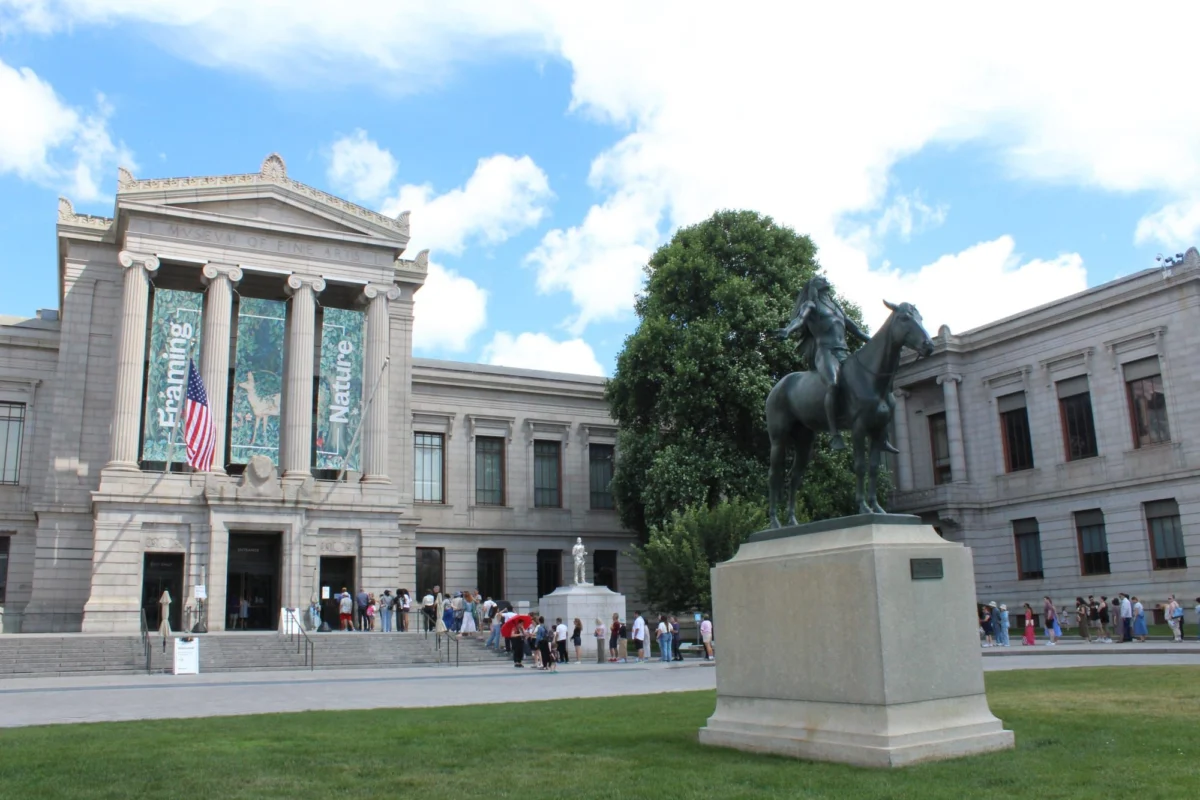
The Museum of Fine Arts (MFA) in Boston has long been a bastion of American history, but its latest undertaking represents a profound shift in how that history is told. On the heels of its annual Juneteenth open house, the museum unveiled Art of the Americas: 1700–1800, a sweeping, ground-level reinstallation that challenges the traditional, often Eurocentric, canon of the colonial period. Featuring over 400 objects, the exhibition is not merely a rearrangement of old inventory; it is a critical, multi-vocal interrogation of what it means to be "American."
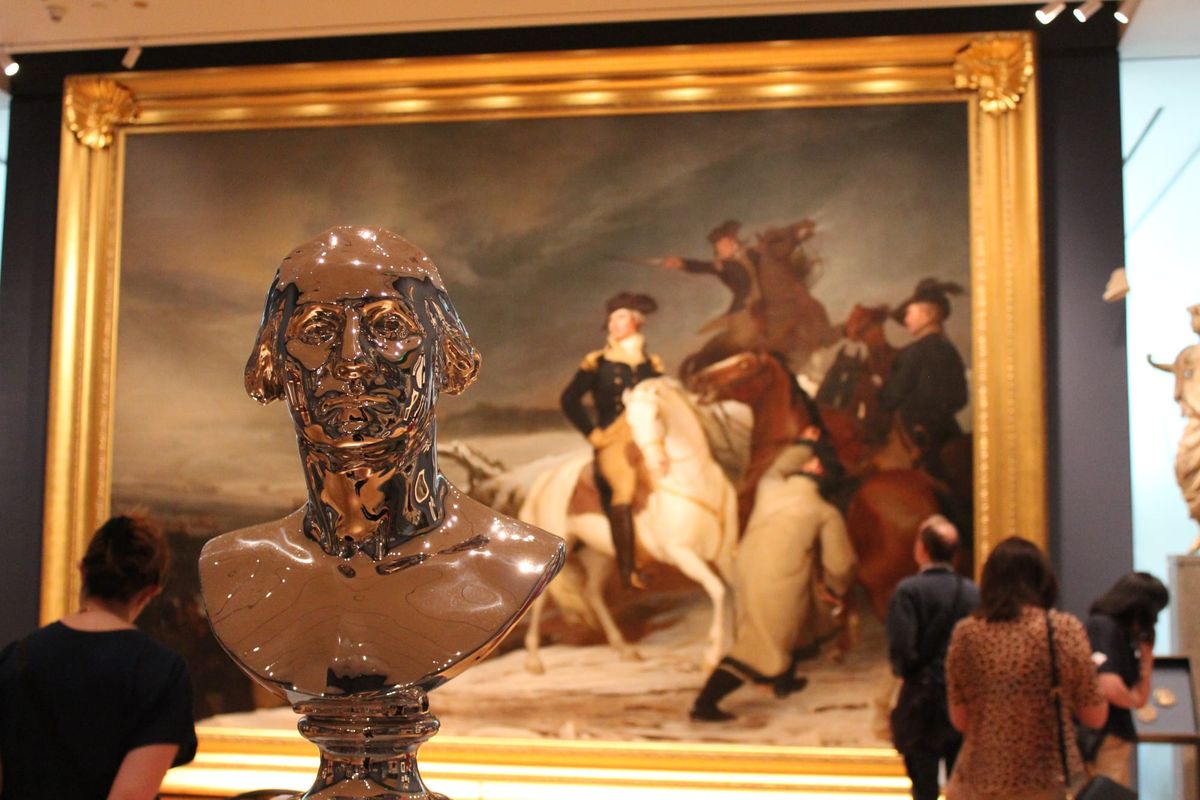
By placing a Mohawk artist’s searing critique of George Washington mere paces from an iconic 19th-century portrait of the first president, and by juxtaposing elite 18th-century silver with a humble, modern-day Dunkin’ cup, the MFA is asserting that the American story is not a static monolith, but a contested, evolving dialogue.
The Core Transformation: A Shift in Perspective
The primary objective of the reinstallation, which was officially celebrated during the "America at 250" event on June 20, was to dismantle the "dated" narratives that have defined the wing for decades. According to Erica Hirshler, the Croll Senior Curator of American Paintings, the previous display failed to reflect the true, interconnected reality of the hemisphere.
"We wanted to tell wider narratives that met our mission for the Art of the Americas, plural, not just the United States," Hirshler explained. By widening the scope to include North, Central, and South America, as well as the Caribbean and global trade partners in East Asia, the museum has moved away from a strictly nationalist lens. The result is a gallery that feels less like a trophy room of colonial power and more like a map of complex human interactions.
The exhibition is divided into eight thematic sections, each designed to provoke thought rather than provide simple answers. The opening section, "Power and Resistance," sets the tone immediately. Here, the curators have deliberately created friction, placing the works of Native artists in direct conversation with those of British-influenced colonial painters. The inclusion of Paul Revere’s "Sons of Liberty Bowl" (1768) alongside a ceramic jar by the enslaved poet and potter David Drake serves as a poignant reminder that the "liberty" championed by the Founding Fathers existed in a reality defined by the systemic subjugation of others.
Chronology: A Three-Year Labor of Inquiry
The current installation is the culmination of a rigorous three-year collaborative process. The journey from conceptualization to execution involved a diverse coalition of curators, scholars, community members, and contemporary artists.
- Year 1 (The Audit): Curators conducted a comprehensive review of the MFA’s existing holdings, identifying gaps in representation and challenging the established historical hierarchies within the collection.
- Year 2 (The Dialogue): The museum engaged in extensive consultations with community members and Indigenous stakeholders to ensure that the narratives being curated were respectful and historically accurate, particularly concerning the treatment of the colonial era.
- Year 3 (The Synthesis): The final year focused on the physical installation and the strategic pairing of objects. During this time, the curators faced external political pressures, including the decision to decline federal funding that came with restrictive compliance requirements, forcing a shift in resource management.
- June 2026 (The Unveiling): The exhibition opened to the public during the Juneteenth holiday, signaling the museum’s commitment to themes of liberation, history, and social justice.
Supporting Data: The Power of Juxtaposition
The success of Art of the Americas lies in its ability to use objects as historical evidence. Three specific pairings illustrate this methodology:
1. The Washington Dialogue
Perhaps the most striking visual anchor in the room is the placement of Thomas Sully’s 1819 painting, The Passage of the Delaware, alongside Alan Michelson’s 2024 sculpture, Hanödaga:yas (Town Destroyer): Reflect. While Sully’s work celebrates the mythic heroism of Washington, Michelson’s silver bust directly addresses the violence of the American project. The title refers to the Seneca name given to Washington, who ordered the destruction of Haudenosaunee towns. By centering this contrast, the exhibition forces the viewer to confront the "complicated legacies that underpin the construction of the American story."

2. The Matrilineal Home Altar
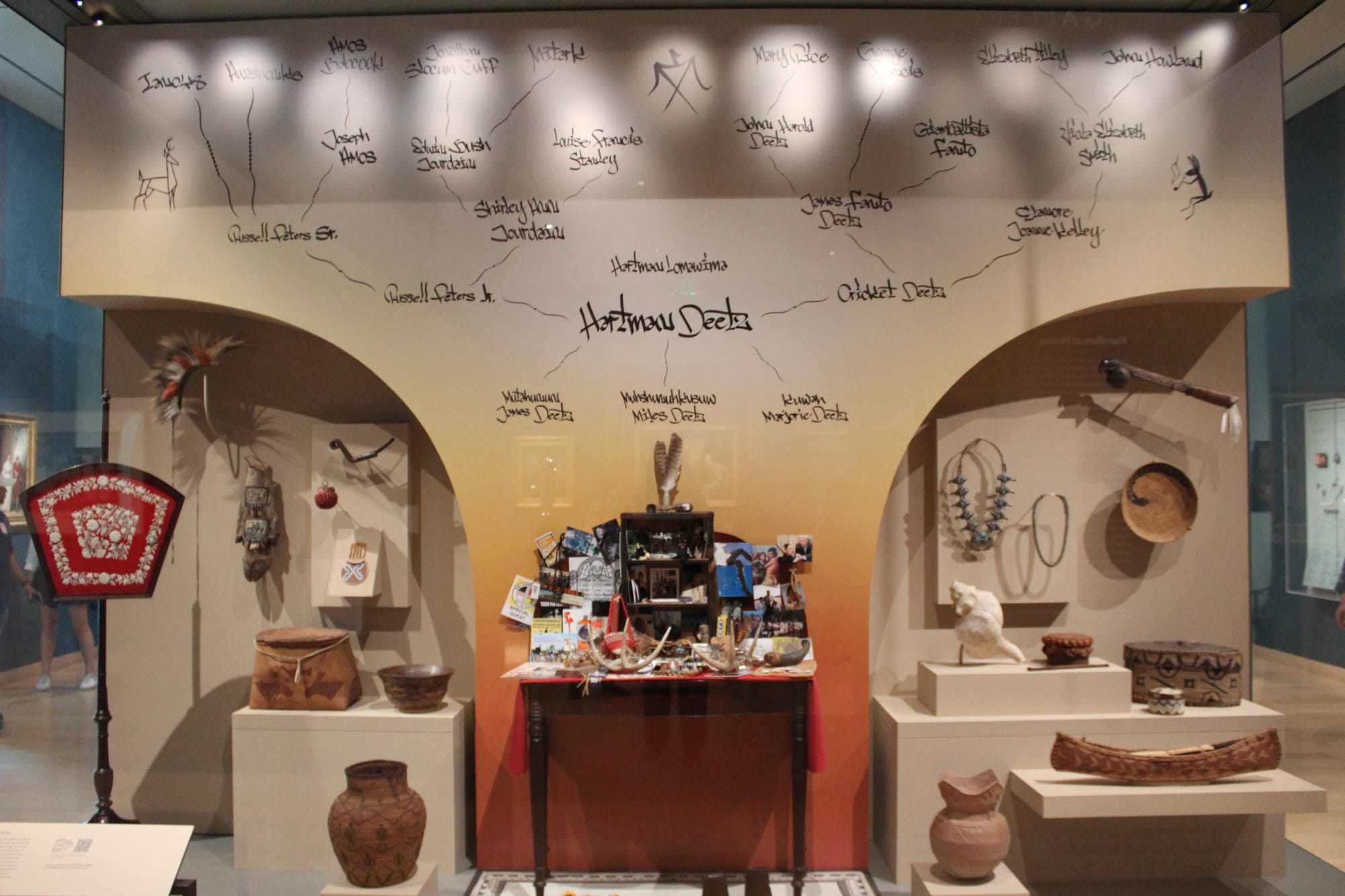
In a powerful display of personal history, artist Hartman Deetz has curated a section that illustrates his own matrilineal family tree. The installation features a replica of a home altar that weaves together Italian, Irish, Wampanoag, and Californian threads. This move shifts the focus from grand, political narratives to the personal, lived experiences of the people who make up the fabric of the Americas.
3. "Something’s Brewing"
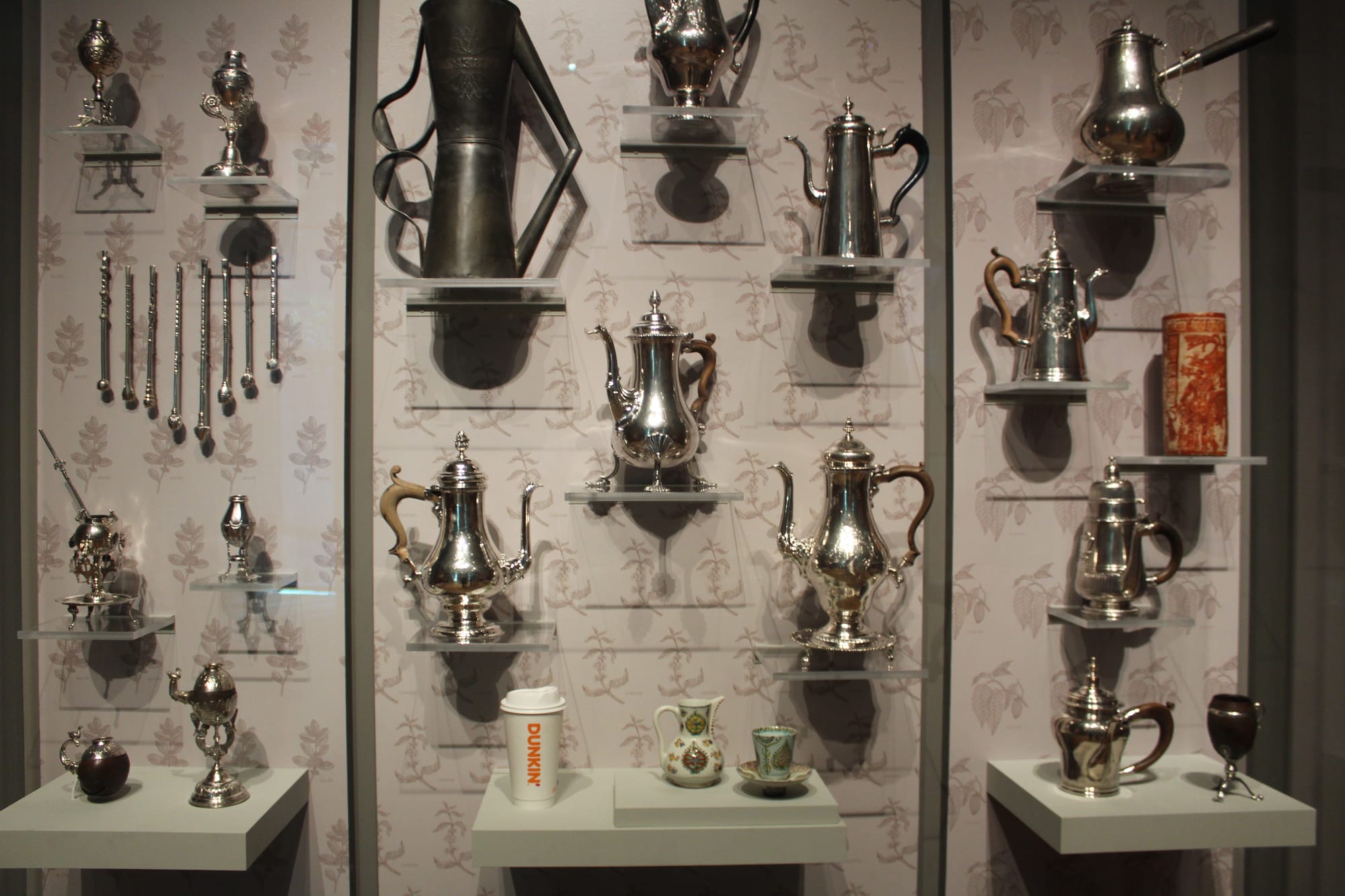
The inclusion of a Dunkin’ cup in a vitrine of 18th-century silver tea vessels is, at first glance, humorous. Yet, as Hirshler noted with a laugh, "Boston runs on Dunkin’." Beyond the local cultural shorthand, the object serves as a bridge between the historical tea trade—which fueled the American Revolution—and the modern consumer habits that define New England life today. It is a reminder that history is not just in books; it is in our cups.
Official Responses and Institutional Integrity
One of the most significant aspects of this exhibition is not what is on the walls, but the administrative struggle that took place behind the scenes. During the planning phase, the MFA was offered a $400,000 grant from the National Endowment for the Humanities (NEH). However, the museum leadership made the historic decision to decline the funds.
Lucía Abramovich Sánchez, associate curator of American Decorative Arts and Sculpture, expressed strong pride in this decision. The refusal stemmed from concerns regarding new, stringent federal compliance mandates that could have restricted the museum’s editorial freedom. In an era where the humanities face increasing political scrutiny, the MFA chose autonomy over financial ease.
"We felt that the risk of having to follow the executive order would impede the work that we wanted to do," Hirshler added. By securing alternative funding, the MFA ensured that the narrative remained untainted by political agendas, maintaining the integrity of the curators’ vision.
Implications: Defining the "American" Identity
The broader implication of this exhibition is a fundamental rethinking of the museum as an institution. The MFA is effectively signaling that it is no longer content to act as a neutral repository of "fine art." Instead, it is positioning itself as a platform for historical revisionism in the best sense of the word—a place where the past is constantly re-examined to better serve the present.
As Sánchez noted, the goal is to help visitors understand that "we are and have been interconnected with each other for a very long time." By presenting a hemispheric view of the Americas, the MFA is helping to dissolve the artificial borders that have long dictated how art history is segmented.
Ultimately, Art of the Americas: 1700–1800 acts as a mirror. It asks visitors to look at the elegant silver, the brutal casta paintings, and the discarded coffee cups, and to ask themselves what parts of the American story they choose to amplify. In doing so, the MFA is not just celebrating 250 years of history; it is inviting the public to participate in the ongoing construction of the next century of the American experience.
The exhibition is currently on view at the Museum of Fine Arts, Boston, and stands as a testament to the fact that when institutions are willing to risk their comfort for the sake of truth, the results are as profound as they are necessary.
 Basiran
 Muslim
 Evan Lee Salim
