

By [Your Name/Journalistic Staff]
In the landscape of American public memory, few icons hold as much weight as the Statue of Liberty. Standing in New York Harbor, she is frequently invoked as an immutable pillar of democracy—a frozen, copper-clad guarantee of “freedom, inspiration, and national unity.” However, in July 2025, a high-profile clash between acclaimed portraitist Amy Sherald and the Smithsonian Institution revealed just how volatile these symbols remain. When Sherald canceled the National Portrait Gallery stop of her solo exhibition, American Sublime, she ignited a firestorm that transcended the art world, forcing a national conversation about who is permitted to claim the “American spirit” and what that spirit actually represents.
The Catalyst: A Portrait of Contention
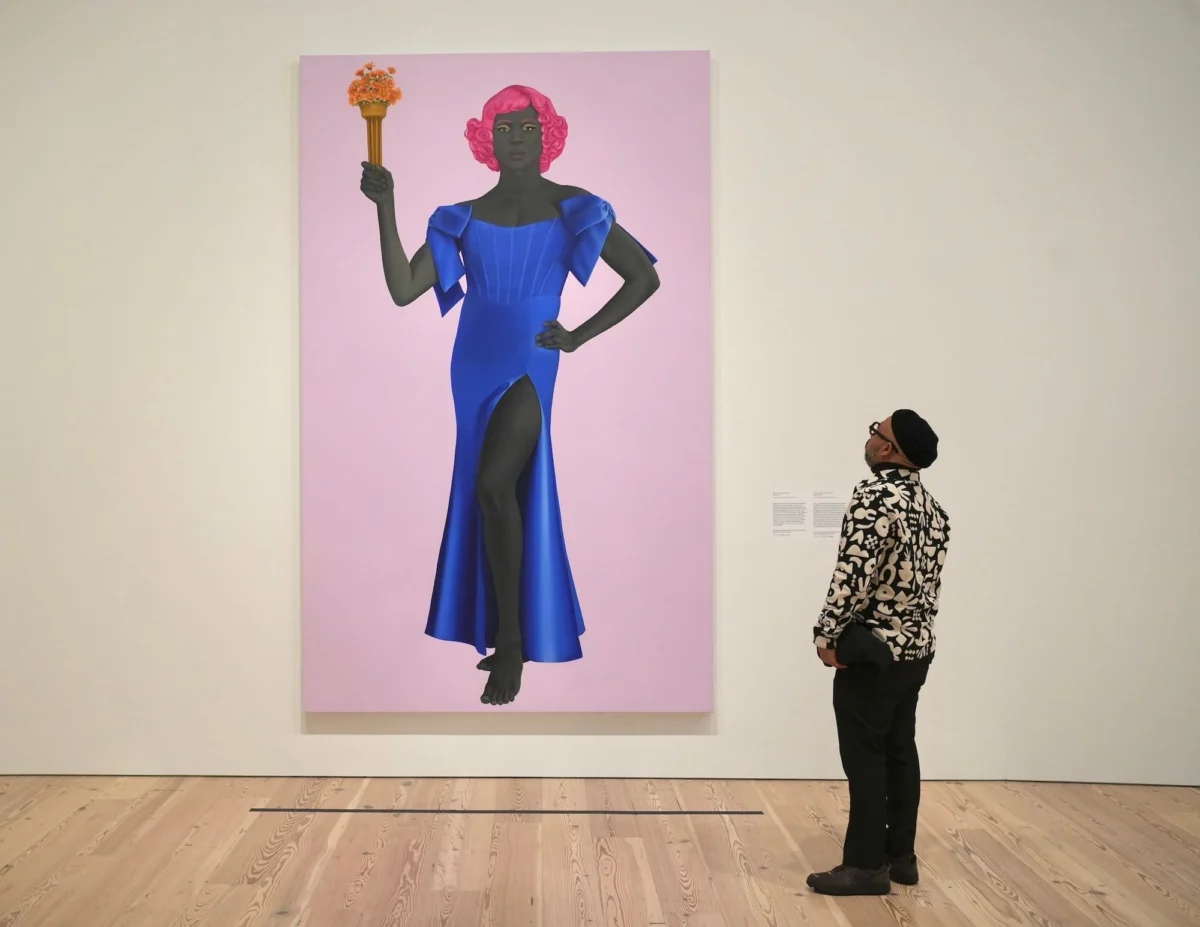
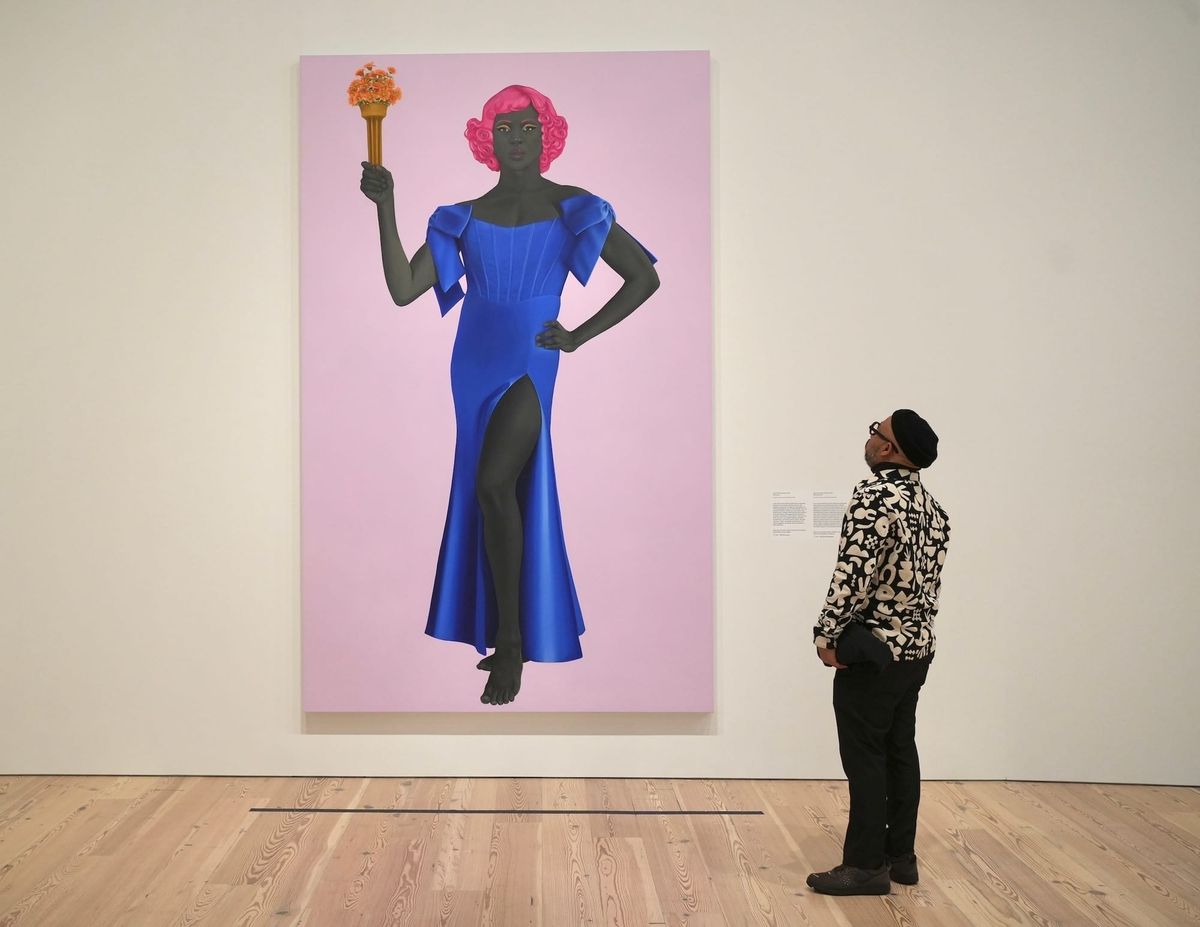
The center of the controversy is Sherald’s 2024 painting, Trans Forming Liberty. The work depicts Arewa Basit, a Black trans woman, posing as the Statue of Liberty. For Sherald, the piece was a meditation on the fluidity of national identity and an invitation to expand the traditional boundaries of who is welcomed under the metaphorical torch of liberty.
The Smithsonian, however, reportedly took issue with the work’s inclusion in a public-facing exhibition. Sherald cited concerns over censorship, arguing that the institution’s desire to modulate the visibility of a Black trans woman in such a prominent role was an act of political suppression. The resulting impasse led to the cancellation of the exhibition’s Washington, D.C. leg, stripping the nation’s capital of one of the most significant artistic interventions of the decade.
A Chronology of the Conflict
The timeline of this dispute highlights the rapid escalation of cultural tensions in the mid-2020s:
- June 2024: Amy Sherald debuts Trans Forming Liberty at the Whitney Museum of American Art. The piece is widely praised for its technical brilliance and its challenging recontextualization of an American icon.
- Early 2025: Planning for the Smithsonian National Portrait Gallery stop of American Sublime encounters internal friction. Concerns are raised by administrators regarding the “provocative” nature of the portrait.
- July 2025: Sherald formally announces the cancellation of the D.C. exhibition, publicly citing “unacceptable pressure to censor the narrative of the work.”
- Late July 2025: Lindsey Halligan, a special assistant to President Donald Trump, releases an official statement condemning the painting, characterizing the Statue of Liberty as a “solemn symbol” rather than a canvas for political expression.
- August 2025–Present: The discourse surrounding the censorship incident continues to evolve, drawing in scholars, activists, and art historians who argue that the Statue of Liberty’s history is far more fraught than the state-sanctioned narrative suggests.
The Myth of the Neutral Symbol
The friction between Sherald and the Smithsonian underscores a fundamental misunderstanding of public monuments. As Lindsey Halligan argued in her July statement, the state views the Statue of Liberty as a fixed, objective signifier of American unity. This view relies on the assumption that national symbols possess an inherent, unchanging meaning.
Art historians and cultural critics, however, reject this essentialist view. Monuments are not static; they are reflective surfaces. Every generation projects its own values, exclusions, and aspirations onto these bronze and stone giants. To suggest that the Statue of Liberty is not an “abstract canvas for political expression” is to ignore its history. From its origins as a gift celebrating the abolition of slavery to its later appropriation by nativist movements, the statue has been consistently redefined.
By positioning a Black trans woman as Lady Liberty, Sherald was not “politicizing” a neutral object; she was exposing the fact that the statue was already deeply political. She simply chose to fill that canvas with a narrative that challenges the traditional, exclusionary boundaries of American citizenship.
Official Responses and Political Implications
The involvement of the Trump administration in this art-world dispute signals a shift toward a more aggressive “culture war” posture regarding public art. By defining the statue as a “solemn symbol of national unity,” the administration is effectively asserting a monopoly on the definition of patriotism.
Critics of this stance argue that such definitions are a form of soft authoritarianism. If the government determines which interpretations of a national symbol are acceptable, then art ceases to be a tool for introspection and becomes a tool for propaganda. When an institution as prestigious as the Smithsonian bows to political pressure, it risks transforming from a sanctuary of historical inquiry into a gatekeeper of state-approved identity.
Expanding the Conversation: Minujín, Ringgold, and the Art of Resistance
Sherald is not the first artist to disrupt the sanctity of the American monument. She follows a lineage of visionary creators who have used their work to interrogate the American mythos.
Marta Minujín, for instance, has long utilized the language of pop art to deconstruct the gravity of state icons, forcing viewers to engage with the absurdity of hero-worship. Similarly, Faith Ringgold’s work has consistently challenged the racial hierarchies embedded in American history, using textiles and storytelling to center the voices of Black women who have been historically excluded from the “official” record.
These artists remind us that a monument is only as strong as its ability to withstand dissent. If the Statue of Liberty represents freedom, then its most patriotic iteration is one that allows for radical, inclusive, and even uncomfortable reinterpretations.
The Future of Public Memory
The cancellation of American Sublime in D.C. is not merely a loss for the art community; it is a symptom of a deeper fracture in the American public sphere. When the state fears an image—when a portrait of a trans woman is viewed as a threat to national stability—it reveals a profound insecurity about the nature of that nation.
The legacy of this incident will likely be felt in the coming years as museums and galleries navigate the increasingly polarized landscape of public funding and donor relations. As we move forward, the question remains: Can American institutions withstand the pressure to curate a sanitized history, or will they surrender the very freedom that the Statue of Liberty is meant to symbolize?
For now, Amy Sherald’s Trans Forming Liberty remains a defiant piece of art. It stands as a reminder that the symbols of our past are not static relics, but living, breathing, and occasionally challenging dialogues that continue to define who we are—and who we are permitted to become.
Key Takeaways for Further Study
- The Role of Institutions: The incident highlights the precarious position of national museums when faced with executive branch pressure.
- The Iconography of Inclusion: How artists use familiar symbols to make political statements about marginalized groups.
- Defining Patriotism: The ongoing struggle between state-sponsored definitions of national identity and the lived experiences of diverse American citizens.
As the discourse continues, the conversation remains open: Is the Statue of Liberty a mirror for the nation’s ideals, or a gatekeeper for its prejudices? The controversy surrounding Sherald’s work suggests that for many, the answer depends entirely on who is holding the torch.
 Basiran
 Muslim
 Evan Lee Salim
