

Welcome back to TechCrunch Mobility, your definitive hub for tracking the future of transportation, urban infrastructure, and the rapidly expanding role of artificial intelligence within the sector. As autonomous vehicles (AVs), electric fleets, and next-generation transit solutions weave deeper into the fabric of daily life, the regulatory and financial landscapes are shifting at a breathless pace.
Below is our comprehensive breakdown of the week’s most critical developments in mobility, spanning groundbreaking legislation in California, massive enterprise logistics deals, critical vehicle recalls, and venture capital movements.
Main Facts: California’s Senate Bill 1246 and the New Accountability Era for AVs
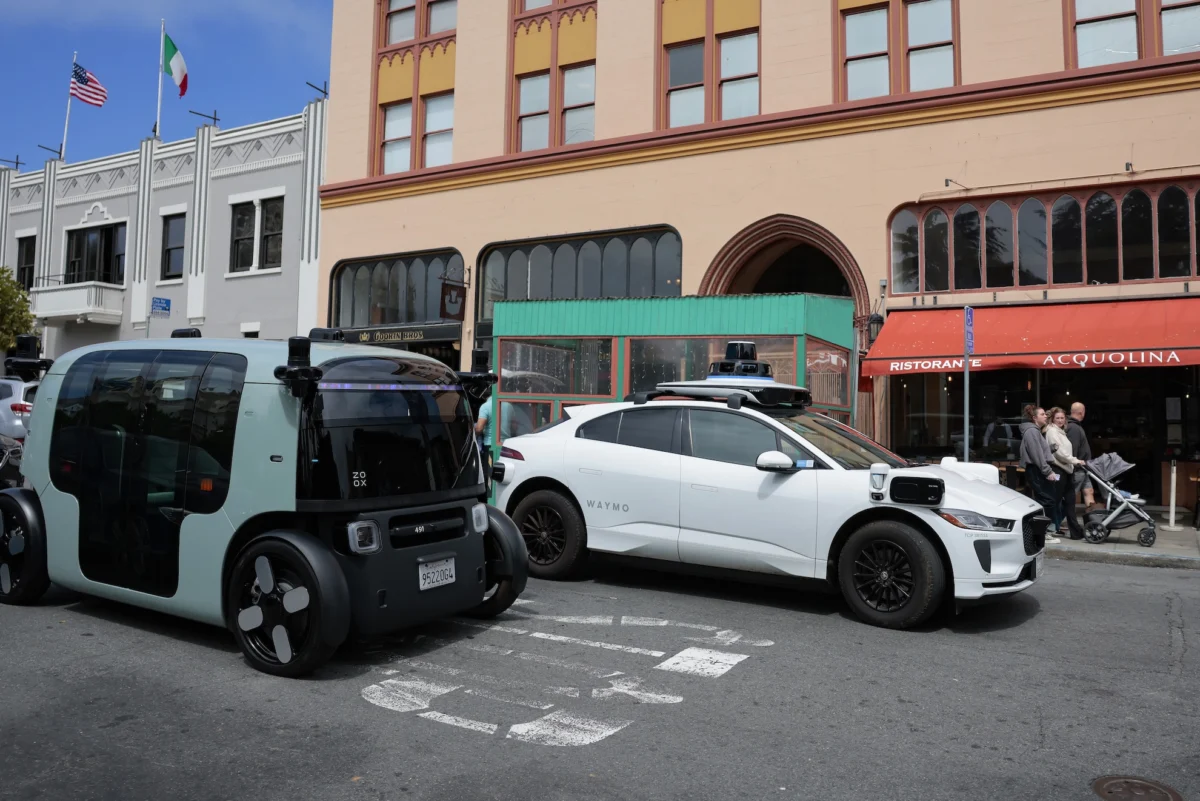
On an average day in cities like San Francisco, the landscape is heavily populated by autonomous robotaxis zipping efficiently through urban corridors. Yet, this futuristic convenience is increasingly accompanied by operational friction. TechCrunch has extensively documented numerous incidents of autonomous fleets impeding traffic, inadvertently driving into active crime scenes, and directly interfering with first responders. In several troubling cases, AV companies have been forced to rely on police officers and firefighters to physically clear or move disabled robotaxis.
Recognizing that these disruptions represent merely the opening chapter of the AV era, California lawmakers have taken aggressive steps to get ahead of the curve. This week, Governor Gavin Newsom signed Senate Bill 1246 into law.
The legislation establishes a rigorous framework designed to dramatically improve public safety, enforce stricter response protocols when vehicles experience system-wide failures, and hold autonomous vehicle developers financially and legally accountable. Major players in the space—including industry heavyweights like Tesla, Waymo, and Zoox—must now adapt to a heavily regulated operating environment in California ahead of the law’s official effective date in July 2028.

Chronology of Events: From Street-Level Chaos to Legislative Action
To understand how California arrived at Senate Bill 1246, it is necessary to trace the timeline of escalating tensions between autonomous vehicle operators and municipal authorities:
- The Rollout Phase: Over the past several years, companies like Waymo scaled their commercial robotaxi operations across major California metropolitan areas, promising a safer and more efficient alternative to human-driven ride-hail services.
- The Friction Points: As deployment densities increased, reports surfaced of AVs stalling in intersections, blocking public transit lanes, and failing to recognize emergency vehicle light patterns or hand signals. Incidents involving robotaxis stalling outside active fire stations and blocking police perimeters triggered sharp rebukes from local leaders.
- The Reliance on First Responders: Investigative reports revealed instances where remote assistance software failed, forcing autonomous operators to lean on municipal first responders to manually push or navigate stalled vehicles out of harm’s way.
- Legislative Genesis: Recognizing that voluntary compliance was insufficient, California lawmakers drafted SB 1246 to establish statutory guardrails and penalties ahead of an impending wave of broader consumer AV adoption.
- Enactment: Governor Gavin Newsom officially signed SB 1246 into law, setting the stage for the Department of Motor Vehicles (DMV) to iron out enforcement mechanisms ahead of its July 2028 implementation.
Supporting Data: Key Provisions of SB 1246 and Industry Metrics
Senate Bill 1246 introduces a comprehensive set of operational mandates and punitive measures for AV developers operating within California:
- Thirty-Minute Rule: AV operators face steep financial penalties if an autonomous vehicle blocks police, fire, or medical personnel from performing their duties for a period exceeding 30 minutes.
- On-the-Ground Support: Companies must provide immediate, local, human support teams to assist emergency personnel when an AV causes an obstruction or is involved in an accident. These workers must be designated as "local incident technicians."
- Geographic Restrictions on Remote Operations: The law mandates that remote drivers employed by AV developers must be based within the United States and possess a valid U.S. driver’s license.
- Mandatory Notifications: AV firms are legally required to immediately notify local jurisdictions—including cities and towns—regarding the precise location and operational status of vehicles during system-wide outages.
- Regulatory Oversight: The California Department of Motor Vehicles (DMV) remains the primary regulatory body tasked with defining the fine details of compliance before the July 2028 enforcement date.
Official Responses and Industry Reactions
The passage of Senate Bill 1246 has sparked nuanced reactions across the tech and transportation sectors. While municipal governments and first-responder unions have largely praised the legislation as a necessary corrective to unchecked corporate scaling, autonomous vehicle developers face the challenge of updating their operational playbooks.
Industry analysts note that while the law may not completely eradicate every instance of a robotaxi stalling in an inconvenient location, it fundamentally shifts the cost-benefit analysis for operators. By mandating localized incident response infrastructure and imposing strict penalties for blocking emergency routes, California is signaling that the burden of safety and traffic mitigation rests squarely on the tech companies, rather than the public sector.
The central question now facing the industry is whether other states will look to California as a regulatory blueprint, or if they will wait for the federal government to establish a unified national standard for autonomous vehicle operations.

Broader Mobility Deals and Venture Capital Rounds
Beyond the regulatory showdown in California, the global mobility and logistics sectors continue to see massive capital infusions and strategic partnerships:
- Harbinger Secures Major FedEx Pact: Electric vehicle startup Harbinger announced a landmark $300 million deal to supply shipping giant FedEx with 2,000 custom-built electric delivery trucks.
- HyperGuest Raises $25 Million: Israeli travel tech startup HyperGuest secured a $25 million funding round led by AMI, the investment arm of Apax Partners, to scale its B2B hospitality distribution platform.
- REGENT Craft Expands Marine Corps Contract: The developer of the all-electric Seaglider extended its ongoing collaboration with the U.S. Marine Corps Warfighting Lab, bringing its total contract value to $19.25 million.
- Quartermaster’s $140 Million Series B: Arlington, Virginia-based maritime intelligence startup Quartermaster closed a massive $140 million financing round, featuring $100 million in equity from Insight Partners, Overmatch Ventures, and First Round Capital, alongside a $40 million debt facility from Stifel.
- Voltaback Scales EV Charging: French fleet management software startup Voltaback secured €2.8 million from European investment fund Serena to expand its electric vehicle charging reimbursement solutions across Europe.
Notable Reads, Earnings, and Technological Milestones
Autonomous Trucking Milestones
Aurora recently made headlines by projecting a fleet of 30,000 autonomous trucks on public roads by the end of 2030. In an exclusive interview with TechCrunch, CFO David Maday detailed the strategic roadmap and unit economics that give the company confidence in reaching this ambitious target. Meanwhile, Kodiak announced that retail giant IKEA has joined as a driverless launch partner, with automated freight trucks slated to haul cargo along a 219-mile stretch of Interstate 45 between Houston and Dallas later this year.
Automotive Updates and Recalls
- BMW: The automaker unveiled its 2027 3 Series, offering identical vehicle styling for both internal combustion engine (ICE) and battery-electric variants—with the electric version retailing for $4,400 less than its gas counterpart.
- Rivian: Buoyed by strong consumer demand for the newly introduced R2 SUV, Rivian reported a record-breaking sales quarter and reaffirmed its annual guidance of 65,000 to 70,000 vehicles. However, the company also issued a safety recall for the R2 due to potentially undertightened high-voltage battery pack fasteners that could cause a loss of driving power.
- Tesla: Tesla recorded its second consecutive strong sales quarter, moving more than 480,000 EVs globally. However, adverse weather forced another delay for the long-awaited Roadster 2 event. Furthermore, Tesla secured $30 billion in new credit lines aimed at scaling its ambitious AI and robotics initiatives, including the Optimus humanoid robot and the Cybercab robotaxi.
Data Privacy and Legal Settlements
- Connected Car Privacy: A comprehensive study by Northeastern University testing 21 late-model vehicles across 17 brands revealed that modern connected cars are aggressively harvesting personal user data and sharing it with major tech platforms, including Adobe, Google, Microsoft, Meta, Snap, and Yahoo.
- Lyft Settlement: Ride-hailing platform Lyft agreed to pay $272.5 million to settle a sprawling class-action lawsuit accusing the company of illegally misclassifying drivers as independent contractors rather than full employees prior to the voter approval of Proposition 22.
Implications for the Future: Disrupt 2026
As these multifaceted trends converge, industry leaders will gather in San Francisco for Disrupt 2026, TechCrunch’s premier annual technology conference. The event will feature critical panel discussions and keynote interviews examining the intersection of artificial intelligence, robotics, and physical mobility.
Attendees will hear directly from Rivian CEO RJ Scaringe as he discusses his dual bet on electric vehicles, autonomy, and robotics. Additional sessions will tackle high-stakes engineering challenges, including a panel titled "Building AI Systems When Failure Is Not an Option," featuring robotics strategy leaders from General Motors, Shield AI, and Waabi.
The future of transportation is no longer a distant theoretical concept; it is being actively negotiated in courtrooms, legislative chambers, and factory floors today. Stay tuned to TechCrunch Mobility as we continue to track how policy, capital, and engineering shape the roads of tomorrow.
 Suro Senen
 Iffa Jayyana
 Lina Hope
