

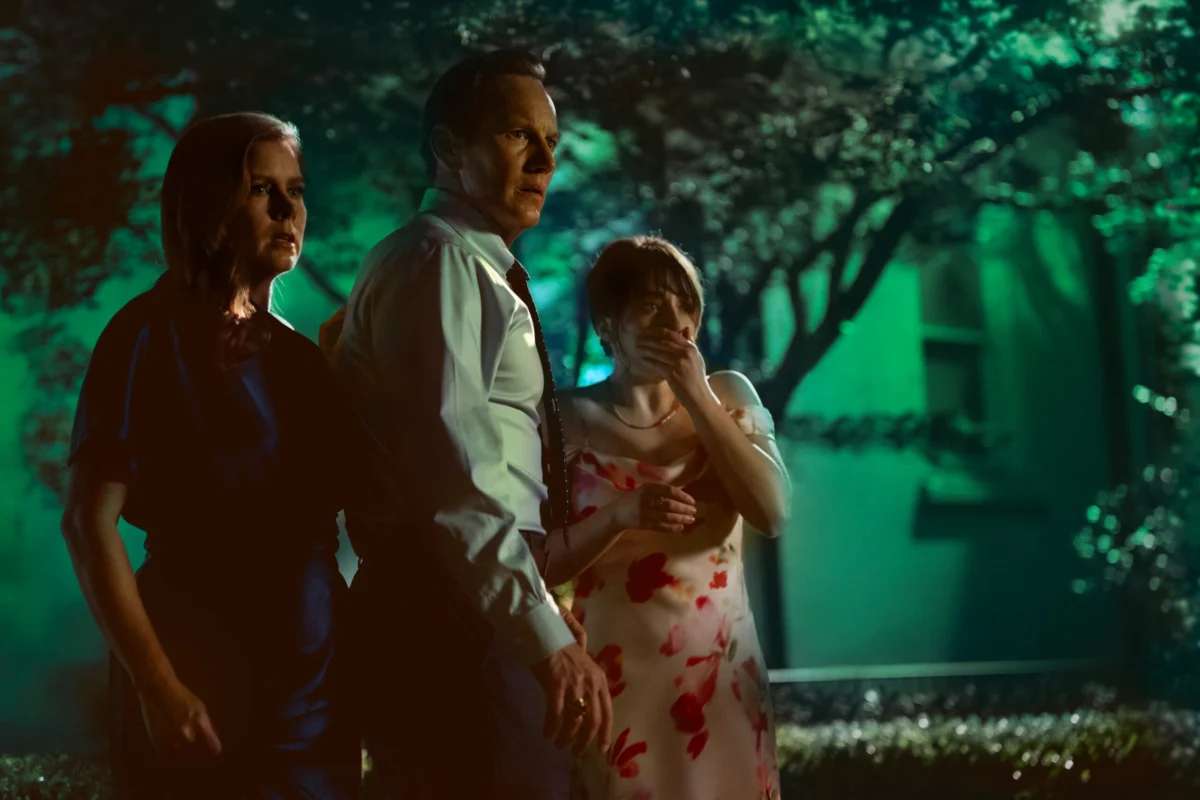
When Nick Antosca was a young child, he inadvertently stumbled into a formative moment of cinematic terror. Walking into a room where his parents were watching television, he was greeted by a stark, black-and-white image of a small child being relentlessly pursued down a dark hallway. That film was J. Lee Thompson’s 1962 classic Cape Fear, a movie that introduced the world to the predatory Max Cady (Robert Mitchum) and his psychological siege of the Bowden family.
Decades later, Antosca—now a celebrated showrunner known for his work on The Act, Brand New Cherry Flavor, and A Friend of the Family—has come full circle. Speaking on a recent episode of IndieWire’s Filmmaker Toolkit podcast, Antosca detailed how those early brushes with cinematic nightmares informed his latest and perhaps most ambitious project: a 10-episode reimagining of Cape Fear for Apple TV+.
Main Facts: A Prestige Overhaul of a Thriller Icon
The new Cape Fear series represents a significant shift in how "legacy IP" (Intellectual Property) is handled in the streaming era. Rather than a shot-for-shot remake of the 1962 original or the 1991 Martin Scorsese-directed version, Antosca’s series is a sprawling, 10-hour descent into what he calls "ambient dread."
The Creative Pedigree
The series boasts a powerhouse cast that signals Apple’s commitment to prestige drama. Javier Bardem takes on the mantle of Max Cady, following in the footsteps of Robert Mitchum and Robert De Niro. Patrick Wilson and Amy Adams star as Sam and Anna Bowden, a married couple of high-powered attorneys whose lives are dismantled when Cady emerges from a long, questionable imprisonment.
A Modern Aesthetic
Set in 2026, the series moves away from the "acute fear" of the feature films—which relied on the immediate physical threat of Cady—and instead leans into the psychological instability of the modern world. Antosca’s version explores the erosion of truth in the age of AI, social media surveillance, and pervasive misinformation. The goal was to sustain the "hallucinatory unease" of the films across a much larger canvas, turning a two-hour sprint into a ten-hour marathon of psychological trauma.
Chronology: The Evolution of a Nightmare
To understand Antosca’s approach, one must look at the lineage of the Cape Fear story, which has evolved alongside the societal anxieties of each era it has inhabited.

1957–1962: The Birth of the Executioner
The story originated with John D. MacDonald’s 1957 novel, The Executioners. It was a lean, mean thriller about a lawyer named Sam Bowden whose past mistake—testifying against a rapist—comes back to haunt him. The 1962 film adaptation by J. Lee Thompson was a product of the Hays Code era, yet it pushed boundaries with its depiction of Mitchum’s Cady as a hyper-masculine, unstoppable force of nature. For a young Antosca, this was the introduction to the concept of "stalking," a realization he describes as "very frightening."
1991: Scorsese’s Moral Decay
By the time Martin Scorsese revisited the material in 1991, the social landscape had shifted. Scorsese and screenwriter Wesley Strick infused the story with Catholic guilt and familial dysfunction. The Bowdens were no longer the "perfect" family of the 60s; they were a fractured unit dealing with infidelity and resentment. Robert De Niro’s Cady was a tattooed, Bible-quoting zealot, representing a more visceral, "blunt force trauma" approach to the character. Antosca discovered this version shortly after the original, noting that both versions felt less like traditional movies and more like "nightmares."
2013–2015: The Hannibal Blueprint
Antosca’s own professional chronology played a vital role in how he would eventually handle Cape Fear. While working on the writing staff of Bryan Fuller’s Hannibal, Antosca witnessed how a creator could take iconic, seemingly "perfect" IP (like Silence of the Lambs) and transform it into a "strange, surprising art project." This experience taught him the value of being "respectfully unfaithful"—honoring the core DNA of the source material while radically reinventing the execution to suit a personal, idiosyncratic vision.
2026: The Apple TV+ Reimagining
The current series is the culmination of these influences. Antosca began developing the project with the intent to reflect the "fragmentation" of the modern family. By expanding the narrative to 10 hours, he has been able to delve into the "culpability" of the Bowdens, making the moral gray areas even more pronounced than they were in Scorsese’s 1991 version.
Supporting Data: The Craft of "Respectful Unfaithfulness"
Antosca’s philosophy of adaptation is rooted in the idea that a remake should not simply "do it again with cell phones." Instead, the data of the story—the characters, the central conflict, the setting—must be re-contextualized for the current cultural climate.
Expanding the Scope
A key challenge in moving from film to television is the pacing. A movie is often about a singular, escalating event. A 10-episode series, however, requires what Antosca calls "ambient dread."

- The 1962/1991 Films: Run times of approx. 105–128 minutes.
- The 2026 Series: Approx. 600 minutes of narrative.
This extra time allows the show to investigate the "wrongful imprisonment" angle. In Antosca’s version, it is increasingly unclear if Max Cady actually committed the original crime or if Sam Bowden’s legal maneuvers were an act of justice or an abuse of power. This ambiguity serves to heighten the audience’s sense of uncertainty.
The Visual Language
Antosca worked closely with cinematographers to ensure the show felt "hallucinatory." Referencing an "acid trip" episode (Episode Six), the production utilized specific visual cues to mirror the psychological breakdown of the characters. This aligns with Antosca’s desire to capture the "energy of nightmares and dreams" rather than a grounded, procedural reality.
Official Responses: Antosca on the Record
In his conversation with IndieWire, Antosca provided several key insights into the "why" and "how" of this adaptation.
On the Nature of the Villain:
"Those two movies [1962 and 1991] had a big effect on me because they feel like nightmares. The movies are blunt force trauma. [Cady] is just a machine coming for them. He’s going to bludgeon this family to death."
On the Philosophy of Adaptation:
"You don’t want to adapt something and just do it again with cell phones. You want to bring something new to it while honoring the original. I always think of it as being respectfully unfaithful."
On the Evolution of the Family:
"One thing I love about the 1991 movie is how the family fragments. That’s the scariest thing, and that’s what I wanted to take further in the show… The family is not the villain of the show. They’re just complicated, and every family I know is complicated."

On the Influence of Bryan Fuller:
"I watched Bryan Fuller make [Hannibal] his own and do a really strange, surprising art project on network TV. That was very formative for me in terms of how to do idiosyncratic personal things using IP."
Implications: The Future of Psychological Thrillers in the AI Age
The reimagining of Cape Fear carries significant implications for the television landscape and the genre of the psychological thriller.
The Shift from Physical to Informational Terror
By leaning into anxieties about AI and disinformation, Antosca is signaling a shift in the horror genre. In 1962, the fear was a man in your house. In 1991, the fear was a man who knew your secrets. In 2026, the fear is a man who can manipulate the very fabric of your reality, making you doubt what you see on your own screens. This "informational stalking" is a commentary on the vulnerability of the modern individual in a hyper-connected world.
The "Auteurist" IP Model
Antosca’s success with Cape Fear suggests that the most effective way to utilize established brands is to hand them to "horror auteurs" who are willing to break them. Following the path blazed by shows like Hannibal or Bates Motel, Cape Fear proves that audiences are less interested in nostalgia and more interested in how old stories can be used to explain new fears.
Sustaining the Trauma
Finally, the project challenges the limits of the thriller genre by testing how long an audience can endure "ambient dread." If the series succeeds, it may pave the way for more "slow-burn" psychological horror on streaming platforms—moving away from jump scares and toward a more sustained, visceral experience of trauma.
As Cape Fear continues its run on Apple TV+, it stands as a testament to Nick Antosca’s journey from a frightened child watching a black-and-white screen to a master of the modern nightmare. By being "respectfully unfaithful," he has managed to create a version of Max Cady that is just as terrifying for the digital age as Robert Mitchum was for the nuclear one.
 Jia Lissa
 Lina Irawan
