

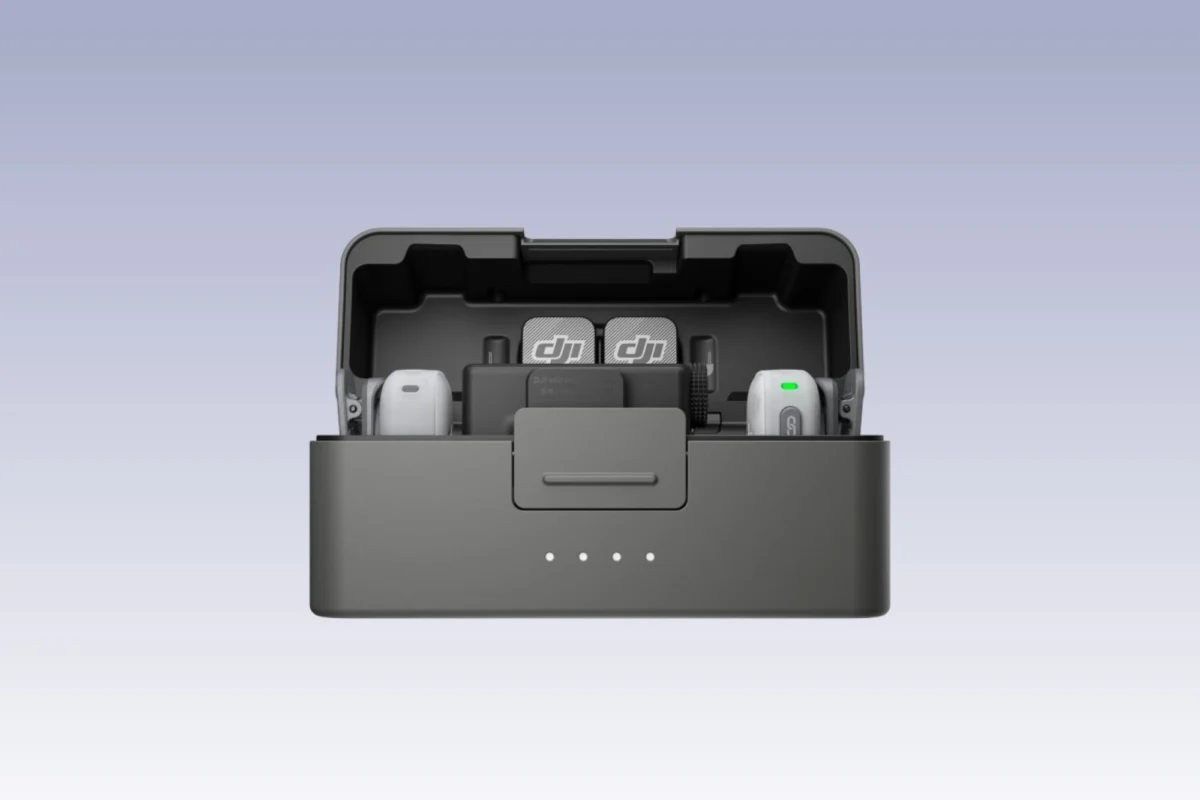
For content creators, the pursuit of high-fidelity audio in a compact form factor has long been the "holy grail." Last year, DJI’s Mic Mini solidified its reputation as a gold standard in the budget-friendly, portable audio category, offering a seamless balance of ease-of-use and professional-grade sound. Today, that legacy continues with the unveiling of the DJI Mic Mini 2. However, for a significant portion of the global market—specifically in the United States—this new release is a case of "look but don’t touch."
The Evolution of Portable Audio: Introducing the Mic Mini 2
The DJI Mic Mini 2 arrives as a refined successor to a widely praised predecessor. First brought to public attention through reports from The Verge, the device maintains the ultra-compact footprint that made the original so popular, while introducing a suite of quality-of-life improvements designed to streamline the workflow for vloggers, mobile journalists, and independent filmmakers.
At its core, the Mic Mini 2 remains a miniature microphone array engineered for those who prioritize portability without sacrificing audio clarity. The system is currently rolling out to international markets, with a competitive pricing structure that underscores DJI’s commitment to accessibility. A standard bundle, which includes a dedicated charging case, a wireless receiver, and a single mic transmitter, is available for €59. For those requiring more robust production capabilities, a €99 bundle is also available, offering a larger charging case, dual mic transmitters, and an upgraded receiver.
Chronology of the Series: From Breakthrough to Iteration
To understand the significance of the Mic Mini 2, one must look at the trajectory of DJI’s audio division. When the original Mic Mini launched, it was lauded by critics—including our own team at Mashable—for its exceptional price-to-performance ratio. It wasn’t just about the hardware; the integration with a dedicated mobile app allowed users to adjust gain, noise cancellation settings, and battery monitoring with intuitive precision.
The Mic Mini 2 represents an incremental but strategic evolution. While the underlying audio architecture remains familiar, DJI has focused its R&D efforts on customization and creative control.

- Launch Phase: Initial development focused on retaining the form factor of the original while addressing user feedback regarding aesthetic versatility.
- The Feature Rollout: The most notable design change is the introduction of magnetic, swappable mic covers. These covers allow creators to swap colors on the fly, providing a functional way to either camouflage the microphone against clothing or turn it into a stylistic statement piece.
- Software Enhancements: Alongside the physical design, DJI has introduced new, pre-calibrated voice presets. These are designed to assist creators who may not have extensive post-production audio training, allowing them to optimize their vocal profiles for specific environments—such as crowded streets or quiet indoor studios—with a single tap.
Supporting Data: What’s New and What’s Not
Despite the excitement surrounding the release, it is important to temper expectations regarding the technical leap between the two generations. For many, the Mic Mini 2 will not appear to be a revolutionary departure from the original.
The Key Upgrades:
- Magnetic Aesthetic Customization: The swappable colored covers are the highlight. While seemingly a minor aesthetic tweak, they represent a shift toward content creators who treat their gear as part of their personal brand identity.
- Advanced Voice Presets: By embedding intelligence into the receiver, DJI is lowering the barrier to entry for high-quality audio. These presets act as a "lite" version of a professional mixing board, ensuring consistent vocal levels across different recording sessions.
What Remains Constant:
The core audio quality, which was the standout feature of the first generation, remains largely unchanged. The original Mic Mini already offered a performance that punched well above its weight class, and the Mic Mini 2 continues this trend by prioritizing the same reliability in wireless connectivity and battery efficiency that characterized the initial launch.
The U.S. Impasse: A Market in Limbo
The most pressing question for North American consumers is the absence of the Mic Mini 2 from the U.S. market. The lack of a U.S. dollar price point is a direct reflection of a broader, systemic issue currently affecting DJI’s entire product ecosystem in the United States.
As previously documented, DJI is navigating a complex landscape of regulatory and geopolitical scrutiny in the U.S. This has resulted in significant, unpredictable delays for nearly all of the company’s recent hardware launches. From the Osmo Pocket 4 to the latest iterations of their audio equipment, U.S. customers are increasingly finding themselves at the back of the queue.
This phenomenon is not merely about supply chain constraints; it is rooted in the evolving relationship between Chinese technology firms and U.S. regulatory bodies. These hurdles have turned the simple act of buying a microphone into a logistical puzzle, forcing American enthusiasts to rely on third-party importers or wait for an uncertain, potentially distant, domestic release date.

Implications for Content Creators
For the professional creator, these delays create a "two-tier" global market. Creators based in Europe or Asia can integrate the latest, most flexible audio tools into their workflow, while those in the U.S. remain tethered to the older generation—or forced to source international models at a premium.
Furthermore, the lack of availability complicates the "ecosystem" effect that DJI thrives upon. If a creator is already using a DJI camera, gimbal, and drone, the addition of the Mic Mini 2 creates a cohesive, streamlined workflow. When one piece of that puzzle is missing from the U.S. market, the incentive to move to competitors—such as RØDE or Sennheiser—increases significantly.
Looking Forward: A Call for Clarity
The current state of affairs poses a challenge for both the consumer and the manufacturer. DJI has built a brand on the promise of "making the complex simple," yet the path to obtaining their latest gear in the United States has become increasingly complex.
While the Mic Mini 2 is objectively a solid, iterative improvement on an already capable device, its absence in the U.S. highlights the vulnerability of global technology markets to geopolitical friction. For now, the takeaway for the American user is clear: if you are desperate for the specific features of the Mic Mini 2, you may need to look toward creative, albeit unofficial, channels to acquire it. However, for the average creator, the original Mic Mini remains a highly capable workhorse that continues to stand the test of time.
As we look toward the remainder of the year, all eyes remain on the regulatory landscape. Whether the Mic Mini 2 eventually finds its way to U.S. retailers remains a matter of ongoing speculation. Until then, the microphone serves as a curious case study: a piece of consumer hardware caught in the crosshairs of global policy, proving that in the modern era, the most significant obstacle to high-quality audio might not be the technology itself, but the geography of its distribution.
 Nana Wu
 Neng Nana
 Reynand Wu
