

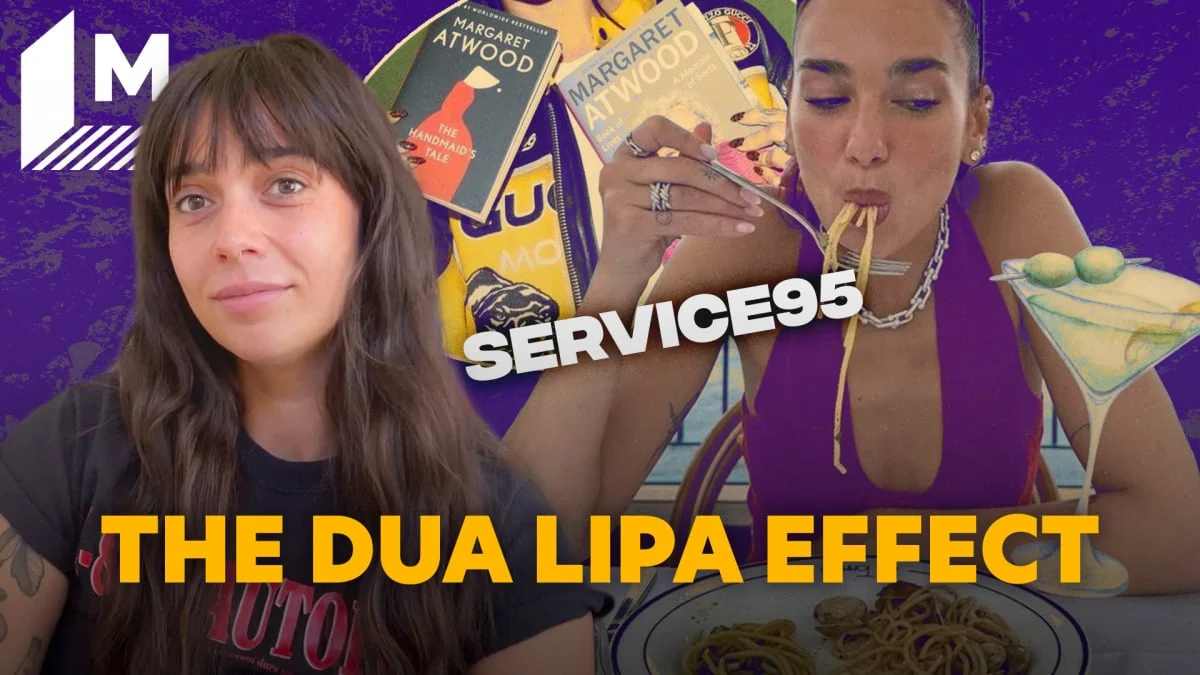
In the hyper-curated landscape of contemporary social media, where the "hustle" is often fetishized and every waking moment is treated as potential "content," Dua Lipa has carved out a strikingly different digital footprint. The global pop sensation has emerged as more than just a musical powerhouse; she has become the internet’s unofficial mood board for a specific, aspirational form of adulthood.
It is a lifestyle defined not by the frenetic energy of grinding toward a promotion, but by a curated sense of ease, cultural enrichment, and intentional leisure. As the world navigates a post-hustle culture era, Lipa’s digital persona—and her burgeoning editorial empire, Service95—has captured the collective imagination of a generation seeking to reclaim the sanctity of their own time.
The Anatomy of the ‘Dua Effect’
Dua Lipa’s public image is a masterclass in modern celebrity branding. While she possesses all the traditional markers of stardom—fame, immense wealth, and physical beauty—the way she presents her downtime is distinct. Unlike the performative displays of extreme luxury often seen from influencers or tech-adjacent moguls, Lipa’s leisure feels grounded in an aesthetic of "enrichment."
Her Instagram feed is a collage of what many would consider the "ideal" modern life: European summers, bookstore visits, art gallery tours, culinary explorations, and high-fashion outings with a close-knit circle of friends. Writer Madison Huizinga famously coined this phenomenon as "The Dua Effect." It is a brand identity rooted in the concept of being a perpetual student of life. She isn’t selling a product; she is selling a philosophy that suggests pleasure, curiosity, and artistic exploration are not merely rewards for work, but the primary goals of existence.
Chronology of a Cultural Shift: From Pop Star to Lifestyle Concierge
To understand how Lipa became a lifestyle icon, one must look at the evolution of her brand alongside the changing tides of the digital economy.
- 2020: The Pandemic Pivot: As the world retreated into isolation, Lipa’s Future Nostalgia era provided an essential escape. During this time, her social media became a beacon of optimism, focusing on home-cooked meals, reading lists, and home-based dance parties. This established the foundation for her "leisure-as-lifestyle" brand.
- 2021: The Launch of Service95: Lipa moved beyond the vanity of the celebrity Instagram account by launching Service95. Initially a newsletter, it quickly expanded into a multimedia editorial platform, complete with a podcast and a highly influential book club. By positioning herself as a "cultural concierge," she moved from being an object of consumption to a curator of experiences.
- 2022–2024: The Global Nomad Aesthetic: As touring resumed, Lipa’s presence on social media became increasingly cosmopolitan. Her partnerships—most notably with Google for curated, geo-located travel guides—solidified her status as a global citizen who treats every city as a classroom.
- 2025–2026: The Anti-Hustle Manifestation: By mid-2026, the cultural conversation has shifted definitively against the "rise and grind" mentality. Lipa’s brand has become the North Star for Gen Z and young Millennials who are disillusioned by the promise that productivity equals happiness.
Supporting Data: The Decline of the ‘Grind’
The obsession with Lipa’s lifestyle is not occurring in a vacuum; it is a direct response to current economic and sociological trends.

The Erosion of Hustle Culture
Recent reports from outlets like The Guardian and the BBC indicate a sharp decline in the appeal of "hustle culture." Following years of wage stagnation and rising costs of living, younger generations are increasingly prioritizing "soft living"—a movement that emphasizes emotional well-being and life satisfaction over career advancement.
Data shows that Gen Z, in particular, is less likely to equate their self-worth with their professional output. When the traditional path to success (homeownership, stable retirement) feels increasingly out of reach, the "Dua Effect" provides a psychological pivot: if you cannot own the world, you can at least experience it with depth and beauty.
The Creator Economy Fantasy
The desire to "live like Dua" is also tied to the broader creator economy. There is an enduring fantasy that one’s life can be both a vocation and an art form. While most people do not have the resources to sustain a global, jet-setting lifestyle, the aesthetic of that life—characterized by reading, visiting museums, and meaningful socialization—is perceived as an attainable form of resistance against the commodification of the self.
The Paradox of the ‘Curated’ Life
Despite her appeal, there is an inherent tension in the "Dua Effect." Lipa’s lifestyle is, by any objective metric, an elite existence. Most working-class individuals cannot casually commute between global capitals or sustain a life of perpetual museum-going.
The Critique of Exclusivity
Critics argue that Lipa’s brand, while aesthetically pleasing, is ultimately a product of extreme wealth. Her partnerships—such as her collaborations with tech giants for travel curation—serve to sanitize the inherent luxury of her experiences, framing them as "accessible" tips for the average follower. This creates a cognitive dissonance: the audience is invited to emulate her "curiosity," but the tools she uses to feed that curiosity are largely out of reach.
The Burden of Visibility
Furthermore, there is the question of labor. Lipa undoubtedly works an grueling schedule—touring, recording, managing a business, and navigating the demands of global stardom. However, this labor is deliberately obscured. Her Instagram serves as a "highlight reel" of leisure, which can contribute to the "comparison trap" for her followers. By erasing the visible markers of work, she creates an illusion of effortless existence that can inadvertently exacerbate feelings of inadequacy among those struggling to balance their own actual, labor-intensive lives.

Implications: What Does This Mean for the Future of Celebrity?
The "Dua Effect" signals a significant shift in what the public demands from their idols. We are moving away from the "relatable" celebrity of the early 2010s, who tried to appear like "just one of us," and moving toward a new type of aspirational figure: the "Curator-Celebrity."
The Rise of the Cultural Concierge
Future celebrities will likely be judged not just on their talent, but on their taste. The demand for Service95-style platforms suggests that fans want to know what their icons are reading, where they are eating, and what they are thinking about. Celebrity is no longer just about the performance; it is about the lifestyle architecture.
The Psychological Need for ‘Slow’ Content
As social media platforms become increasingly dominated by short-form, high-speed algorithmic content, there is a growing hunger for the "slow" lifestyle that Lipa models. The obsession with her life reflects a collective burnout. When the world feels unstable—economically, politically, and socially—the image of a person sitting in a quiet, sun-drenched café reading a book becomes a powerful, if temporary, sedative.
Conclusion: Beyond the Aesthetic
Dua Lipa has succeeded in becoming the internet’s mood board because she speaks to a universal, modern desire: the wish for a life that feels like one’s own, rather than one dictated by the demands of an employer or an algorithm.
While the "Dua Effect" is a construct of immense privilege and careful marketing, it serves as a mirror for the anxieties of the age. We are not just watching her because we want her clothes or her vacations; we are watching her because she represents the version of adulthood we were promised—a version where one has the time to be curious, the space to be social, and the freedom to define success on one’s own terms. Whether this obsession will last is irrelevant; for now, she remains the blueprint for a life that prioritizes the human experience over the digital grind.
As we continue to navigate a landscape where work is increasingly encroaching on our private lives, the "Dua Effect" will likely persist as a form of cultural escapism—a reminder that, even if we cannot live like the pop star, we might still find room to carve out a little more of our own leisure.
 Nana Wu
 Neng Nana
 Reynand Wu
