

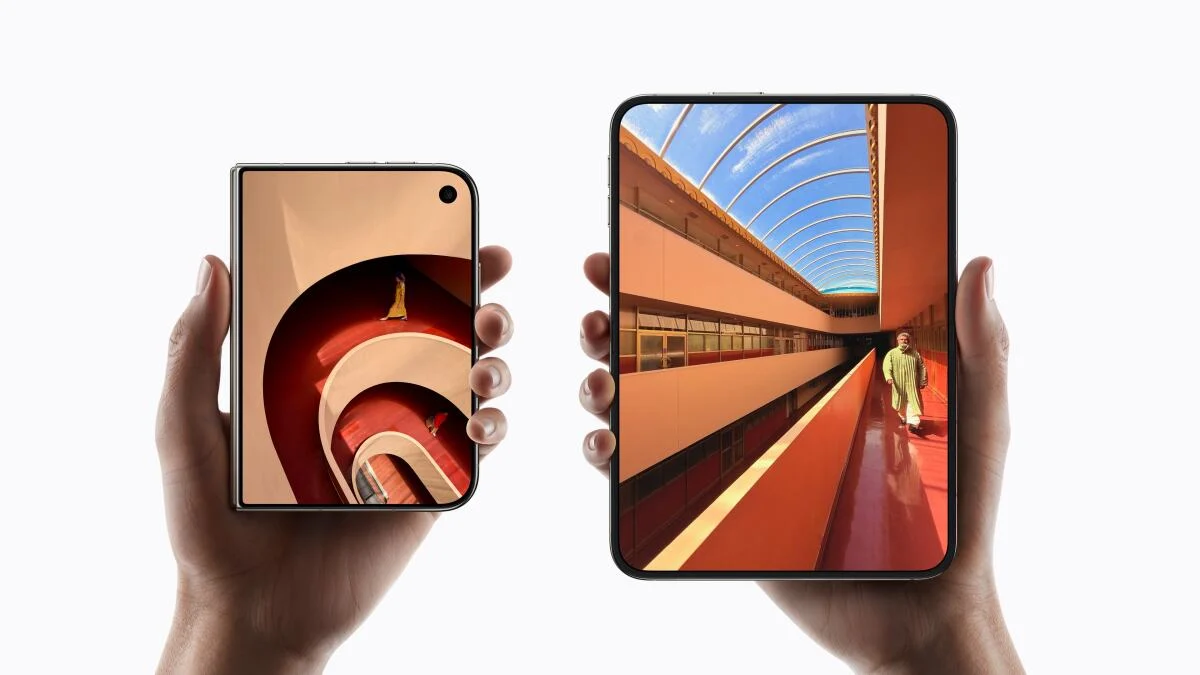
CUPERTINO, Calif. — For years, the tech industry played a familiar waiting game. While competitors like Samsung, Google, and OnePlus iterated through generations of foldable hardware, refining hinges, shrinking creases, and capturing a passionate niche of mobile power users, Apple remained conspicuously silent. The rumor mill churned out countless speculative reports, concept renders, and supply-chain whispers, yet Cupertino’s labs stayed locked.
That silence shattered on Wednesday during Apple’s high-stakes "Surprise and Shine" event at Apple Park. In a keynote led by Apple CEO John Ternus, the tech giant finally pulled back the curtain on its worst-kept secret: the iPhone Duo.
Priced at a steep premium, the iPhone Duo marks Apple’s official entry into the folding smartphone market, featuring a sprawling 7.6-inch inner display that folds cleanly in half. But while early adopters and tech analysts are still unpacking the engineering marvels—and the eye-watering price tag—of Apple’s latest hardware, the rest of the internet wasted zero time. Within minutes of the keynote, the global digital ecosystem erupted into a symphony of corporate shade, existential SEO dread, and historical flexes.
Main Facts: What Is the iPhone Duo?
The iPhone Duo represents a massive strategic shift for a company known for letting competitors pioneer product categories before perfecting them.
- The Hardware: The defining feature of the iPhone Duo is its flexible OLED screen. Unfolded, it offers users a 7.6-inch canvas that bridges the gap between smartphone portability and tablet-sized productivity. When closed, it relies on an outer cover screen designed for quick interactions.
- The Launch Event: Unveiled during the "Surprise and Shine" keynote in Cupertino, the device headlined a packed slate of autumn hardware announcements.
- The Market Positioning: Apple is positioning the Duo as the ultimate productivity and media powerhouse, aimed squarely at high-end consumers who have looked longingly at devices like the Samsung Galaxy Z Fold series or the Google Pixel Fold line.
- The Leadership Context: The launch also serves as a major milestone for John Ternus, who has stepped into the spotlight as Apple’s CEO, steering the company into its next generational form factor.
Chronology: The Long Road to the Foldable iPhone
To understand the magnitude of the iPhone Duo’s release, it is necessary to look back at the arduous timeline of the foldable phone market and how Apple finally reached this juncture.
Phase 1: The Wild West of Foldables (2019–2022)
When Samsung launched the original Galaxy Fold, it was greeted with a mixture of awe and skepticism. Early models suffered from durability issues, prominent screen creases, and astronomical price tags. Competitors like Huawei, Motorola, and later Google slowly entered the fray, treating the form factor as an experimental playground for tech enthusiasts. Throughout this period, Apple was famously absent, choosing to watch from the sidelines while competitors ironed out the inevitable growing pains of a brand-new engineering discipline.
Phase 2: The Rumor Mill Peak (2023–2025)
As hinge mechanisms improved and ultra-thin glass became the industry standard, speculation surrounding an "Apple Fold" or "iPhone Flip" reached a fever pitch. Every patent filed in Cupertino was scrutinized by analysts convinced that a folding iPhone was just around the corner. Despite persistent leaks suggesting delays due to Apple’s notoriously strict display crease standards, the market braced itself for Cupertino’s inevitable entrance.
Phase 3: The "Surprise and Shine" Unveiling (Wednesday)
The wait officially ended on Wednesday morning. Taking the stage at Apple Park, Ternus introduced the device under its official moniker: the iPhone Duo. Moving away from alphanumeric designations, the name signals a distinct product category—one designed to double a user’s screen real estate. Almost immediately, live-bloggers, tech journalists, and social media managers scrambled to process the news.
Supporting Data & Market Implications
The launch of the iPhone Duo is not merely a novelty; it is a calculated earthquake in the premium smartphone sector.
For the past several years, foldable phones have remained a relatively small percentage of total global smartphone shipments, largely constrained by high manufacturing costs and consumer hesitation regarding long-term durability. However, industry analysts have long predicted that an Apple-branded foldable would act as the ultimate market legitimizer. Just as the Apple Watch propelled smartwatches into the mainstream and the AirPods revolutionized wireless audio, the iPhone Duo is expected to normalize the foldable form factor for the mass market.
- Competitive Pressure: Samsung, which launched the Galaxy Z Fold 8 just a couple of months prior in July, now faces a formidable rival with the Apple ecosystem’s unmatched hardware-software integration.
- Pricing and Accessibility: True to Apple form, the iPhone Duo commands a high price point, targeting enterprise executives, creative professionals, and affluent tech consumers willing to pay top dollar for cutting-edge design.
- Ecosystem Synergy: The true power of the Duo lies in its software adaptation. iPadOS-style multitasking features integrated directly into iOS allow users to make the most of the 7.6-inch canvas, creating a seamless transition between pocket-sized phone and immersive workstation.
Official Responses: Competitors and Brands Join the Fray
While tech reviewers poured over technical specifications, the internet’s corporate social media accounts turned the iPhone Duo’s launch into a spectator sport. The reaction was swift, humorous, and deeply competitive.
Samsung’s Unsubtle Shade
As Apple’s primary rival in the foldable space, Samsung wasted no time reacting to the news. Having established a multi-year head start with the Galaxy Z Fold series—culminating in the July release of the Galaxy Z Fold 8—Samsung’s official US account took to X (formerly Twitter) with a pointed, albeit subtle, jab at Cupertino’s late arrival to the party. Though the tweet sparked immediate viral engagement and debate among fanboys on both sides, it underscored the high-stakes rivalry defining the current mobile landscape.
Duolingo’s SEO Meltdown
Perhaps the most unexpectedly hilarious reaction came from the language-learning platform Duolingo. Realizing that Apple’s buzziest new product shared a phonetic—and nearly identical—name with the app, the social media team behind the aggressive green owl went into an immediate, public spiral.
"It’s called the iPhone WHAT???" posted the official Duolingo account, directly tagging Apple CEO John Ternus while hyperventilating over search engine optimization (SEO) implications.
For a brand that relies heavily on digital visibility, the sudden dominance of "iPhone Duo" in search algorithms sent its marketing department scrambling, providing endless entertainment for Twitter users watching corporate anxiety play out in real-time.
Merriam-Webster’s Historical Flex
Not wanting to miss out on the cultural zeitgeist, American dictionary Merriam-Webster dropped a masterclass in deadpan corporate humor. Weighing in on the obsession with things that fold, the dictionary’s official account posted:
"Not to brag, but our product has been foldable since 1828."
The tweet radiated "just gonna leave this here" energy, poking fun at the tech industry’s tendency to treat folding mechanics as a revolutionary modern breakthrough when paper books and bound dictionaries have been executing the hinge mechanism for centuries.
Implications: What the iPhone Duo Means for the Future
The release of the iPhone Duo marks the end of an era of speculation and the beginning of a fierce new battleground for mobile supremacy.
For Apple, the device proves that the company is willing to embrace radical hardware shifts when the underlying technology meets its exacting standards. By waiting until crease mitigation, battery efficiency, and software multitasking reached maturity, Apple has minimized the early-adopter friction that plagued the first wave of foldables from other manufacturers.
For competitors like Samsung and Google, the presence of the iPhone Duo is both a validation of their market foresight and a formidable threat. Apple’s brand loyalty and ecosystem lock-in mean that millions of consumers who previously ignored foldables will now give the form factor a serious look.
As the dust settles on the "Surprise and Shine" event, one thing is abundantly clear: the smartphone market will never be the same. Whether users are shelling out thousands for Apple’s newest toy, watching Samsung sweat over market share, or listening to Duolingo panic about Google search rankings, the folding era has officially arrived—and it is making a lot of noise.
 Layla Zulfa
 Siti Muinah
