

By Chase DiBenedetto | June 9, 2026
For the first time in 27 years, the New York Knicks have returned to the NBA Finals, a feat that has transformed the city into a cauldron of orange-and-blue fervor. From the Bronx to Battery Park, the “Knicks Fever” has been all-consuming. Fans have been seen dancing atop taxis, turning subway cars into impromptu nightclubs, and draping themselves in custom, airbrushed memorabilia purchased from local corner stores. It is a moment of pure, unadulterated civic pride.
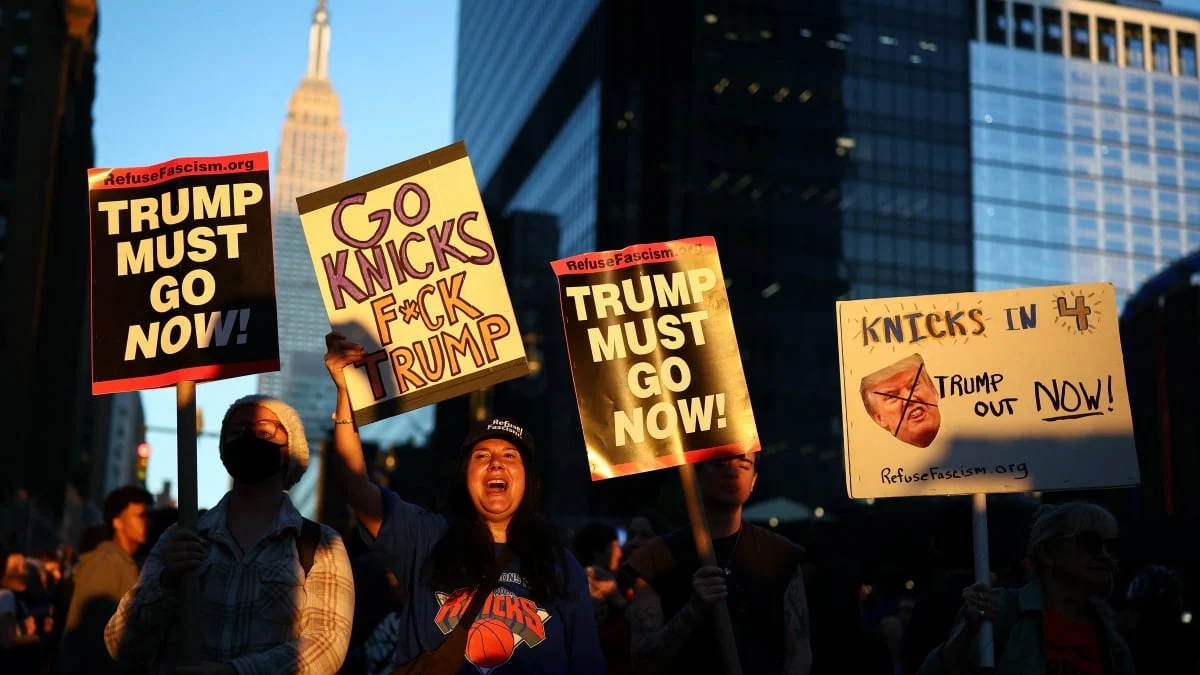
However, that momentum hit a jarring, icy wall on the night of Game 3. In an unprecedented move, President Donald Trump attended the game at Madison Square Garden (MSG), becoming the first sitting president to attend an NBA Finals matchup. The result was not the unifying display of national sportsmanship one might expect, but rather a clash of politics and fandom that saw the President met with a deafening wall of boos from the New York crowd.
The Chronology of a Controversial Night
The tension surrounding the President’s attendance began the moment his travel plans were announced following the Knicks’ Game 2 victory. Almost immediately, the internet erupted in a mixture of derision and genuine concern. Superstitious sports fans, who view the Knicks’ championship drought as a cosmic trial, expressed immediate fears that the President’s presence would invite a “curse” upon their team.
Pre-Game Friction
The logistics of the President’s visit caused immediate friction with the city’s pulse. The U.S. Secret Service, mandated to provide the highest level of security, imposed strict cordons around the perimeter of Madison Square Garden. These security measures forced the cancellation of a highly anticipated public watch party planned for outside the arena.
The cancellation did little to dampen the spirits of the locals. Mayor Zohran Mamdani, who attended the game, quickly pivoted to organize an alternative viewing event at Bryant Park. Meanwhile, social media became a staging ground for collective action. TikTok users began sharing tutorials on how to properly voice dissent, with one viral video titled “How to ward off the curse coming for the Knicks in game 3” serving as a guide for the thousands of fans who felt their championship dream was being threatened by political theater.
The Moment of Impact
As the national anthem concluded and the stadium lights dimmed, the broadcast cameras panned to the presidential box. The reaction was instantaneous. A roar of disapproval cascaded from the rafters of the Garden, a sound so visceral it was audible even to those watching from home. Attendees at the Bryant Park watch party added their own voices to the chorus, creating a city-wide cacophony of disapproval.
The game itself proved to be a grueling, high-stakes affair. Despite the crowd’s attempts to “boo away the curse,” the Knicks fell to the San Antonio Spurs in a nail-biting, point-for-point battle that left the Garden stunned.
The Politics of the Court: Supporting Data and Context
To understand why the crowd’s reaction was so severe, one must look at the historical context of the relationship between the Trump administration and the NBA. President Trump has frequently utilized his platform to criticize the league, often targeting what he describes as “liberal player politics.”
In the eyes of many NBA fans, the league—which has historically championed social justice initiatives—represents values diametrically opposed to those espoused by the Trump administration. This cultural divide has turned the NBA into a flashpoint for American political discourse.
The “curse” narrative, while tongue-in-cheek, reflects a deeper reality: the sports arena is no longer a neutral space. The decision to attend a marquee event during a period of high national tension is a calculated political maneuver. By inserting himself into the NBA Finals, the President effectively transitioned the game from a test of athletic prowess to a test of public approval.

Official Responses: A Tale of Two Realities
The disconnect between the President’s perception and the reality inside the arena was stark. Speaking to reporters on the tarmac outside Air Force One following the game, President Trump appeared to project a different narrative regarding his reception.
"I mean, I thought it was amazing, actually," the President remarked. "You mean when they had the camera on me? I thought it was very good. Yeah. It was certainly amazing. It was, I think, mostly cheers. It was loud and it was very enthusiastic."
When asked about the cultural divide between the White House and the league, he doubled down on his previous critiques. "It tends to be a little left-wing, but it’s great entertainment. It’s great," he added, effectively dismissing the political weight of the boos as mere enthusiasm.
This response has further fueled the fire online. Critics point to his statement as a classic example of “alternate reality” rhetoric, arguing that the deafening booing could not possibly be misinterpreted as “cheers.”
Implications for the Future of Sports and Politics
The events at Madison Square Garden carry significant implications for the intersection of American sports and politics.
1. The Erosion of the Neutral Ground
Sports have long been considered a “third space”—a place where people from all walks of life could set aside their political differences for a few hours of collective escapism. The events of Game 3 suggest that this neutral ground is rapidly eroding. When the highest office in the land becomes an active participant in a sporting event, the stadium becomes a battleground.
2. The Power of Organized Fanbases
The ease with which New York fans organized and mobilized their dissent via social media demonstrates a new level of fan-activism. The use of TikTok to coordinate chants and “boo tutorials” shows that modern fanbases are capable of responding to political figures with the same strategic intensity they use to support their teams.
3. The Risk of Security Overreach
The cancellation of the public watch party due to Secret Service requirements highlights the tension between public life and national security. For many New Yorkers, the loss of their public viewing space was a direct affront, further solidifying their resentment toward the President’s visit. This could set a precedent where future presidential visits to large-scale events are met with even stricter security, potentially alienating the public further.
Conclusion
As the series moves forward, the “Trump Curse” will likely remain a topic of intense conversation. Whether or not the Knicks can recover in Game 4 remains to be seen, but the events of Game 3 have already secured a place in sports history.
What should have been a night celebrating the return of the Knicks to the pinnacle of basketball was instead marked by the friction of a divided nation. The cheers, the boos, and the political rhetoric have created a spectacle that arguably overshadowed the game itself. For the NBA, the challenge remains: how to maintain the integrity of the sport when the world’s most polarizing figures decide that the court is the perfect place to make their next move.
As the city of New York prepares for the remainder of the series, the only certainty is that the crowd will remain a formidable force—not just for the opposing team, but for any politician who dares to test their resolve.
 Azzam Bilal Chamdy
 Muslim
 Reynand Wu
