

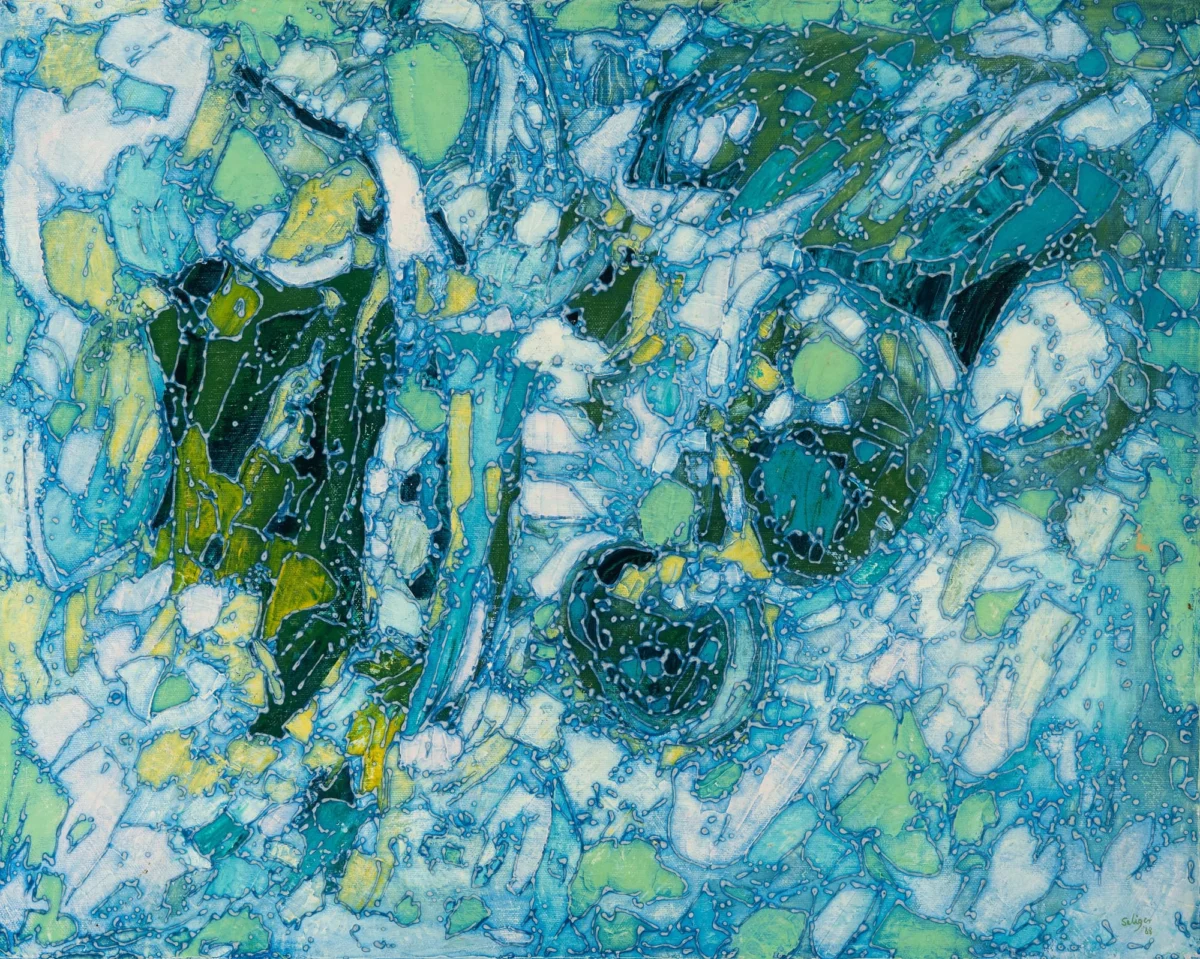
In the annals of mid-20th-century American art, the narrative of Abstract Expressionism is often dominated by the titanic figures of the New York School: the sweeping gestures of Jackson Pollock, the somber color fields of Mark Rothko, and the imposing canvases of Willem de Kooning. Yet, standing quietly on the periphery of this seismic movement was a young prodigy who charted a path entirely his own. Charles Seliger, one of the youngest members of that generation, rejected the gargantuan scale and aggressive bravado of his contemporaries. Instead, he turned his gaze inward—to the microscopic, the cellular, and the intricate architecture of the natural world.
Nearly two decades after his passing, the exhibition Charles Seliger: The Structure of Matter, A Centennial Exhibition at Hollis Taggart serves as a vital corrective to the historical record, reintroducing a maverick whose work bridges the gap between Surrealist automatism and a profound, scientific reverence for the building blocks of life.
A Precarious Beginning: The Prodigy of 57th Street
The trajectory of Charles Seliger’s career began with an event that would be the envy of any aspiring artist. In 1945, at the age of just 19, he was granted a solo exhibition at Peggy Guggenheim’s legendary gallery, The Art of This Century. To be included in the orbit of Guggenheim—the premier patron of the avant-garde—was to be anointed by the movement itself.
While Seliger was technically part of the emergence of Abstract Expressionism, he was a stylistic outlier from the start. Where others sought to project the internal psyche onto expansive canvases through heroic, physical movement, Seliger sought to transcribe the rhythms of the biological. His interest lay not in the ego, but in the observation of nature’s invisible patterns. He was deeply influenced by the Surrealist practice of "automatism"—the technique of allowing the hand to move randomly across the canvas to tap into the subconscious—but he refined this into a meditative, highly controlled discipline.
Chronology of a Quiet Maverick
To understand Seliger’s place in history, one must look at his evolution across the decades:
- 1945: His breakout solo show at The Art of This Century establishes him as a wunderkind of the New York scene.
- 1940s–1950s: Seliger spends these years refining his "biomorphic" style. While his peers move toward Action Painting, he focuses on intricate, web-like structures that evoke the density of botanical or cellular life.
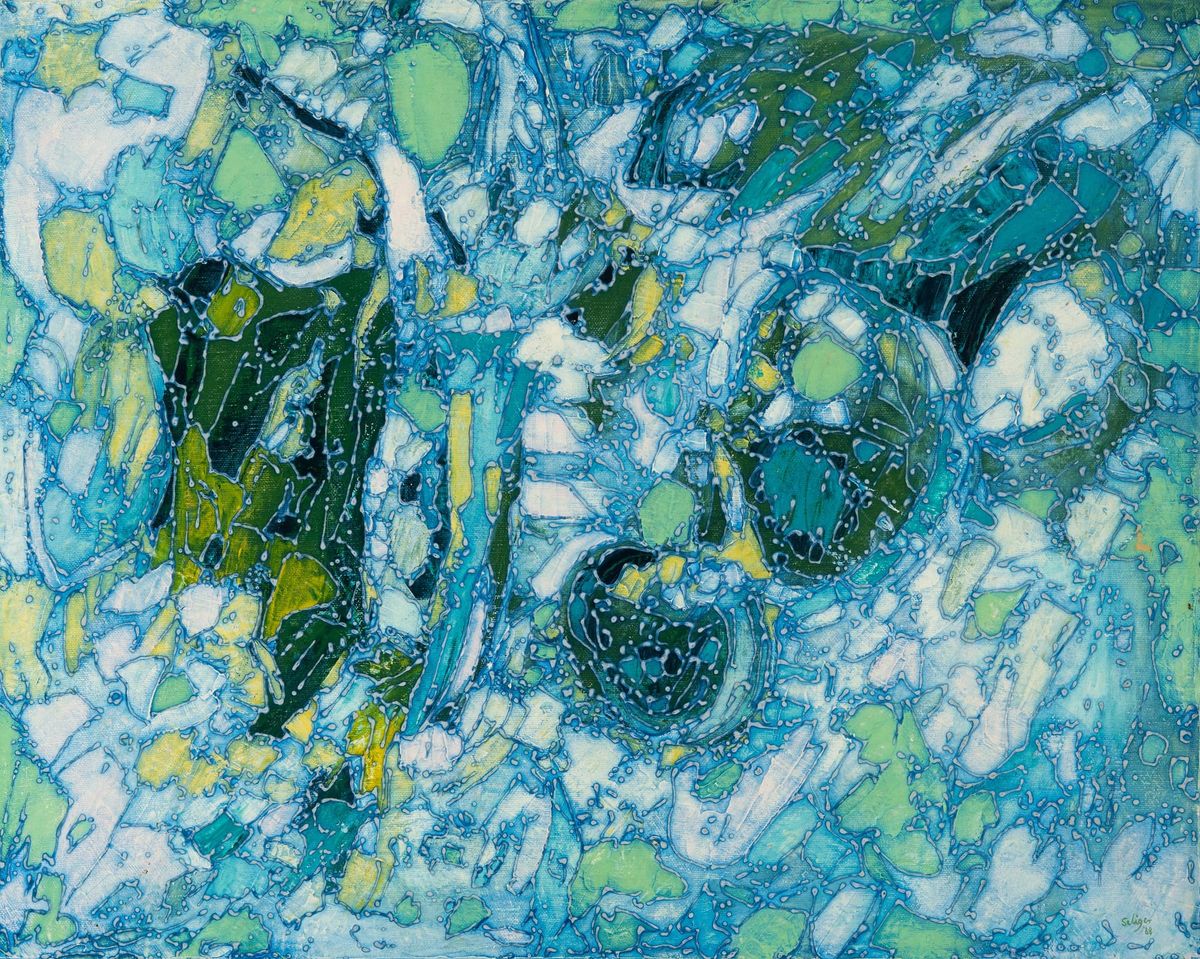
- 1960s: His work gains a sharper, more defined edge, as seen in pieces like May Day (1968). The transition from Surrealist fluidity to a more structural, almost architectural approach to composition becomes evident.
- 1970s–1990s: Seliger continues to work in relative isolation from the mainstream trends of Pop Art and Minimalism, maintaining his focus on the intersection of nature and geometry.
- 2010: Following his death in 2009, Michael Rosenfeld Gallery organizes a significant memorial exhibition, marking a brief surge in scholarly interest.
- 2026 (Centennial): The Hollis Taggart exhibition brings his work back into the light, providing a retrospective lens on his century-long legacy.
The Science of the Aesthetic: Supporting Data
Seliger’s work cannot be categorized by the standard vocabulary of Abstract Expressionism because his primary source material was not emotional catharsis, but the natural sciences. He was an artist-observer, deeply invested in how the macrocosm mirrors the microcosm.
His process involved a meticulous layering of paint, often creating a surface that feels like a cross-section of organic matter—a rock formation, a hive, or the complex anatomy of a plant. In May Day, the viewer is not looking at a landscape, but into the very DNA of spring. His palette, often earth-toned and muted, grounded his work in the physical reality of the planet, even when his forms drifted into the abstract.
Critics have noted that Seliger’s refusal to "scale up" was a deliberate aesthetic choice. By keeping his works small and intimate, he demanded that the viewer approach the canvas with the same focus one might use when looking through a microscope. This interaction creates a private, almost sacred space between the painting and the observer, a stark contrast to the public, performative nature of his contemporaries’ works.
Official Perspectives and Critical Re-evaluation
The art establishment has historically struggled to place Seliger. His independence—the very quality that makes him so compelling—was the primary reason he was excluded from many mid-century retrospectives. Because he did not fit the "macho" mythos of the Abstract Expressionists, his contributions were often relegated to a footnote.
However, recent discourse from galleries and curators suggests a shift. Hollis Taggart, in organizing the current centennial exhibition, emphasizes that Seliger’s work anticipates contemporary interests in ecological art and the intersection of art and science.
"Seliger wasn’t just painting nature; he was painting the logic of nature," says a representative from the Charles M. Seliger Trust. "He understood that beauty is not just surface-level; it is embedded in the structure of matter. By ignoring the trends of his time, he ensured that his work would remain timeless, untethered to the specific political or social anxieties of the post-war era."
Implications: Why Seliger Matters Now
The rediscovery of Charles Seliger has significant implications for how we view the history of 20th-century American art. His career challenges the "Great Man" theory of art history, which suggests that significant movements are driven solely by the loudest voices and the largest canvases.
- Revising the Canon: By including Seliger in the conversation, art historians can paint a more nuanced picture of Abstract Expressionism—one that includes the quiet, the intellectual, and the scientific, alongside the gestural and the emotive.
- Environmental Resonance: In an era of climate crisis and renewed scientific inquiry, Seliger’s reverence for the "invisible architecture" of nature feels prescient. He reminds us that the world is composed of systems that exist regardless of human intervention, and that these systems possess an intrinsic, formal beauty.
- The Value of Autonomy: For contemporary artists, Seliger stands as a paragon of professional independence. His refusal to conform to the commercial pressures of the mid-century art market serves as a blueprint for longevity. He stayed true to his vision, trusting that the quality of his work would eventually find its audience.
Conclusion: An Invisible Architecture Revealed
Charles Seliger was a man who looked at a leaf and saw a universe. While the rest of the New York School was busy shouting, Seliger was busy listening to the silent, intricate hum of the biological world.
The centennial exhibition at Hollis Taggart is more than just a survey of a forgotten talent; it is an invitation to slow down. In a modern world saturated with high-definition, fast-paced imagery, Seliger’s work offers a different kind of intensity. It requires patience. It asks us to look closer, to lean in, and to appreciate the invisible structures that hold our world together.
As we look back at the hundred years since his birth, it becomes clear that Seliger was never truly lost; he was simply waiting for the rest of us to catch up to his microscopic vision. He remains, as he was in 1945, an essential, singular voice in the story of American art—a painter of the architecture of the infinite.
 Muslim
 Jia Lissa
