

It is a rare phenomenon in independent cinema when a filmmaker emerges with a directorial voice so fully formed that it feels less like a debut and more like an archaeological discovery. When Anna Biller unveiled The Love Witch in 2016, she didn’t just release a film; she curated an aesthetic manifesto. With its saturated Technicolor palette, deliberate midcentury artifice, and a searing, self-aware interrogation of gender politics, the film established Biller as a singular auteur—a director who writes, directs, edits, and scores her own fever dreams.
Now, a decade later, Biller has returned to the fray with The Face of Horror, a film that trades the vintage occult of the 1960s for the pageantry of the Middle Ages. Premiering at the 2026 Toronto International Film Festival, the film serves as a testament to Biller’s enduring fascination with the double-edged sword of feminine power and the grotesque lengths to which society will go to police it.
The Synthesis of Myth and Modernity
Biller’s sophomore feature is, in many ways, a spiritual successor to her debut. While The Love Witch utilized the visual language of Corman-Poe horror to dissect modern dating, The Face of Horror functions as a medieval tapestry woven with the threads of contemporary anxiety.
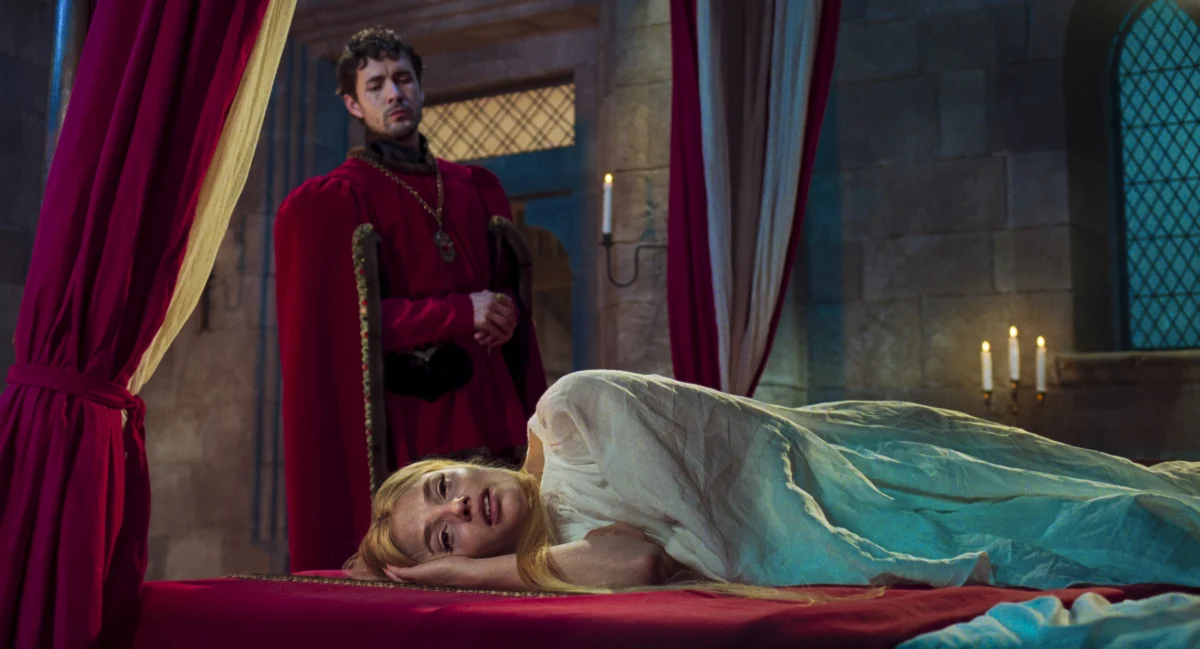
The film introduces us to Eleanor (Kristine Froseth) and Beatrice (Ellie Bamber), two sisters whose beauty serves as both their greatest currency and their primary catalyst for suffering. In a kingdom where chivalry is a mask for opportunism, they are pursued by the noble-seeming Edward (Jonah Hauer-King) and Richard (Leo Suter). The men’s courtship is predatory from the outset: they orchestrate the murder of the sisters’ father, only to conveniently appear as the heroes who will "protect" the grieving women in exchange for their hands in marriage.

What follows is not a standard period romance, but a blistering critique of performative masculinity. As the domestic reality of marriage sets in, Biller leans into the surreal. Edward, burdened by the mundane reality of his wife’s expectations, becomes a figure of terrifying banality. His descent into villainy—attempting to poison his wife with a disfiguring concoction—is not merely a plot point; it is an exploration of the fragility of the male ego when confronted with a woman who demands agency rather than adoration.
A Chronology of Artistic Evolution
The journey to The Face of Horror has been a long one, marked by the meticulous attention to detail that has become Biller’s trademark.
- 2016: The release of The Love Witch solidifies Biller’s reputation as an auteur who bridges the gap between high-camp aesthetics and intellectual feminist theory.
- 2018–2022: Biller spends years in development, sourcing historical materials and refining a script that functions as a "lost Canterbury Tale."
- 2024: Production begins with a significantly expanded budget, allowing for more elaborate practical sets and costumes that echo 1950s Technicolor epics rather than the gritty, mud-caked reality of actual medieval history.
- July 2026: Post-production concludes, with Biller once again collaborating with cinematographer M. David Mullen to ensure that the lighting and camera movements reflect the authentic techniques of mid-century cinema.
- September 2026: The film makes its world premiere at the Toronto International Film Festival to critical acclaim, currently awaiting U.S. distribution.
The Aesthetic and Technical Framework
Central to the film’s success is the visual marriage between Biller and cinematographer M. David Mullen. Their collaboration ensures that the film does not feel like a modern parody, but like a relic from a bygone era that has been miraculously preserved.
The production design is arguably the most ambitious of Biller’s career. The royal feasts, the towering stone castles, and the jesters in vibrant, saturated hues are not just backdrops; they are active participants in the narrative. By utilizing practical effects and period-accurate color grading, the team has avoided the "digital sheen" that often plagues contemporary period pieces.

Critics have noted that the film’s pacing is intentionally unconventional. Much like the structure of Geoffrey Chaucer’s The Canterbury Tales, the narrative is prone to digressions. The plot will grind to a halt so that a character might deliver a monologue on the paradoxes of beauty, or to allow for an extended, dreamlike musical sequence featuring a court jester. For some, these breaks may feel disruptive, but they are vital to Biller’s thesis: the film is a meditation on the journey of the female experience, not a race to a conclusion.
Supporting Data: The Biller Signature
The reception of The Face of Horror confirms that Biller’s audience has grown significantly since 2016. Data from early festival screenings suggests a high level of engagement among younger demographics who resonate with her blend of "storytime" narratives and academic discourse on gender.
- Critical Reception: Current consensus places the film at a high B+ grade, with praise focused on the "stunning" mise-en-scène and the "sharp, biting" script.
- Production Scale: While exact budget figures remain private, industry insiders confirm that Biller was granted a higher tier of funding than The Love Witch, which allowed for the inclusion of period-accurate armor, elaborate silk costuming, and a larger ensemble cast.
- Thematic Consistency: Throughout her work, Biller maintains a 100% focus on the "female gaze." Every shot is calibrated to emphasize the character’s internal emotional landscape, often using the environment to reflect the protagonist’s psychological state.
Official Responses and Industry Buzz
The buzz surrounding the film’s distribution is palpable. Festivals have become the primary battleground for indie films with strong, distinct voices, and The Face of Horror is being viewed as a "must-acquire" title.
"Anna Biller doesn’t just make movies; she constructs worlds that feel like they’ve been waiting for us to discover them," said one festival programmer. "The shift from the 1960s vibe of The Love Witch to a stylized medieval setting is a bold move, but it works because she treats the genre with the same reverence and subversion."

Biller herself has been characteristically guarded about the deeper meanings of the film, preferring to let the work speak for itself. In interviews during the festival, she emphasized that the medieval setting was chosen specifically for its cultural resonance regarding the "commodification of the female body." She noted, "Whether it’s the 14th century or the 21st, the script regarding how a woman should look and behave has remained remarkably, and tragically, consistent."
Implications for Independent Cinema
The arrival of The Face of Horror has profound implications for the state of independent filmmaking. In an era where many indie films are chasing a "hyper-realistic" aesthetic or leaning heavily into digital deconstruction, Biller’s commitment to high-artifice and classical composition is a radical act of rebellion.
- The "Auteur" Model: Biller remains one of the few filmmakers who maintains total control over every creative aspect of her films. Her success serves as a blueprint for independent directors who prioritize artistic integrity over commercial compromise.
- Genre Blending: By mixing horror, period drama, and feminist theory, Biller is helping to redefine what "genre cinema" can be. She proves that a film can be visually spectacular while simultaneously serving as a vehicle for complex philosophical debate.
- The Long-Form Career: The ten-year gap between her features is a rarity in the modern industry. However, the quality of The Face of Horror suggests that this deliberate, slow-burn approach is essential to her process. It signals to the industry that patience in the creative process can result in a more durable and impactful body of work.
As the film continues its festival run, the conversation surrounding it will likely center on whether Biller’s work can transcend the "cult" label and reach a broader audience. With its sharp, funny, and deeply unsettling look at the "face of horror"—which, in Biller’s world, is almost always the face of a man who cannot handle a woman’s autonomy—the film is poised to be one of the most discussed pieces of cinema in 2026.
For those who have been waiting a decade for the next chapter in Anna Biller’s filmography, The Face of Horror is more than worth the wait. It is a brilliant, colorful, and haunting reminder that in the right hands, the past can tell us everything we need to know about our own, uncertain future.
 Jia Lissa
 Lina Irawan
 Iffa Jayyana
