

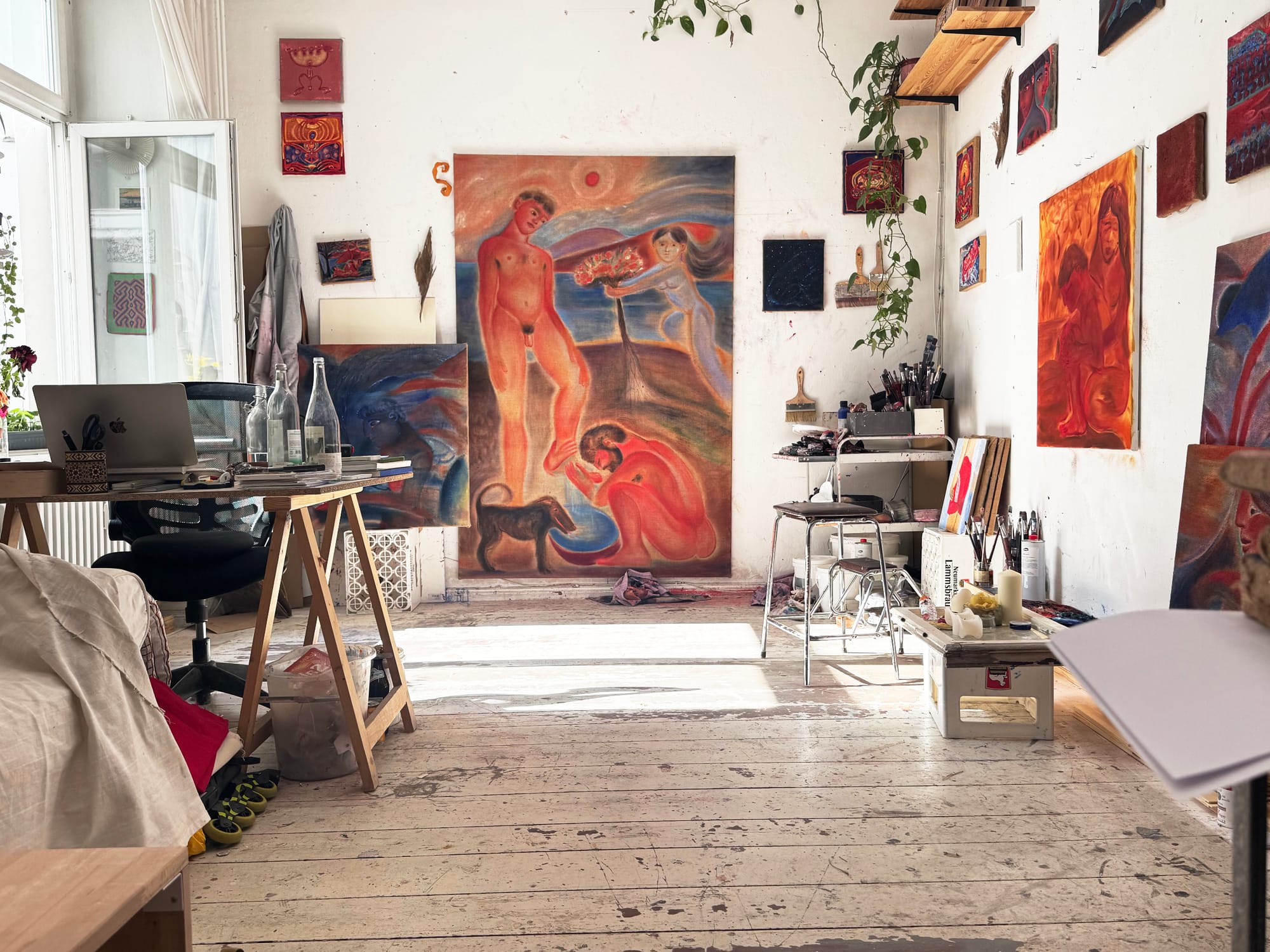
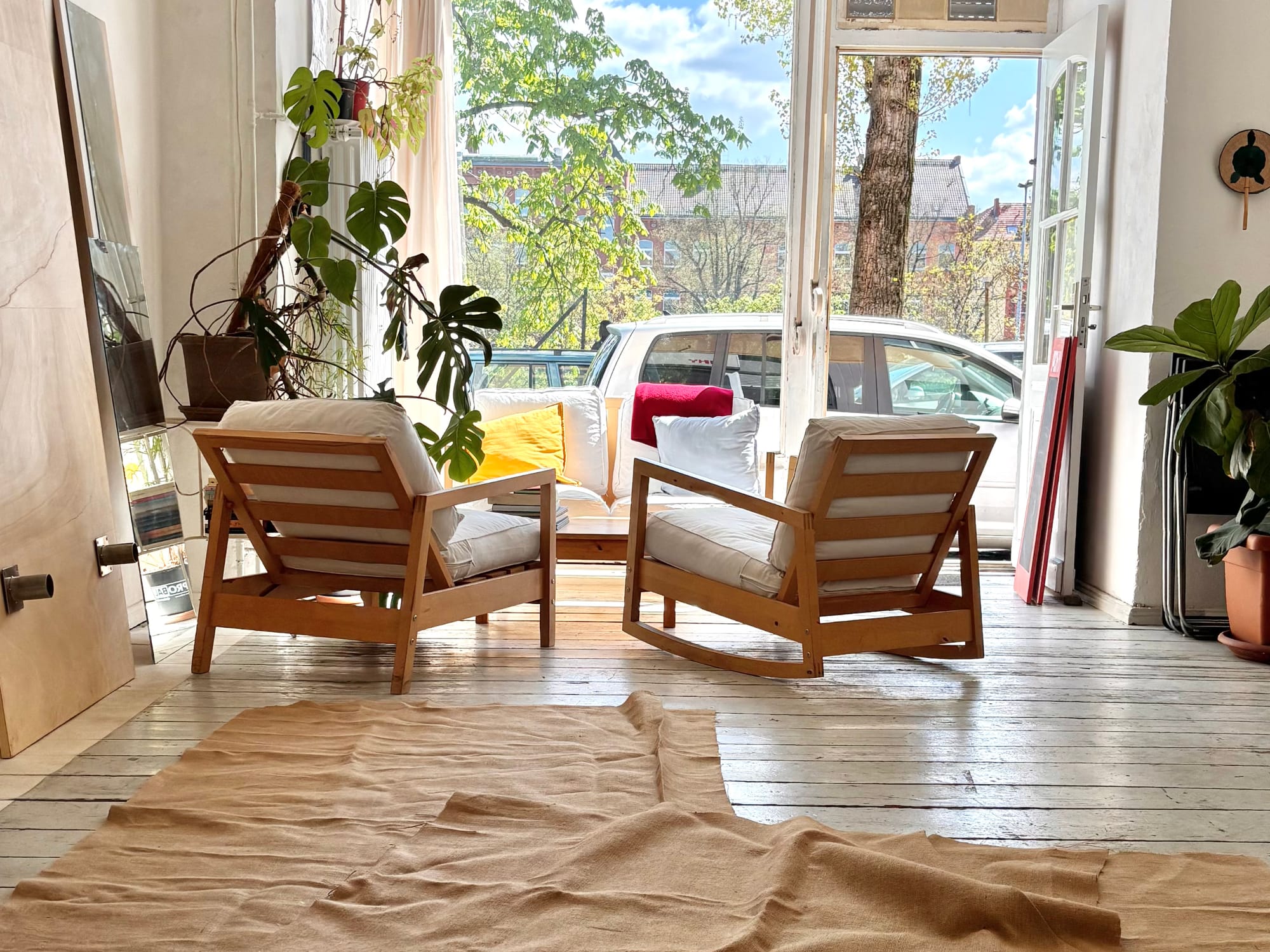
In the bustling creative landscape of Berlin, where industrial spaces and sprawling galleries often dictate the rhythm of artistic production, one painter has carved out a more intimate existence. Daniel Correa Mejía, a fixture of the city’s contemporary art scene, has spent the last thirteen years anchoring his practice in a shared ground-floor studio that serves as both a laboratory for his evolution and an extension of his own home.
This installment of A View From the Easel—the 341st in the long-running series—explores the symbiotic relationship between an artist and his environment. For Mejía, the studio is not merely a place of labor; it is a living, breathing archive of his personal history, his family, and his tactile connection to the materials of his craft.
The Geography of the Creative Process
A Decade-Plus of Continuity
The permanence of Mejía’s workspace is an anomaly in an era of rapid gentrification and studio displacement. Having occupied his current Berlin studio for thirteen years, Mejía has allowed the space to mature alongside his own artistic trajectory. This longitudinal relationship has fostered a unique environment where the physical walls, the light, and the arrangement of objects have become active participants in the creative process.
"I feel really attached to this space," Mejía notes. "It has evolved with me through so many years that I can connect easily with it and with my practice. It’s as if the space has a special energy for creating."
The Daily Ritual
Mejía’s day begins not with the frantic pace of the digital world, but with a deliberate shift toward the analog. Arriving around noon, he centers his day on a four-hour block of intensive painting. However, the "work" of the artist is rarely confined to the canvas. The remaining hours are spent in a state of productive ambiguity: reading, writing, drawing, and, perhaps most importantly, observing.
This intuitive approach—what he describes as "moving through the studio"—allows for a dialogue between finished pieces and nascent ideas. His process is heavily reliant on his personal diaries, which serve as a repository for sketches and emotional markers. By consulting these journals, he selects imagery that resonates with his internal state, ensuring that every new piece is a reflection of his current lived experience rather than a formulaic output.

The Intersection of Memory and Material
The Fabric of Light
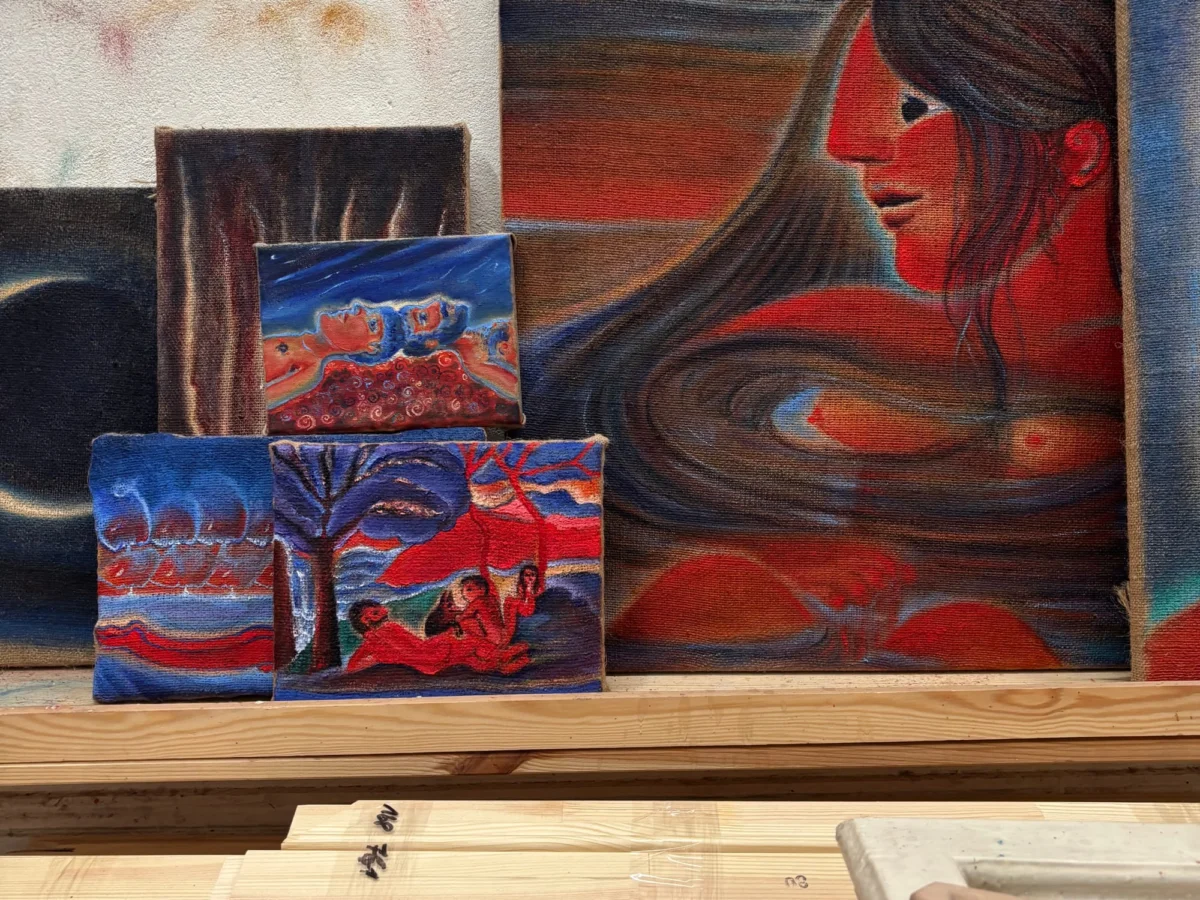
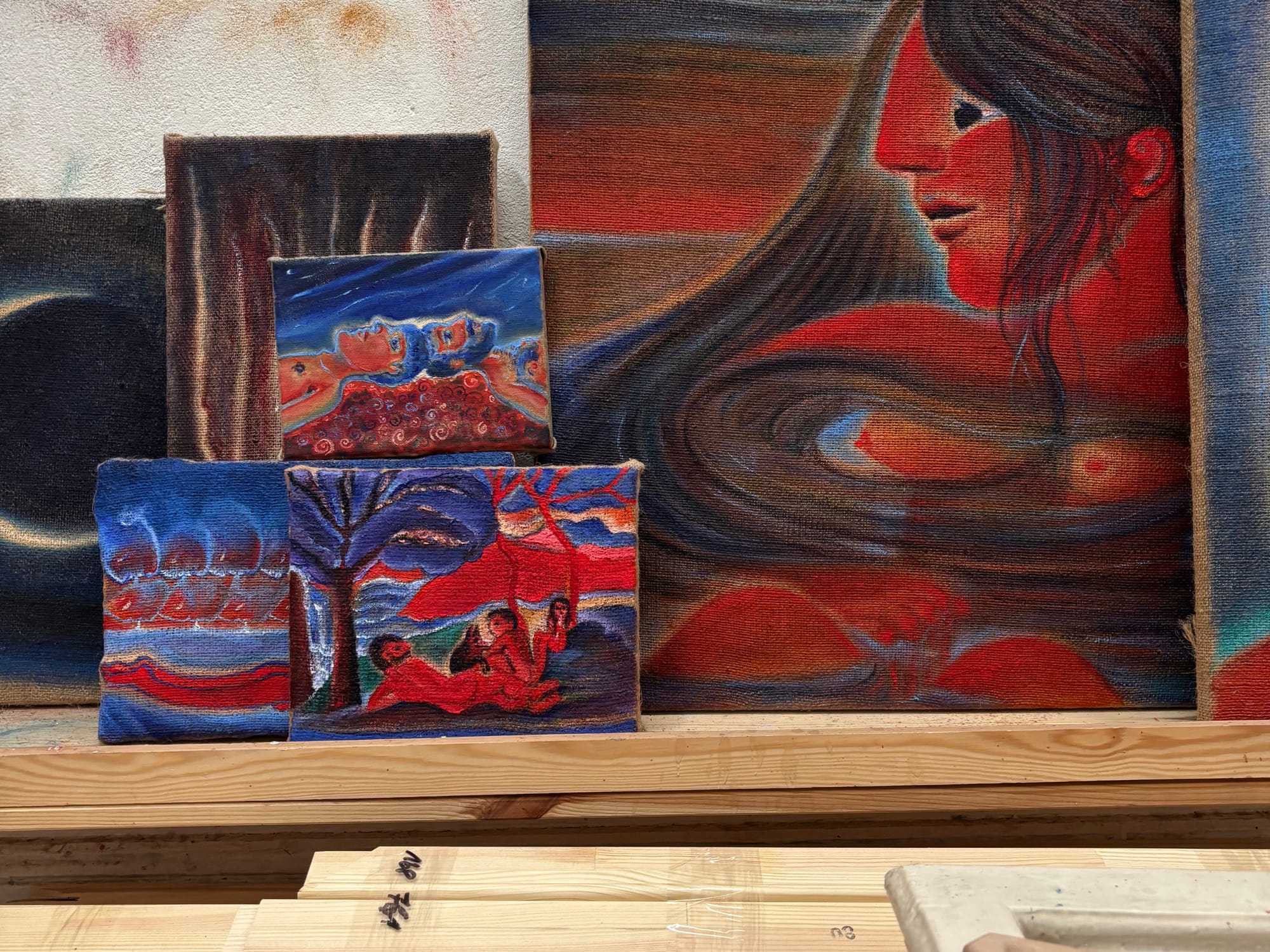
At the heart of Mejía’s technical approach is a profound reverence for his substrate. He works primarily on jute, a choice that transcends aesthetic preference and enters the realm of philosophy. For Mejía, the texture of the fabric is not merely a base but a primary source of illumination.
"Without the fabric, there would be no painting," he explains. His technique involves a careful negotiation between the application of oil paint and the preservation of the raw, natural jute. By allowing the bare fabric to function as the light source, he creates a luminosity that emerges from within the painting rather than sitting on top of it. This reliance on the inherent color and texture of the material creates a poetic, subterranean glow, emphasizing the raw materiality of the work.
Objects as Narrative Anchors
The studio is crowded with more than just canvas. It is a curated collection of influences: family photographs from Colombia, raw natural elements like seeds and stones, and the accumulated remnants of past projects. These objects serve as a grounding force, connecting the artist to his heritage and the natural world. This "dialogue" between his work and the objects surrounding it frames his practice as an ongoing conversation rather than a series of isolated productions.
Community and the Public/Private Threshold
The Urban Studio
One of the most striking aspects of Mejía’s workspace is its permeability. Located on the ground floor with a street-facing window, the studio acts as a filter for the outside world. This design choice is intentional; by leaving the door open, he remains tethered to the pulse of his neighborhood.
This connectivity extends to his professional circle. Sharing the space with two other artists and a writer, Mejía maintains a balance between the solitude required for painting and the social sustenance provided by a creative community. While his practice is inherently solitary, the presence of his peers ensures that he is never entirely isolated, providing a vital check against the potential stagnation of an "artist-in-a-vacuum" scenario.
The Myth of the Neutral Space
Mejía’s reflections on the "protected" nature of the studio offer a poignant critique of the modern gallery environment. He observes that his work thrives within the messy, lived-in context of the studio, where it exists in relation to his personal objects and the passage of time. He expresses a desire—yet acknowledges the difficulty—of translating this specific, charged energy into the "neutral" spaces of the white-cube gallery. To Mejía, the studio is a developmental entity that cannot be replicated or exported.
Implications for Modern Practice
The Value of Limitations
In an industry that often celebrates the "more is more" philosophy—larger studios, faster production, wider reach—Mejía finds strength in constraint. He views his limited square footage as a catalyst for ingenuity. When space is scarce, the artist is forced to innovate, finding new ways to approach the canvas and manage the flow of work.
Furthermore, he rejects the necessity of a massive industrial loft. His preference for a cozy, home-like environment suggests that the quality of life and the ability to maintain a consistent routine are more conducive to long-term success than the prestige of a specific aesthetic workspace.
The Digital Struggle
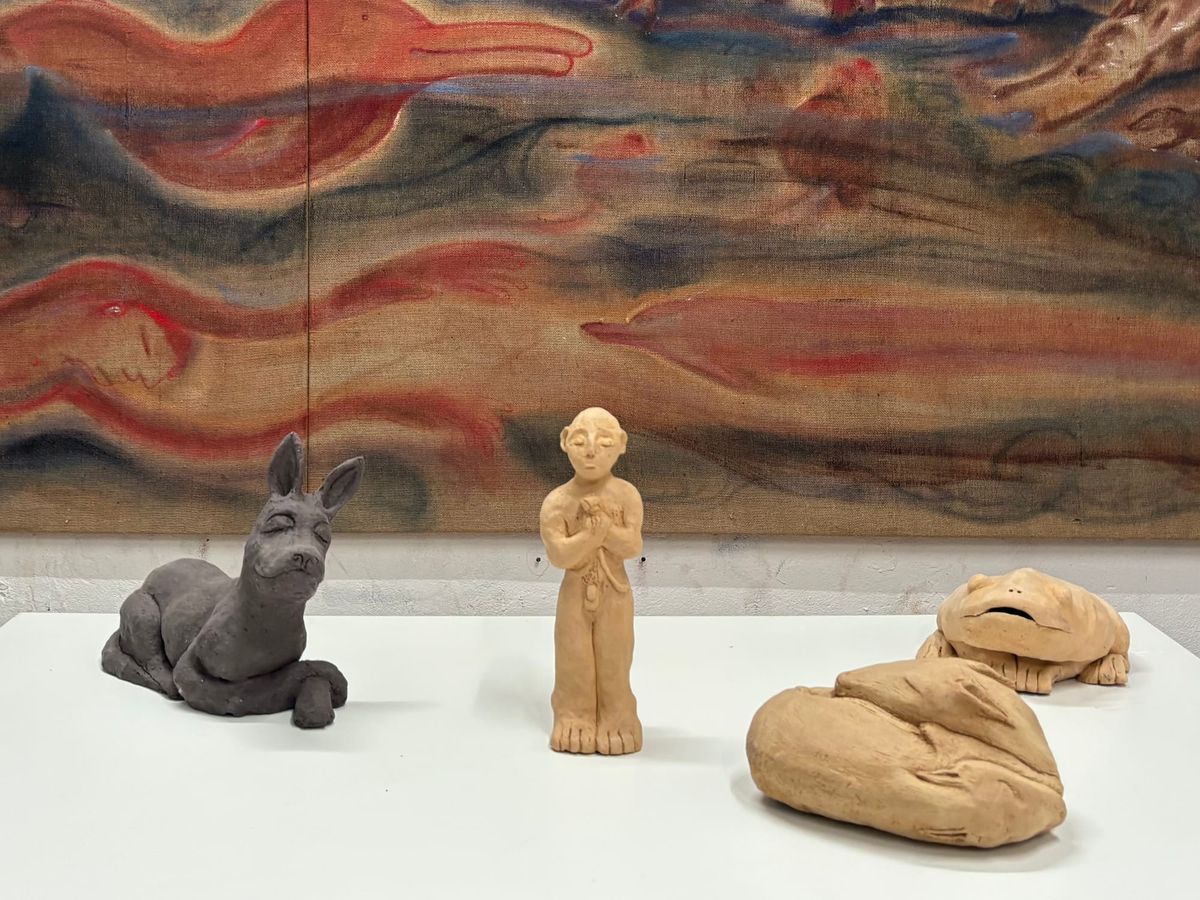
Despite his commitment to traditional mediums like oil and clay, Mejía is not immune to the pressures of the modern digital landscape. He admits to the occasional distraction of social media, labeling it a struggle he shares with many of his peers. However, his antidote is simple: a return to the tactile. Whether he is working with clay—which he values for its elemental, grounding nature—or painting, his process is a deliberate reclamation of the physical self in an increasingly virtual world.
Conclusion: A Philosophy of Presence
Daniel Correa Mejía’s thirteen-year residency in his Berlin studio serves as a masterclass in artistic sustainability. By prioritizing continuity, community, and the physical dialogue with his materials, he has created a space that is less a factory and more a sanctuary.
His work serves as a reminder that the most profound art is often born from the quiet, rhythmic repetition of daily life. As he continues to paint on jute, letting the light of the fabric guide his brush, he remains committed to the idea that the studio is not just a place where work is made—it is a place where the artist is made. For those looking to understand the intersection of life and labor, Mejía’s practice offers a compelling roadmap: seek the space that feels like home, surround yourself with what moves you, and never stop listening to the dialogue between the hand, the material, and the memory.
 Muslim
 Evan Lee Salim
 Jia Lissa
