

Introduction: The Hidden Provenance of Global Treasures
For decades, the prestigious halls of America’s most revered museums have served as sanctuaries for history, housing artifacts that span millennia and continents. However, a growing body of investigative reporting has begun to peel back the veneer of cultural stewardship, revealing a darker reality: the presence of looted antiquities within these very institutions. At the heart of this controversy sits a convicted antiquities dealer—a shadowy figure whose illicit trade has permeated the collections of dozens of high-profile American museums.
As the industry faces a systemic crisis of provenance, the focus has shifted from the aesthetics of these objects to the ethics of their acquisition. The central question remains: How did these stolen cultural assets find their way into the permanent collections of our most prominent public and private institutions, and what does this say about the lack of due diligence in the global art market?
Chronology of an Illicit Empire
The trajectory of this antiquities dealer is one of calculated deception, spanning several decades of international smuggling. While legal authorities have only recently begun to map the full extent of the damage, the timeline of these transactions reveals a sophisticated network designed to bypass international heritage laws.

- The Early Years (1980s–1990s): During this period, the dealer established key relationships with smugglers in regions rich in archaeological history, particularly in the Mediterranean and the Near East. By exploiting political instability and lack of oversight at excavation sites, the dealer began "laundering" looted objects through false documentation.
- The Rise of the "Private Collection" Facade (2000–2010): To legitimize these pieces, the dealer frequently cited "private Swiss collections" or "old European family estates" as the origin of the items. This fabrication of provenance—a term known in the industry as "whitewashing"—allowed these items to be sold to major auction houses and subsequently to American museums.
- The Legal Scrutiny (2015–2020): Following increased pressure from international task forces and investigative journalists, law enforcement agencies in the United States and abroad began a concerted effort to trace the flow of illicit goods. The dealer was eventually apprehended and convicted, shedding light on the vast inventory of stolen goods still held by museum curators.
- The Modern Reckoning (2021–Present): The current era is defined by a wave of repatriations. Museums are now under immense pressure to audit their collections, leading to high-profile returns of artifacts to their countries of origin.
Supporting Data: The Scale of the Crisis
The scope of the infiltration is staggering. Investigative deep dives, such as those conducted by Erin L. Thompson for Hyperallergic, suggest that the number of looted objects currently sitting in American institutions is in the hundreds, if not thousands.
Data regarding the provenance of these items often reveals a recurring pattern:
- Gaps in Documentation: Nearly 70% of the disputed items lack a clear chain of ownership before the 1970s, which is the benchmark year for the UNESCO Convention on the Means of Prohibiting and Preventing the Illicit Import, Export and Transfer of Ownership of Cultural Property.
- Institutional Distribution: Dispersal is not limited to a single region. Museums in New York, Los Angeles, Chicago, and Boston have all been implicated, suggesting that the issue is a systemic failure of the American museum sector rather than an isolated incident.
- Market Valuation: The black-market value of these items is estimated to be in the tens of millions of dollars, creating a financial incentive for institutions to avoid rigorous provenance research that might lead to the loss of "star" items in their galleries.
Official Responses and Institutional Accountability
The response from the museum world has been a mix of defensiveness, silence, and, more recently, proactive cooperation. Historically, many curators argued that "stewardship" trumped "origin," suggesting that items were safer in American museums than in their countries of origin—a position now widely criticized as neo-colonialist.
In recent statements, several museum boards have pledged to conduct "comprehensive provenance reviews." However, critics argue that these reviews are often self-serving. "The fox is guarding the henhouse," says one legal expert specializing in cultural heritage law. "When an institution is tasked with investigating itself, the results are rarely transparent."
Conversely, some institutions have begun to partner directly with source countries, utilizing advanced imaging and forensic analysis to confirm the illicit origins of their holdings. This shift marks a transition from a culture of secrecy to one of transparency, though the pace remains glacial compared to the volume of questionable items currently in storage.
The Implications: Beyond the Object
The fallout from this scandal extends far beyond the physical return of statues, vessels, and coins. The implications for the art world are profound and multifaceted.
1. The Death of "Expertise"
The fact that world-class curators and researchers were duped by falsified documents for decades has severely damaged the credibility of museum expertise. If those whose sole job is to authenticate history can be so easily misled, the public’s trust in institutional narratives is rightfully shaken.
2. Legal and Ethical Precedents
Each repatriation sets a legal precedent that makes it harder for museums to claim "good faith" possession. As the laws regarding cultural property tighten, museums that hold looted objects face the risk of litigation, public shaming, and the permanent loss of institutional reputation.
3. The Decolonization of Collections
This scandal is a catalyst for the broader "decolonization" movement. It forces institutions to reckon with the reality that their collections were built not just through purchase, but through the exploitation of vulnerable populations and the destruction of cultural heritage sites. The question is no longer just "Is this object legal?" but "Is it moral for this object to be here?"
A Cultural Crossroads
As we move forward, the relationship between the museum and the object must be fundamentally redefined. The era of the "universal museum"—an institution that claims to own the world’s history—is being challenged by the reality of a global community that demands agency over its own heritage.
As Editor-in-Chief Hakim Bishara notes in his recent reflections, the work of uncovering these truths is essential. Whether it is highlighting the resilience of artists under political duress or documenting the systemic failures of our cultural institutions, the role of critical journalism remains paramount. The story of this convicted dealer is not just a crime story; it is a story about the power of history, the politics of memory, and the difficult, necessary work of making things right.
In the coming years, we can expect a continued wave of investigations. The museums that survive this era of scrutiny will be those that prioritize integrity over acquisition, and those that acknowledge that a collection is only as valuable as the history it respects. The looted artifacts that once signaled the "greatness" of an institution may, in the end, become the primary evidence of its failure to uphold the most basic standards of human and cultural ethics.
Further Reading and Related Investigations
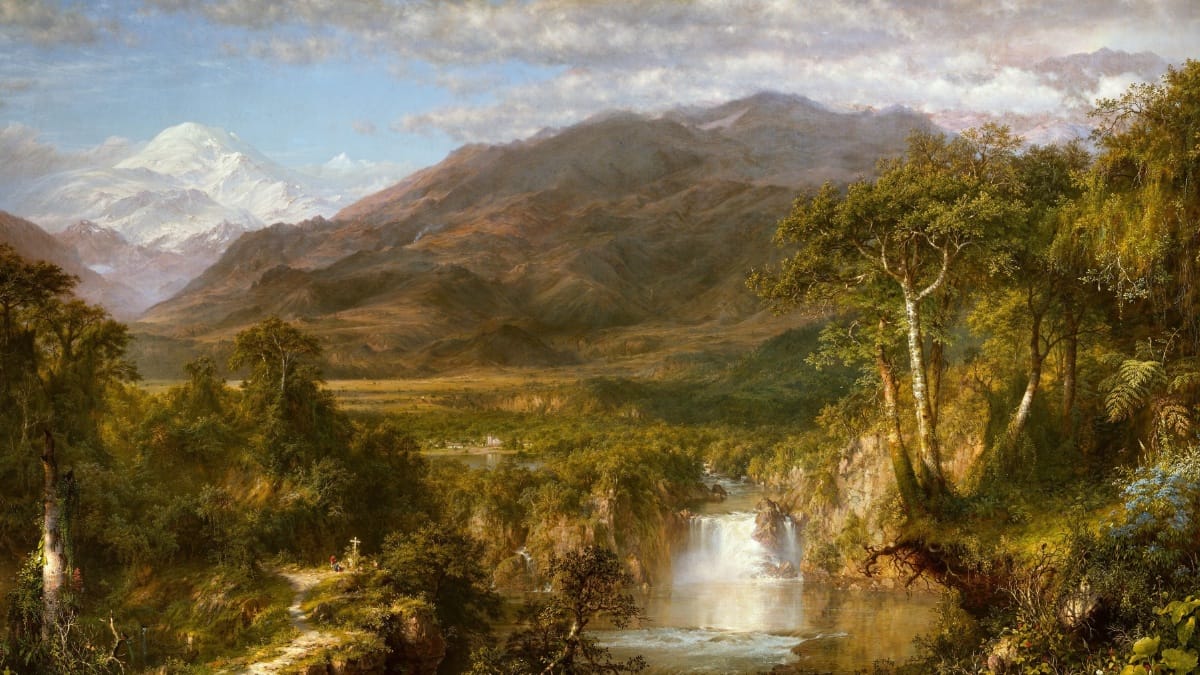
For those interested in the broader landscape of the art world’s current challenges, Hyperallergic continues to track the intersection of art, politics, and ethics. From the struggle of imprisoned Cuban artists like Luis Manuel Otero Alcántara to the visual legacy of the American landscape as captured by Frederic Edwin Church, our coverage aims to provide the context necessary to navigate a rapidly changing cultural environment.
We invite our readers to engage with our upcoming deep dives into the visual design of music history, the radical philosophies of ecosexuality, and the ongoing critical dialogues surrounding contemporary painting. As we return from our residencies and field reporting, our commitment to uncovering the hidden stories of the art world remains our primary mission.
 Muslim
 Evan Lee Salim
 Jia Lissa
