

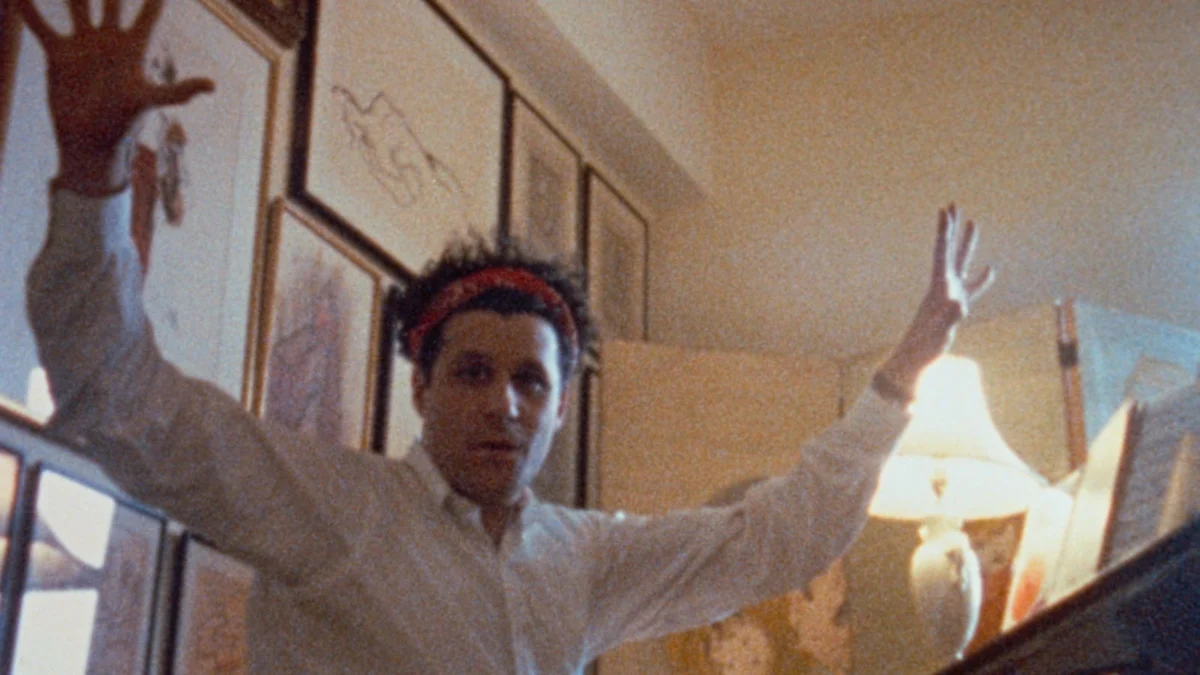
For journalists and documentarians, the ethical boundary between observer and participant is often treated as a firewall. To enter into a romantic entanglement with one’s subject is to invite a storm of scrutiny, potentially compromising objectivity and blurring the line between professional documentation and personal memoir. Yet, in the realm of documentary filmmaking, this vulnerability can sometimes be the key to unlocking a perspective that no neutral party could ever capture.
This tension is the heartbeat of Douglas Keeve’s 1995 documentary Unzipped, a masterpiece of vérité filmmaking that returns to theaters this weekend in a stunning 4K restoration courtesy of Janus Films. As the film makes its way back to audiences, it serves as both a time capsule of the 1990s fashion zeitgeist and a poignant, uncomfortable, and deeply human study of a relationship caught in the crosshairs of professional ambition and personal devotion.
A Portrait of the Designer as a Young Man
At the time of the film’s production, Isaac Mizrahi was not the household name he would eventually become—a man synonymous with the high-low accessibility of Target diffusion lines and a fixture of daytime television. In 1994, Mizrahi was a rising star in the fashion firmament, navigating the high-stakes world of haute couture with a frenetic, charming intensity.
The documentary tracks Mizrahi as he prepares his 1994 collection, famously inspired by the 1922 silent film Nanook of the North. It was a moment of peak fashion excess: Chanel held a majority stake in the Mizrahi house, and the industry was dominated by the "supermodel" era. Keeve, then a photographer and filmmaker in a romantic relationship with the designer, captured Mizrahi at his most vulnerable and volatile. With his signature "Eraserhead" shock of hair and a personality that was equal parts creative genius and nervous energy, Mizrahi provided the perfect subject for a portrait that feels less like a corporate documentary and more like a home movie shot in the epicenter of the industry.
Chronology of a Creative Whirlwind
The production of Unzipped was not merely a job; it was an extension of the couple’s daily life. Filming spanned the preparation for the Paris Fashion Week show, capturing the grueling process of sketches, fittings, and the inevitable ego-driven conflicts that define the industry.

- 1994: The height of production. Keeve follows Mizrahi as he develops the Nanook-inspired collection. The film captures the raw, behind-the-scenes reality of the Isaac Mizrahi fashion house.
- 1995 (January): The film premieres at the Sundance Film Festival, where it earns an Audience Award and critical acclaim for its intimacy and unique access.
- 1995 (Post-Sundance): Shortly after the film’s successful launch, the relationship between Keeve and Mizrahi dissolves.
- 2025/2026: The Sundance Institute and the UCLA Film & Television Archive complete a comprehensive 4K restoration, overseen by Keeve, bringing the film back to the cultural conversation.
The film is not merely a chronicle of clothes; it is a document of a specific, fleeting New York City. For younger viewers currently enchanted by the 1990s nostalgia trend—fueled by the renewed interest in figures like Carolyn Bessette-Kennedy—Unzipped offers an authentic, gritty, and mostly black-and-white look at a world defined by the scent of Parliament cigarettes and the sharp silhouette of Calvin Klein denim.
The Cost of Intimacy: Was the Film to Blame?
The central question that has followed Unzipped for three decades is whether the act of filming the relationship contributed to its demise. When asked about the breakup, Keeve is characteristically reflective.
"Did the movie break us up? I’m not sure I know how to answer that because relationships are so complicated," Keeve told IndieWire. "Isaac is complicated, I’m complicated. So you have two complicateds, plus a complicated world. Our lives were so different, and in some ways, I couldn’t quite keep up with his."
Keeve describes the lifestyle gap between the two men, noting that Mizrahi thrived in the social circuit—dinner, cocktails, after-hours parties—while Keeve balanced his creative output with a need for a different kind of stability. "He wanted a partner who could share those things, which I think is correct," he adds.
Despite the dissolution of the romance, Keeve maintains that the documentary was never a weaponized or manipulative tool. "The movie came in, and the movie had nothing to do with our breakup at all. There was pressure around finishing the movie because we had a deadline, but I was so in love with Isaac… I hate to say it because when you make a movie like that, it just becomes utter rubbish, but it is a love letter to him."

Unfiltered Access and the "Frenemy" Dynamic
One of the most remarkable aspects of Unzipped is its unflinching honesty. Keeve captures Mizrahi in moments of benign volatility—such as his distress over a rival design house’s "Eskimo" collection, which bore a striking resemblance to his own. The film also features Mizrahi’s mother, Sarah, whose presence adds a layer of quintessential, fraught, and deeply loving mother-son complexity to the narrative.
Keeve’s approach to filming was one of total immersion. He admits he withheld the edit from Mizrahi until the film was near completion. "I wouldn’t show Isaac the movie when we were editing it at all," Keeve explains. "There may be those moments in the movie that may seem like I’m shooting him in the bathtub and exploiting him, but I just always had a camera, and Isaac is somewhat oblivious to the camera in a way."
This lack of artifice extends to the supermodels who populate the film, including Naomi Campbell, Christy Turlington, Linda Evangelista, Cindy Crawford, and Kate Moss. Keeve notes that even when Evangelista appears to be having a "hissy fit" backstage, she is acutely aware of the lens. "She’s turning it on for the camera," Keeve notes. "She knows we’re making a movie. She just turns to the camera, and she gives this look like she’s just staring at the camera like, ‘I dare you to judge me or whatever,’ and then she turns away. For me, that’s an incredible moment."
Implications for Modern Documentary Filmmaking
The restoration and re-release of Unzipped come at a time when the ethics of documentary filmmaking are being debated with renewed vigor. As platforms continue to demand more "authentic" and "intimate" content, the line between private life and public entertainment has become increasingly porous.
Unzipped stands as a benchmark for this style. It proves that when the filmmaker has a vested emotional interest in the subject, the result is not necessarily a "puff piece." Instead, it creates a high-stakes environment where the subject’s true personality—both the admirable and the frustrating—is laid bare. The fact that Keeve and Mizrahi remain "frenemies" who collaborated on the restoration suggests that the project, while intense, ultimately honored the truth of their shared history.

For the viewer, the restoration offers a chance to see the film’s "diamonds polished," as Keeve puts it. But more importantly, it offers a glimpse into a time before the digital age sanitized the fashion world. There is a raw humanity in watching Mizrahi on the phone with his mother in the bathroom, oblivious to the camera, that feels almost impossible to replicate in today’s curated, social-media-driven era.
A Legacy Restored
As Unzipped begins its run at the Film Forum in New York, with an expansion to Los Angeles scheduled for October 9, it is clear that the film’s power has not waned. It remains a rare, balanced, and deeply moving document of a creative genius in the throes of his craft.
Keeve’s final assessment of the project, three decades later, is perhaps the best summary of its enduring appeal: "When I’m watching the movie, I’m not really looking at the technical part of the film about how the diamond has been polished even more. I’m really seeing those moments and feeling those feelings."
In an era where "intimacy" is often a manufactured commodity, Unzipped reminds us that the most profound documentaries are the ones that dare to risk everything—including the relationship itself—for the sake of the truth.
 Jia Lissa
 Lina Irawan
 Iffa Jayyana
