

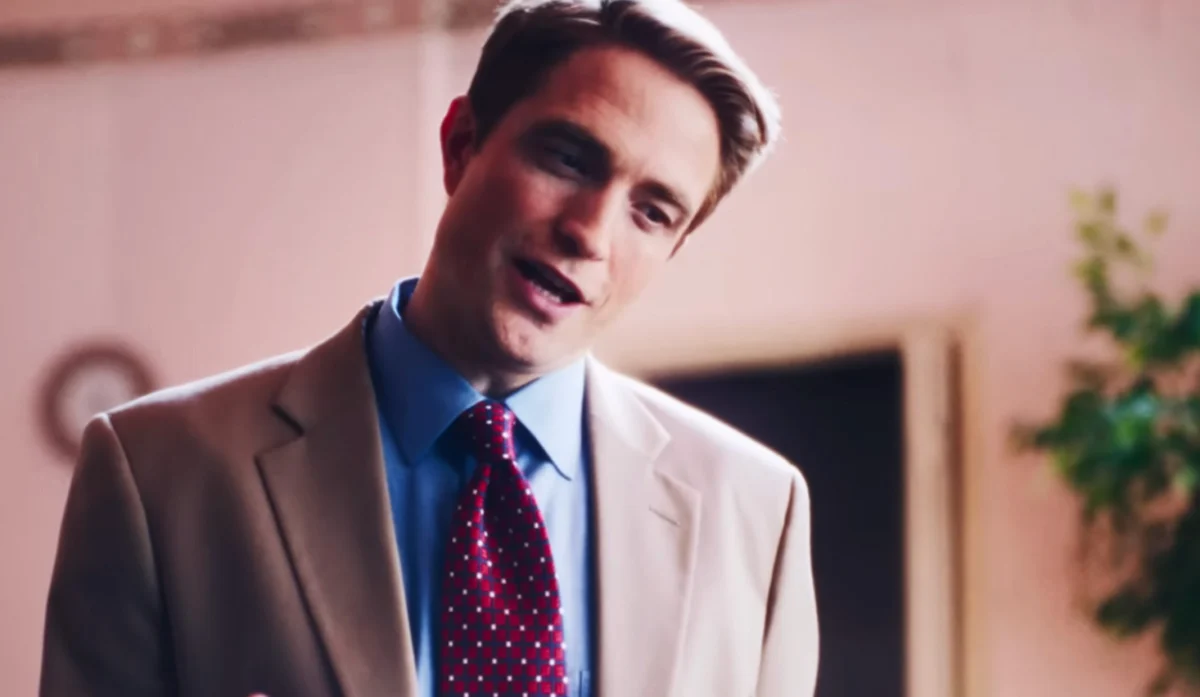
In the high-stakes world of Hollywood development, the path from a script’s inception to the silver screen is rarely a straight line. For A24’s latest psychological thriller, Primetime, the journey was defined by unconventional casting choices, a documentary-style approach to narrative, and the creative friction between a visionary director and his lead star. As the film gains momentum in the current awards season, new light has been shed on the early, volatile days of production, including a revelation that would have fundamentally altered the film’s cultural footprint: the initial suggestion to cast Amanda Knox.

The Casting Revelation: A "Wild" Suggestion
The behind-the-scenes bombshell dropped during a post-screening panel at the Directors Guild of America (DGA) in Los Angeles. Francine Maisler, a veteran casting director whose illustrious resume includes 12 Years a Slave, The Revenant, and the Academy Award-nominated Sinners, opened up about the unconventional brainstorming sessions that occurred during the early development of Primetime.

With Robert Pattinson already locked in to portray the central figure—a character modeled after the sensationalized era of reality-television sting operations and, specifically, the To Catch a Predator phenomenon—director Lance Oppenheim was tasked with finding the perfect foil. The role, which eventually went to three-time Emmy winner Merritt Wever, was initially envisioned through a much more provocative lens.

"I’m going to tell a secret here," Maisler shared with the audience. "When I started this project, Rob was on the movie and before Merritt was cast, Lance brought up the idea of Amanda Knox. That’s how crazy this director is."

The mention of Knox, who became a household name following her highly publicized legal battles in Italy and her subsequent emergence as a public figure, podcaster, and author, elicited a palpable reaction from the crowd. Maisler, known for her sharp instincts and pragmatic approach to talent, admitted that her reaction was immediate and blunt. "And I said, ‘Don’t ever say that again,’" she recalled with a laugh.

The Creative Friction: Oppenheim and the "Off-the-Wall" Process
Following the disclosure, Lance Oppenheim—who joined the panel virtually from London alongside Pattinson and Wever—did not shy away from the anecdote. Instead, he embraced his reputation for pushing boundaries. "Yes, there was a period of time that I would call Francine and I would drive her literally insane with just some very off-the-wall ideas," Oppenheim admitted.

This creative restlessness appears to be a hallmark of Oppenheim’s directing style. As a filmmaker transitioning from documentary work into narrative features, his approach is marked by a refusal to adhere to standard industry conventions. The film’s production was, by all accounts, a pressure cooker of improvisation and calculated disorder.

During the panel, the creative team described the production as a "fever dream." Oppenheim explained that he intentionally fostered an environment that mimicked the content of the film itself. "We really, really tried to keep things carbonated and chaotic," he said. "And that’s really what the movie is about, too. It’s about a production crew that’s kind of going off the rails."

A Study in Tone: Pattinson’s Balancing Act
The chaos of the set extended to the performance of the film’s lead, Robert Pattinson. Tasked with channeling the energy of a disgraced television host, Pattinson found himself navigating a delicate tonal tightrope.

Oppenheim recalled a specific moment during the second week of production that highlights the ambiguity of the role. "I remember… he asked how he felt like it was going and I was like, ‘I feel like you’ve gotten the Chris Hansen part really good… but I also feel like you’re doing Jerry Maguire and Dracula,’" the director noted.

Pattinson, who is also a producer on the project, was quick to retort with his own perspective on the character’s evolution. "And I thought I was doing Mel Gibson and Braveheart," he joked. This back-and-forth illustrates the collaborative, often experimental nature of the Primetime set, where the boundaries between reality television parody and psychological horror were intentionally blurred.

For his part, the Twilight and The Batman star found the lack of structure empowering. "I didn’t have any fear of trying anything," Pattinson said. "Besides, I was the producer. Who was going to tell me no?"

The Role of Andie Bender: Merritt Wever’s Quiet Power
While the casting of Amanda Knox remained a hypothetical, the final choice of Merritt Wever has been lauded by critics and industry peers alike. Wever portrays Andie Bender, the ambitious producer behind the scenes of the show’s predator-trapping operations.

Maisler, who has a long history of working with Wever, was effusive in her praise. "I think she is extraordinary in this film. I think she deserves so much more attention for every piece of work she’s done," Maisler said during the panel.

The sentiment is echoed by industry analysts. In the current Gold Derby odds for Best Supporting Actress, Wever sits at No. 12—a significant position in an exceptionally competitive race. Her performance provides the necessary emotional anchor to the film’s frenetic energy, offering a grounded perspective on the moral decay inherent in the industry the film satirizes.

Implications: The Intersection of Reality and Fiction
The desire to cast someone like Amanda Knox in a project about a televised sting operation speaks volumes about the thematic core of Primetime. The film serves as a meta-commentary on the media’s obsession with "real-life" villains and the voyeuristic nature of modern justice. By attempting to cast a real-life figure known for surviving a media circus, Oppenheim was likely looking for an authentic, lived-in energy that would transcend traditional acting.

The fact that the film moved away from this "gimmick" casting toward a more traditional, albeit brilliant, performance by Wever suggests that the filmmakers ultimately chose to prioritize the integrity of the narrative over the buzz of stunt casting. This decision likely allowed the film to be judged on its merits as a piece of cinema rather than a social experiment.

The Awards Season Outlook
As Primetime continues its theatrical run and makes its rounds through the awards circuit, it is positioning itself as a dark horse in several key categories. Robert Pattinson, currently sitting in the Top 5 for Best Actor in the Gold Derby predictions, is receiving career-best reviews for his portrayal of a man unspooling in real-time.

The film’s success—both in its critical reception and its behind-the-scenes lore—highlights a shift in how A24 manages its projects. By allowing directors like Oppenheim the latitude to test extreme, "insane" ideas before ultimately landing on a cohesive vision, the studio continues to produce work that feels distinct, risky, and deeply resonant with contemporary anxieties.

Conclusion: A Legacy of "What-Ifs"
The revelation of the Amanda Knox conversation will undoubtedly become a piece of trivia that defines the lore of Primetime. It serves as a reminder that the films we watch are often the survivors of a thousand different iterations, shaped by the push and pull of creative vision, casting realities, and the occasional voice of reason in the room.

Whether or not the film would have been "better" or even "different" with a different lead is a question for the archives of Hollywood history. What is certain, however, is that Primetime has succeeded in capturing the spirit of its intended chaos. Through the combined efforts of Oppenheim, Pattinson, and Wever, the film has managed to turn the "carbonated and chaotic" nature of its production into one of the most compelling thrillers of the year.

As we look toward the upcoming awards ceremony, the story of how Primetime was made serves as a testament to the fact that, in Hollywood, sometimes the best creative decisions are the ones that are ultimately, and fortunately, avoided.
 Ali Ikhwan
 Reynand Wu
