

By Aaron Short
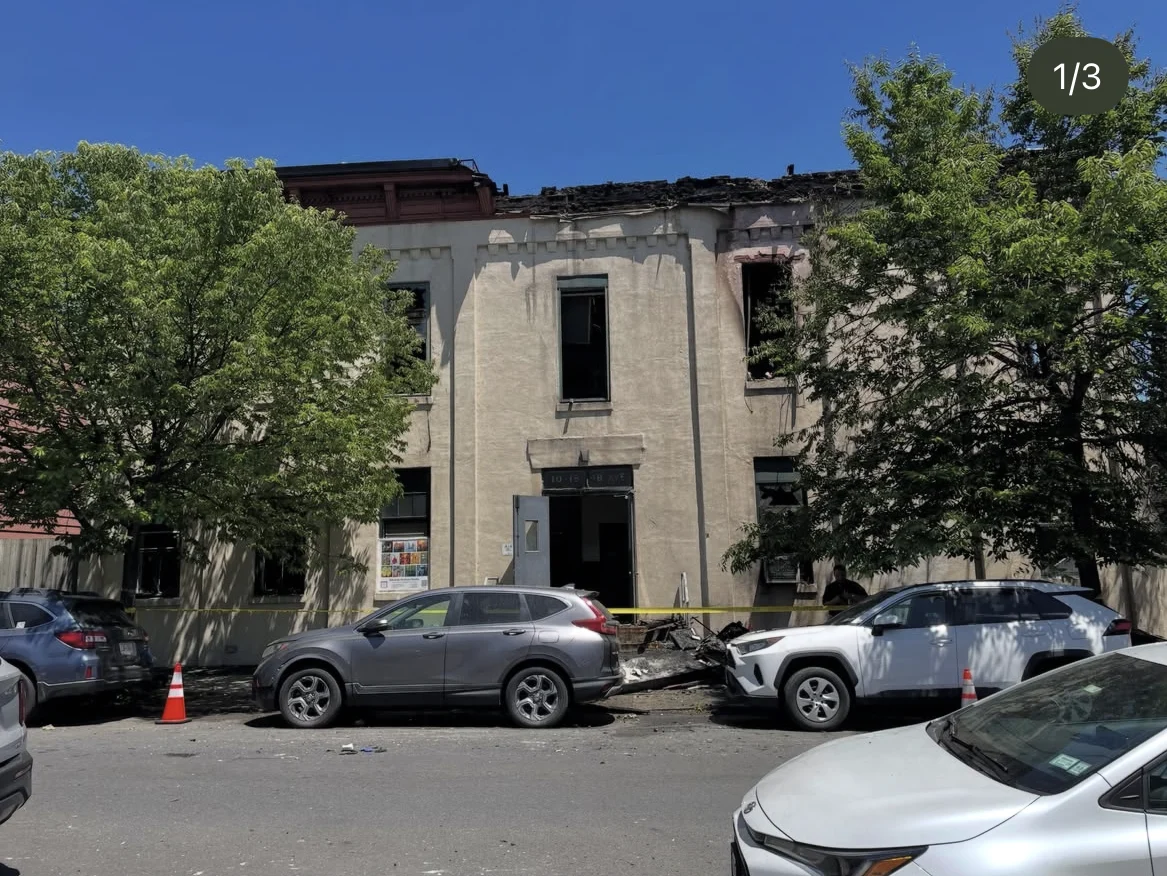
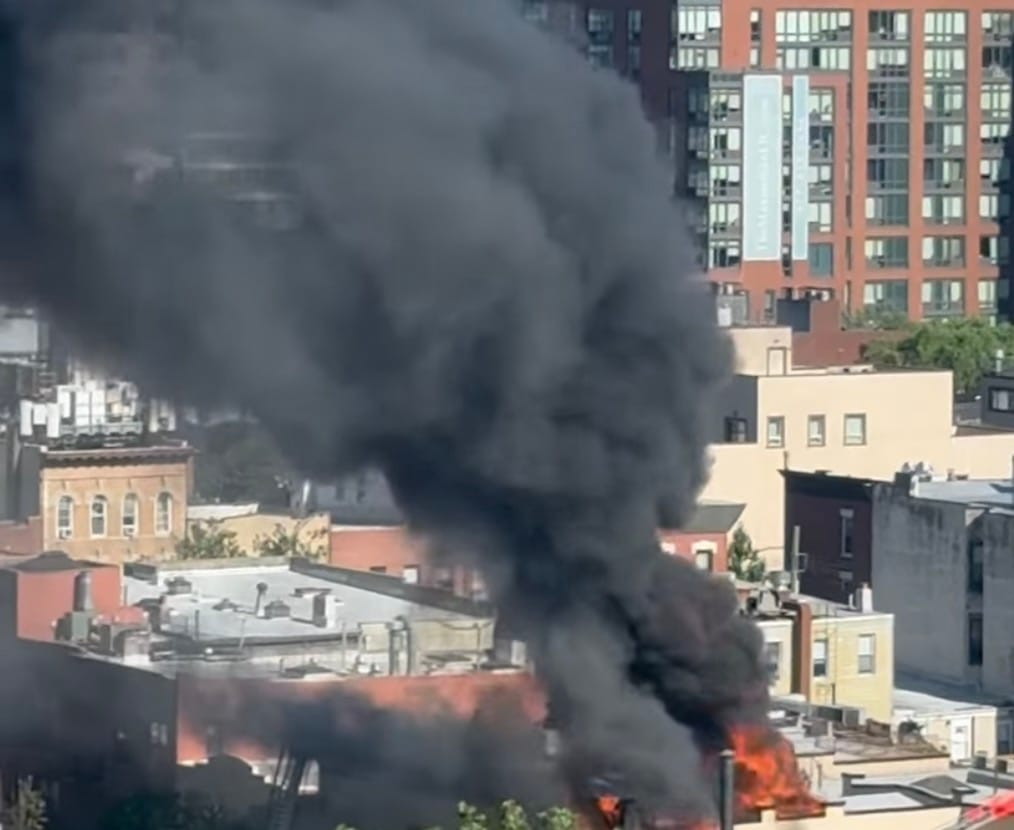
The morning of June 8 began like any other for the creative community in the Hunters Point section of Long Island City. However, by 9:00 a.m., the neighborhood’s quiet industrial charm was shattered by the roar of sirens and the thick, acrid plumes of smoke billowing from a two-story loft building at 10-15 48th Avenue. For artists Linda Ganjian and Ilan Averbach, the three-alarm fire that tore through their workplace was not merely a structural catastrophe—it was an existential threat to decades of creative output.
As the smoke clears and the FDNY begins its investigation into the cause of the blaze, the artists find themselves at the center of a growing crisis facing New York City’s creative class: the sudden loss of affordable, stable studio space.
The Chronology of the Crisis
The fire, which broke out on the morning of June 8, escalated rapidly. According to the FDNY, emergency dispatchers received the first distress calls at 8:46 a.m. By the time fire crews arrived, the flames had already gained a foothold on the top floor of the artist-in-residence building.
The inferno triggered a three-alarm response, drawing significant resources to the quiet street. Over the course of the next two hours, firefighters battled intense heat and precarious structural conditions. While the building’s specialized layout—often characterized by open-plan lofts—allowed for artistic freedom, it also facilitated the rapid spread of fire and smoke.
By mid-morning, the blaze was brought under control, but the damage was extensive. Three firefighters sustained non-life-threatening injuries during the operation and were transported to local hospitals for treatment. Fortunately, there were no civilian injuries reported. However, the physical toll on the building’s integrity was immediate and severe.
The Scramble for Salvation: A Firsthand Account
For Linda Ganjian, a renowned artist recognized for her intricate table-top sculptures and large-scale public art, such as the ceramic murals installed in Terminals 4 and 8 at JFK International Airport, the event was a frantic race against time. After receiving word of the incident, Ganjian spent the better part of the day at the scene, attempting to gauge the status of twenty years of accumulated work.
Her studio, located on the first floor, became a makeshift bunker for her career’s legacy. While the flames did not reach her unit, the secondary effects—water damage from the firefighters’ hoses and the looming threat of mold—posed an equal risk to her delicate mixed-media pieces.
"Some of them got wet, but so far the work is mainly okay," Ganjian told Hyperallergic in the wake of the incident. "I lost a collage, and there was some fixable water damage on a couple others."
The psychological weight of the situation is compounded by the lack of access. Because the city has officially declared the building a hazard, Ganjian and her fellow tenants have been barred from re-entering their workspaces. This limbo is particularly cruel for an artist; while the immediate fire damage is known, the long-term degradation of her work due to high humidity and water infiltration remains a silent, ticking clock.
Official Responses and Building Integrity
The aftermath of the fire has triggered a swift and stringent regulatory response. The New York City Department of Buildings (DOB) conducted a site inspection shortly after the blaze was extinguished, and the findings were grim.
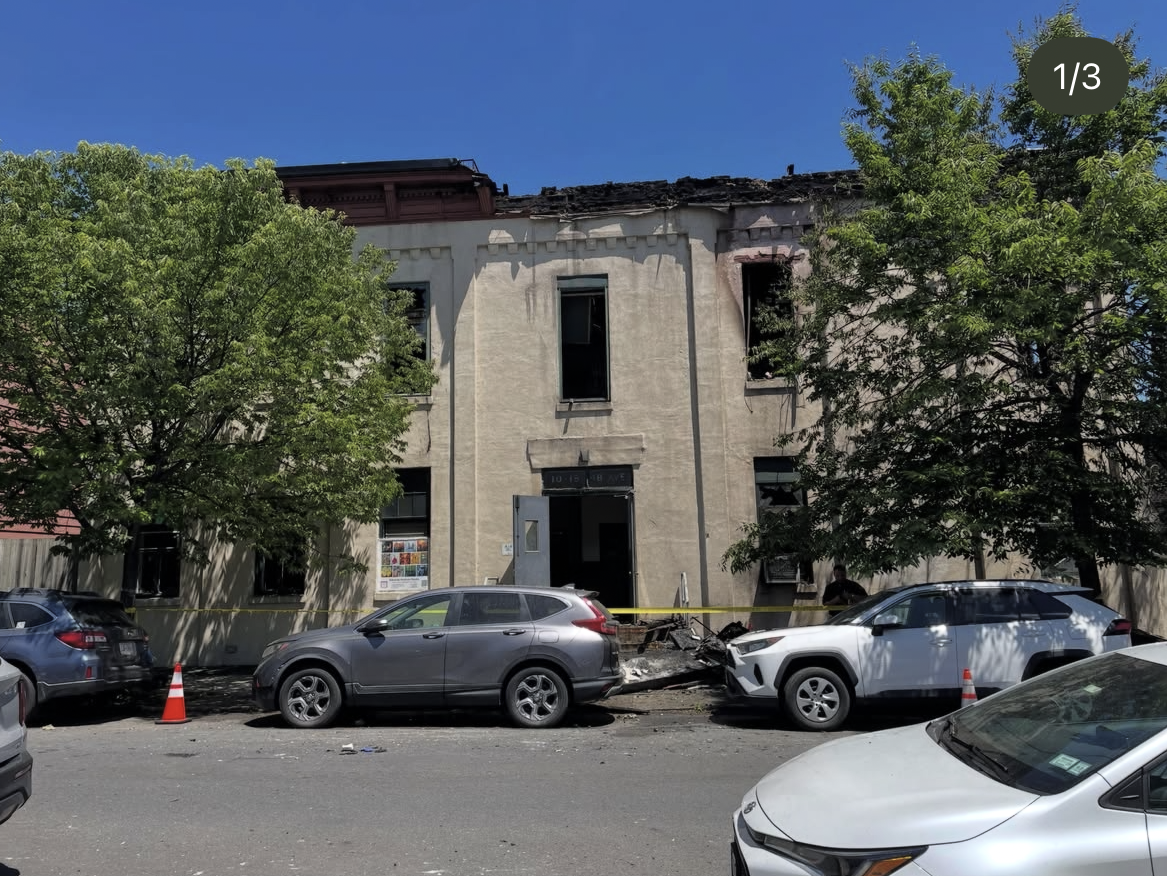
Inspectors discovered extensive structural compromise. Multiple rooms were found with ceilings that had been blown open or entirely exposed, leaving the interior vulnerable to the elements. Furthermore, numerous windows were shattered or missing, and the second floor exhibited severe charring, suggesting significant structural weakening.

Consequently, the DOB issued a full vacate order for the property. This administrative action serves as a legal barrier, preventing the artists from returning to retrieve their property until the building owner can prove that the structure is safe. To further secure the perimeter, officials ordered the immediate installation of a sidewalk shed, as large sections of the building’s masonry, or "corning," were found hanging loose, posing a fatal risk to pedestrians below.
When asked about the timeline for recovery, city officials offered little in the way of concrete hope. While the city maintains that they will coordinate with tenants to allow for the retrieval of belongings once an inspection determines it is safe to do so, there is no set date for when that might occur.
Implications for the Local Art Ecosystem
The destruction at 10-15 48th Avenue is not an isolated event; it is a symptomatic failure of a system that often leaves artists vulnerable to the whims of aging infrastructure. The incident occurred less than a year after a massive, devastating fire tore through an iconic artist studio building in Red Hook, Brooklyn. In that case, the recovery process was agonizingly slow, and many artists were left with damaged work that took years to restore or reconcile.
The situation for Ganjian and her studio-mate, sculptor Ilan Averbach, is now defined by the "search." Ganjian has taken to social media, using Instagram to broadcast her urgent need for new studio and storage space. Her public appeal serves as a reminder that for many NYC artists, a studio is not just a room—it is a storage unit for their life’s work, a laboratory for experimentation, and a primary place of business.
"The stressful part is having to vacate the studio ASAP and find another space to put everything," Ganjian noted. She expressed skepticism about a return to the 48th Avenue location, noting that the extent of the water damage would likely necessitate a gut renovation to mitigate toxic mold growth. "It’s uncertain when or if we’ll be back in."
The Economic and Cultural Cost
Beyond the immediate loss of physical property, the fire highlights the precarious nature of "artist-in-residence" lofts. These spaces are often housed in converted industrial buildings that may lack modern fire suppression systems or seismic reinforcement, yet they are the lifeblood of the city’s creative output.
When a building like the one on 48th Avenue is shuttered, the loss is three-fold:
- The Material Loss: The destruction of irreplaceable archives, prototypes, and finished works.
- The Economic Disruption: The loss of workspace often leads to a cessation of production, causing artists to miss deadlines for commissions, gallery shows, and public art installations.
- The Cultural Erosion: As affordable studio spaces are lost to fires or gentrification, artists are pushed further to the fringes of the city, weakening the community bonds that make neighborhoods like Long Island City and Hunters Point hubs of innovation.
Looking Ahead: A Call for Support
As of this writing, the cause of the fire remains under active investigation by the FDNY’s Fire Marshal. While the building owner bears the legal responsibility for the structural repairs and the implementation of the vacate order, the human cost is being borne almost entirely by the tenants.
For the arts community in Queens, the fire at 10-15 48th Avenue is a sobering call to action. It emphasizes the need for better emergency preparedness for artists, including comprehensive insurance, off-site digital archiving of work, and stronger advocacy for building safety standards that do not sacrifice the affordability of creative spaces.
For now, Linda Ganjian remains in a state of professional displacement. Her story—and the silent, smoke-stained halls of the studio she once called home—stands as a stark reminder of the fragility of the creative process in the heart of the metropolis. As she continues to look for a new space to house her sculptures, she represents the resilience of the New York artist: displaced, shaken, but inevitably moving toward the next canvas, the next project, and the next space to call home.
This story is developing. Hyperallergic will continue to provide updates as more information regarding the building’s status and the artists’ recovery efforts becomes available.
 Muslim
 Evan Lee Salim
 Jia Lissa
