

This week, the cultural landscape spans the breadth of human experience—from the deep-time echoes of ancient Mesopotamian deities to the pressing sociopolitical questions of the modern age. As we navigate a world increasingly defined by digital archives and shifting urban topographies, our "Required Reading" series examines how art, architecture, and history intersect to challenge our perceptions of reality.
The Mythic Future: Chitra Ganesh at the Baltic
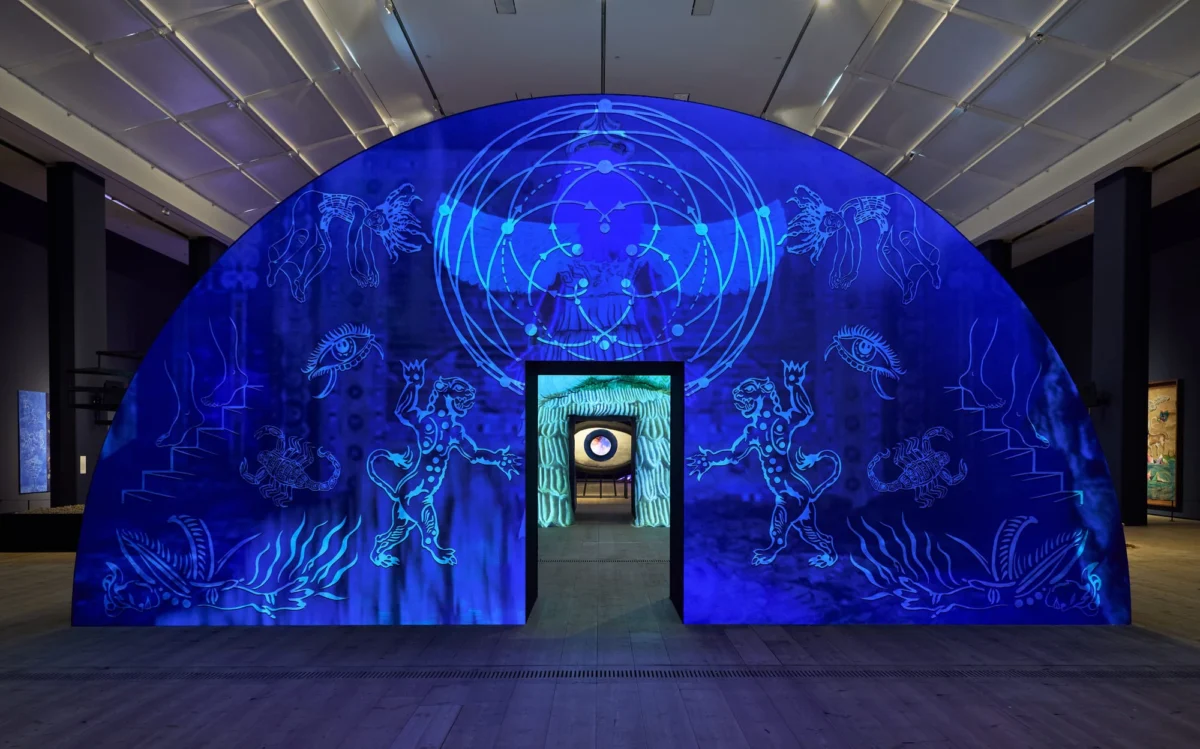
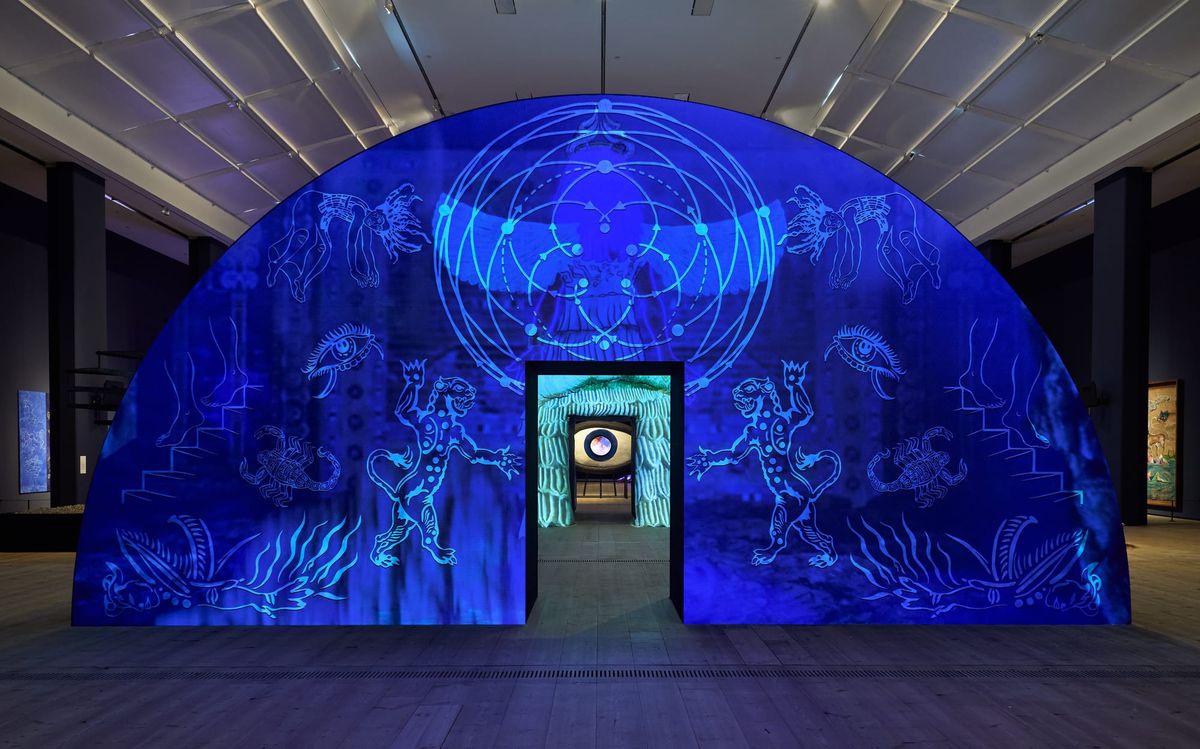
The Baltic Centre for Contemporary Art in Newcastle upon Tyne has unveiled Journey to the Great Below, a striking new exhibition by artist Chitra Ganesh. Drawing inspiration from the 17th-century BCE Mesopotamian epic, "The Descent of Inanna into the Underworld," Ganesh bridges the chasm between ancient myth and speculative future.
Core Themes and Artistic Vision
Ganesh’s work operates as a visual portal, reimagining the goddess Inanna’s journey to the land of the dead and her subsequent resurrection. By utilizing a visual language that feels both ancestral and futuristic, Ganesh forces the viewer to confront the cyclical nature of power, loss, and transformation. Her work suggests that the most profound human anxieties are not modern inventions but are instead echoes of the oldest stories we have ever told.
Architectural Disillusionment: Arundhati Roy’s Early Lens
Before she became a literary titan, Arundhati Roy was an architecture student with a camera. In a recent retrospective for Apollo, Debika Ray revisits the film Roy produced during her university years.
The Chronology of a Political Voice
The film, In Which Annie Gives It Those Ones, serves as a fascinating origin story. Watching it with the hindsight of four decades, one can trace the seeds of Roy’s later political activism.
- The Student Perspective: The cynicism displayed by her on-screen character reflects a profound disillusionment with the rigid, narrow definitions of "progress" promoted by the architectural profession.
- A Prescient Critique: The film acts as a time capsule for modern India, capturing the rapid, often destructive shift between urban development and rural life—a tension that has only intensified in the ensuing years.
Surrealism, Pessimism, and the "Language of Stones"
In the Los Angeles Review of Books, Abigail Susik explores the intersection of hope and despair in new translations of André Breton.
Implications of the Surrealist Revolution
Breton’s essays, collected in Cavalier Perspective, challenge the reader to look beyond traditional political activism. Susik highlights Breton’s belief in a "unified field"—a concept suggesting that neither art nor politics alone is sufficient to change the trajectory of a world hurtling toward extinction. Instead, Breton advocates for an animist, "spiritually" charged perception of the universe. By engaging with art as a form of divination, he posits that humanity might find a way to resist the encroaching "death drive" of modern civilization.
Historical Preservation: The Palestinian Digital Archive
In an era where history is frequently subject to erasure, the Palestinian Museum’s new digital initiative stands as a monumental act of resistance. Reported by Wired, this project is a grassroots effort that has successfully digitized over 500,000 documents, photographs, and maps.
Data and Methodology
The archive is more than a collection; it is an open-source repository designed to safeguard identity. By visiting families across the West Bank and scanning fragile, personal artifacts, the project ensures that the narrative of a people is not lost to displacement or conflict. The mission is twofold: preservation and global accessibility, allowing those in the diaspora to connect with a history that is physically out of reach.
The Legacy of Paul R. Williams: An Unsung Titan
The architectural fabric of Los Angeles is defined by the work of Paul R. Williams, the first licensed Black architect to practice west of the Mississippi. A recent piece in Vanity Fair details the profound reach of his career.
The Scope of a Career
Staci Steinberger of LACMA notes the pervasive influence of Williams’s work, famously remarking that a person could exist their entire life—from birth in a hospital to their final rites in a funeral home—within spaces designed by Williams.
- Historical Recognition: Despite his massive output, Williams remains an unsung hero of 20th-century American architecture.
- Cultural Impact: As noted by Cornell’s Milton S. F. Curry, Williams’s work stands on par with giants like Frank Gehry. His ability to create spaces that felt specifically designed for the Black experience, at a time when such brilliance was systematically ignored, cements his legacy as a pioneer.
Cultural Curiosities: Mermaids, Tattoos, and Airplanes
The Weeki Wachee Phenomenon
Jack Burke’s deep dive into the history of Florida’s Weeki Wachee Springs reveals a strange, mid-century American dream. At its peak, the mermaid show—which began as a desperate attempt to flag down cars on Route 19—became a massive tourist attraction, featuring appearances by Elvis Presley and televised spots on The Ed Sullivan Show. It remains a surreal relic of a time when the American road trip was the country’s primary cultural engine.
The "Tattoo Wars" of New York
Sonia Rao of Gothamist recounts the early days of New York City tattooing, specifically the legal battles between Samuel O’Reilly and "Electric" Elmer Getchell. Following Thomas Edison’s patent for an electric pen in 1876, the race to invent the electric tattoo machine was fraught with litigation. This era of innovation, characterized by both technical ingenuity and bitter professional rivalry, laid the groundwork for the modern tattoo industry.
The Ethics of the Reclining Seat
In The New Yorker, Joshua Rothman tackles a modern moral dilemma: the reclining airplane seat. While the debate often centers on personal space, the structural reality of aviation design is the true culprit. As planes have not become significantly wider, the "pitch" (the distance between rows) is the only variable airlines can manipulate. Rothman suggests that rather than engaging in mid-air conflicts, we might look toward newer, more ergonomically considered aircraft models like the Airbus A220.
Conservation and the Natural World
The Likweli Monkey
Science continues to surprise us with the discovery of the Likweli monkey in the Congolese rainforest. First documented in a blurry 2008 photograph, the primate remained a mystery until researchers from the Lukuru Wildlife Research Foundation confirmed it as a distinct species. This discovery highlights the urgent need for continued conservation efforts in the Tshupa, Lomami, and Lualaba river regions.
Addressing Erasure in Argentina
Following the World Cup, discourse surrounding Argentina has been marked by a noticeable silence regarding the country’s Indigenous and Black populations. Influencer Tess Garcia has utilized social media to highlight this "successful erasure," sparking a necessary conversation about the historical whitening of Argentinian national identity.
Implications for the Future
The stories covered this week share a common thread: the struggle for accurate representation against the tides of time and power. Whether it is the digital preservation of Palestinian history, the recognition of Paul R. Williams’s architectural genius, or the reclamation of marginalized narratives in Argentina, the act of "remembering" is a political one.
As we look toward the future, these narratives suggest that the preservation of our history—both ancient and modern—is the only way to ensure that we do not repeat the mistakes of the past. As Breton might argue, it is through this "Language of Stones" and the pursuit of truth that we might finally begin to bridge the gap between our current reality and a more equitable, liberated future.
 Muslim
 Evan Lee Salim
 Jia Lissa
