

As the calendar turns toward July, the discourse surrounding American identity—its foundational myths, its architectural reality, and its evolving creative spirit—becomes increasingly urgent. This week’s "Required Reading" explores these themes through a diverse lens, ranging from the ethereal light installations of James Turrell to the radical re-readings of the Declaration of Independence. Below, we examine the cultural touchstones defining our current moment.
The Celestial Architecture of James Turrell
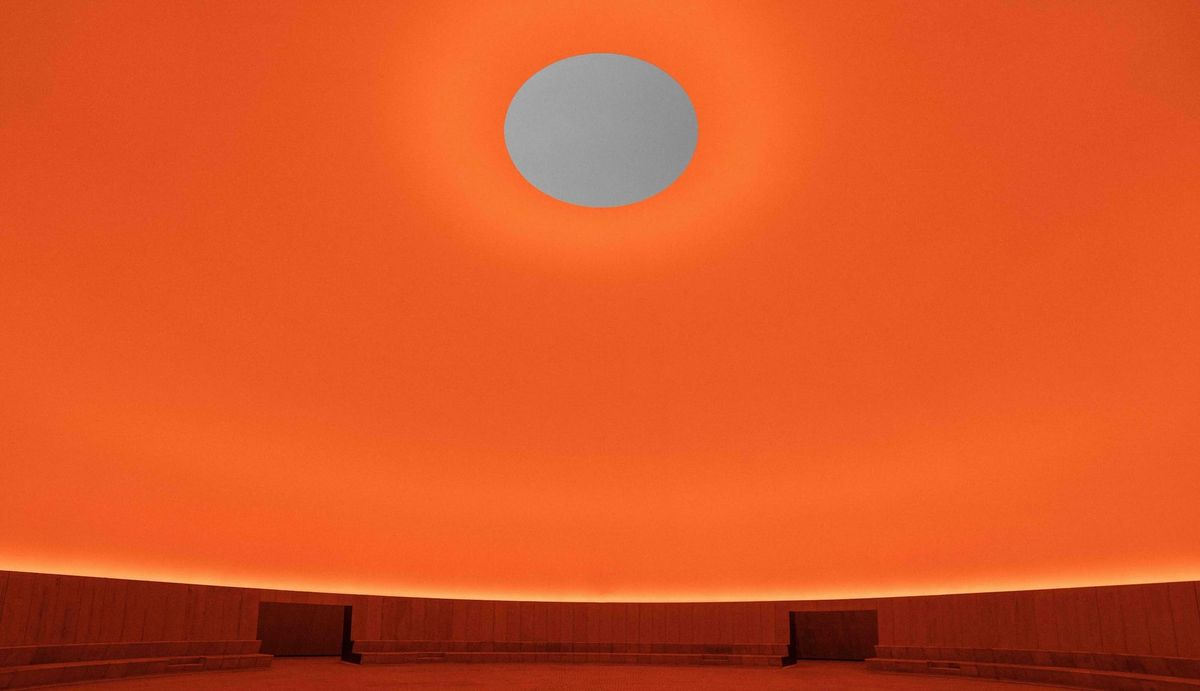
At the ARoS Aarhus Art Museum in Denmark, visitors are currently experiencing a masterclass in spatial perception. James Turrell’s As Seen Below—The Dome, a Skyspace, which opened to the public last month, serves as a testament to the artist’s lifelong fascination with the intersection of light, space, and the human psyche.
The structure is a monumental feat of engineering: a 131-foot-wide, 52-foot-tall cavernous dome. At its zenith, a singular oculus frames the sky, transforming the firmament into a shifting tondo. Throughout the day, the interior walls transition in color, responding in real-time to the atmospheric conditions outside. Turrell, who has spent decades exploring the phenomenology of perception, has effectively blurred the line between the sky and the interior, inviting viewers to question the stability of their own vision.
The Musical Maverick: Raven Chacon’s Sonic Resistance
In a compelling profile for the New York Review of Books, musician Nate Wooley explores the work of Diné artist and composer Raven Chacon. Often pigeonholed solely as a critic of American colonial history, Chacon’s practice is revealed to be far more expansive.
Wooley argues that while Chacon’s work is inherently political—addressing the systemic abuses against Indigenous peoples—his technical lineage is equally significant. Chacon’s compositions share a DNA with the microtonal experiments of Harry Partch, the "Deep Listening" methodologies of Pauline Oliveros, and the graphic, jazz-infused scores of Wadada Leo Smith. These artists are united by a common preoccupation: the profound loneliness and angst inherent in the American project of rugged individualism. Chacon’s music serves not just as a historical critique, but as a bridge between diverse avant-garde traditions, grounding Indigenous experience within the broader, often contested, history of American experimental music.
Architectural Ethos: The Sprawl of the American Landscape
Writing for The Nation, critic Kate Wagner offers a provocative dissection of the American built environment. Wagner challenges the oft-cited architectural maxim, "form follows function," noting that in the American context, this principle has devolved into irony.
Wagner argues that the American architectural ethos treats land not as a partner in construction, but as a resource to be exploited. "As anyone who has ever driven through a mountain suburb knows," she writes, "our architectural ethos treats the land as something meant to be taken from, not worked with." This disregard for the site-inhabitant relationship—what Vitruvius defined through the triad of firmitas, utilitas, and venustas—has resulted in a uniquely "bold" but frequently ugly landscape. For Wagner, the ordinary strip mall and the suburban sprawl are the true confessions of the American soul: a culture that prioritizes engineering convenience over environmental or aesthetic integration.
Black Radicalism and the Declaration of Independence
The approach of July 4th often brings a sanitized, patriotic retelling of American history. However, in the summer issue of Hammer & Hope, historian Robin D. G. Kelley provides a necessary corrective. He explores how Black thinkers, from the 19th century to the modern era, have utilized the Declaration of Independence as a revolutionary tool.
Kelley posits that for enslaved and fugitive Black thinkers, the Declaration was never merely a document of national pride; it was a "referendum on the definition of the human." By grabbing the language of liberty and tossing it back at the state, figures like Denmark Vesey, Nat Turner, and Martin Luther King Jr. transformed the text into an "undetonated grenade." Kelley argues that this history of appropriation and critique makes the Declaration a cornerstone text of Black studies, proving that its most potent applications were those never intended by its authors.
Linguistic Preservation: The Case of Pennsylvania Dutch
The struggle to preserve heritage is rarely as intimate as the one documented by Eythana Miller in The Dial. As a member of an Amish community, Miller grapples with the erosion of the Pennsylvania Dutch language, which is increasingly being supplanted by English terms.

Miller notes a poignant tension: while she believes the oral, concrete nature of Pennsylvania Dutch is essential to her culture’s identity, the realities of modern life—and constant interaction with the outside world—make linguistic drift inevitable. When her relatives swap traditional terms for "parents" or "visited" (Deitsch-ified versions of English), she views it as a loss of lexical independence. Her struggle highlights a universal challenge for minority language speakers: how to maintain the integrity of an ancestral tongue when the surrounding world exerts a relentless pressure to conform.
The "Admin Night" Phenomenon: Surviving Bureaucratic Sprawl
Modern life, as it turns out, is defined by an overwhelming, low-stakes busyness. Patricia Marx, writing for The New Yorker, explores the rise of "Admin Nights"—communal gatherings designed to help friends tackle the mounting, tedious tasks of 21st-century existence.
Coined by journalist Chris Colin in 2019, the concept responds to a "third category of busyness": the endless cycle of hold times, chatbots, and administrative hurdles required to navigate modern infrastructure. "Life has become unsustainable," Colin explains, noting that these nights are as much about political solidarity against corporate inefficiency as they are about productivity. The fact that such a movement exists serves as a biting indictment of the "deranged administrative sprawl" that characterizes our daily lives.
Global Cultural Ripples
- The World Cup Song: In Defector, Sohini Desai contrasts the soul of early World Cup anthems, like Los Ramblers’ "El Rock Del Mundial," with the sterilized, corporate-driven tracks of today. The former was defined by organic, local pride; the latter, she argues, lacks the necessary "purity" to truly capture the spirit of the game.
- The Endangered Heritage of Petra: Reports from 60 Minutes Australia highlight the physical degradation of the UNESCO World Heritage site of Petra, Jordan. Increased foot traffic and a lack of sustainable tourism management are threatening the structural integrity of these ancient Nabataean carvings, sparking a debate on the trade-offs between global accessibility and site preservation.
- The Art of the Kolam: The ephemeral beauty of South Indian kolam—intricate rice flour patterns drawn on the ground—continues to garner international interest, serving as a reminder of the spiritual and domestic rituals that persist despite the rapid pace of digital globalization.
Implications and Reflections
This week’s readings suggest a common thread: we are living in a period of intense structural re-evaluation. Whether it is the physical sprawl of our suburbs, the administrative burden of our digital infrastructure, or the historical framing of our founding documents, the consensus is that the status quo is increasingly untenable.
As we look toward the upcoming national holidays, these voices serve as a reminder that culture is not a static set of monuments, but a living, breathing, and often contentious practice. From the light-filled domes of Denmark to the quiet struggle for a dialect in Pennsylvania, the human impulse remains the same: to find, define, and preserve meaning in a world that is frequently designed to distract us. As we navigate the coming weeks, the question remains: which parts of our current reality are worth preserving, and which are the "undetonated grenades" we must be prepared to throw back?
 Muslim
 Evan Lee Salim
