

By Rhea Nayyar
Published by Hyperallergic
Main Facts
Following a significant five-year hiatus, Manhattan’s New Museum is set to make a triumphant return with its premier showcase for emerging contemporary talent. The institution’s sixth iteration of its flagship triennial opens on February 4, 2027, marking a monumental milestone: it will be the first major international exhibition hosted within the museum’s newly expanded building.
Titled The Outside Expands, the upcoming exhibition promises to break records for the institution, featuring 36 dynamic artists and artist collectives hailing from 34 distinct nations. This sweeping geographic scope makes it the most globally representative and internationally focused edition in the triennial’s history.
Co-curated by New Museum Curator Vivian Crockett and Isabella Rjeille—a esteemed curator at the Museu de Arte de São Paulo Assis Chateaubriand (MASP) in Brazil—the exhibition draws deep conceptual inspiration from a historical moment of political resistance. Specifically, the curators looked back to "X Galeria (X Gallery)," a daring 1979 urban intervention staged by the Brazilian collective 3NÓS3 during the height of a U.S.-backed civil-military dictatorship that subjected Brazil to over two decades of authoritarian rule.
Chronology: From 1970s Resistance to 2027 Innovation
To understand the urgent pulse of The Outside Expands, curators Crockett and Rjeille encourage audiences to look backward to trace a lineage of creative defiance.
- 1979 (The Spark): Amidst brutal censorship and severe human rights violations under Brazil’s military regime, the art collective 3NÓS3 executed "X Galeria." Members of the group blanketed São Paulo, physically duct-taping massive "X" marks across the glass entrances of traditional commercial galleries and cultural institutions.
- The Manifesto: Alongside these giant symbols, the collective left a definitive, politically charged statement: "O que está dentro fica, o que está fora se expande" ("What is inside remains, what is outside expands"). This conceptual gesture urged artists, intellectuals, and citizens to break free from rigid institutional boundaries, creating culture in the public square, on the streets, and far away from state-sanctioned spaces.
- 2021–2026 (The Hiatus & Expansion): Following previous editions of the New Museum Triennial, the curatorial team entered a prolonged, reflective planning cycle. Concurrently, the New Museum itself undertook a massive architectural expansion in Manhattan to increase its gallery footprints and public programming spaces.
- February 4, 2027 (The Debut): The Outside Expands will officially open to the public, inaugurating the New Museum’s newly expanded facilities with an unprecedented roster of international voices.
Supporting Data & Exhibition Metrics
The scale of the 2027 Triennial demonstrates a deliberate shift toward decentralizing Western-centric narratives in contemporary art. Key figures defining this year’s edition include:
- 36: The total number of participating individual artists and collaborative groups selected for the exhibition.
- 34: The number of unique countries represented, highlighting a hyper-diverse geopolitical landscape.
- 5: The number of years that have passed since the last New Museum Triennial, building immense anticipation within the global art market and critical community.
- 1: A singular unified curatorial vision linking historic Latin American artistic resistance to current, decentralized global art practices.
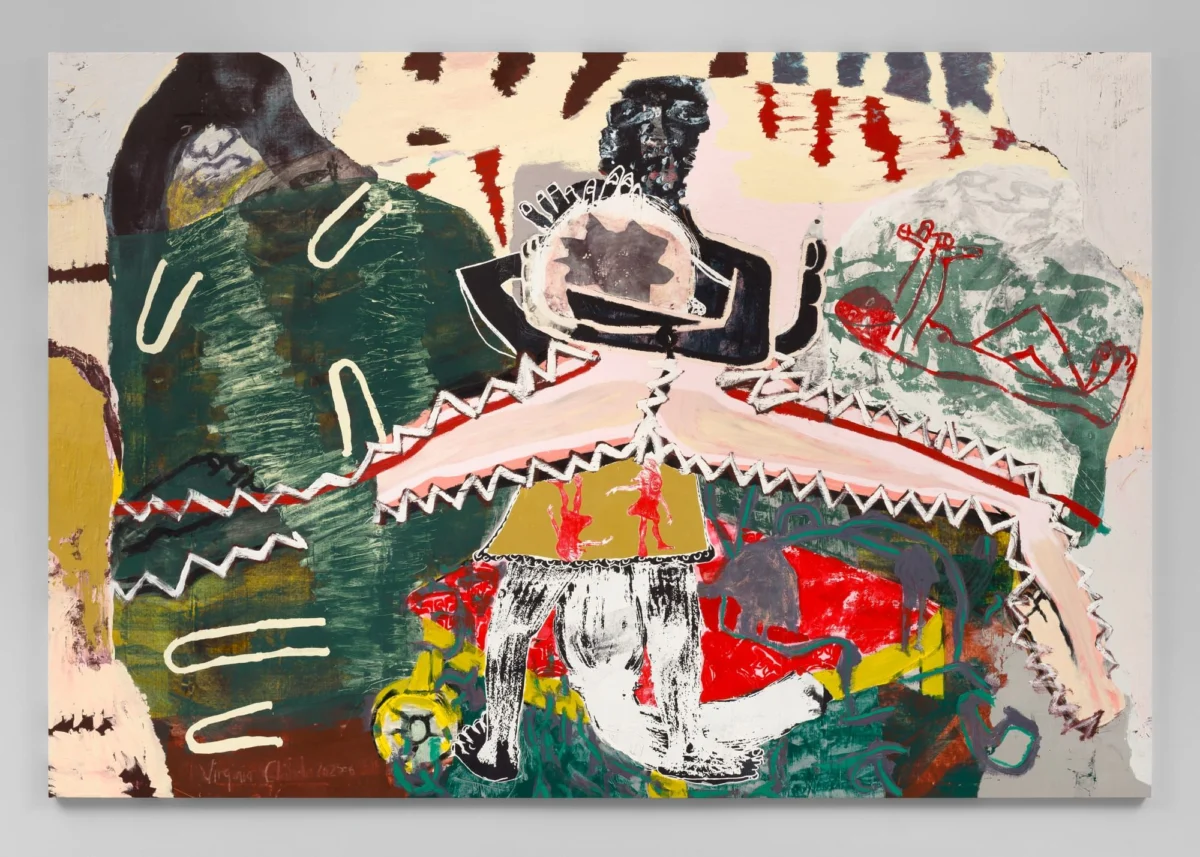
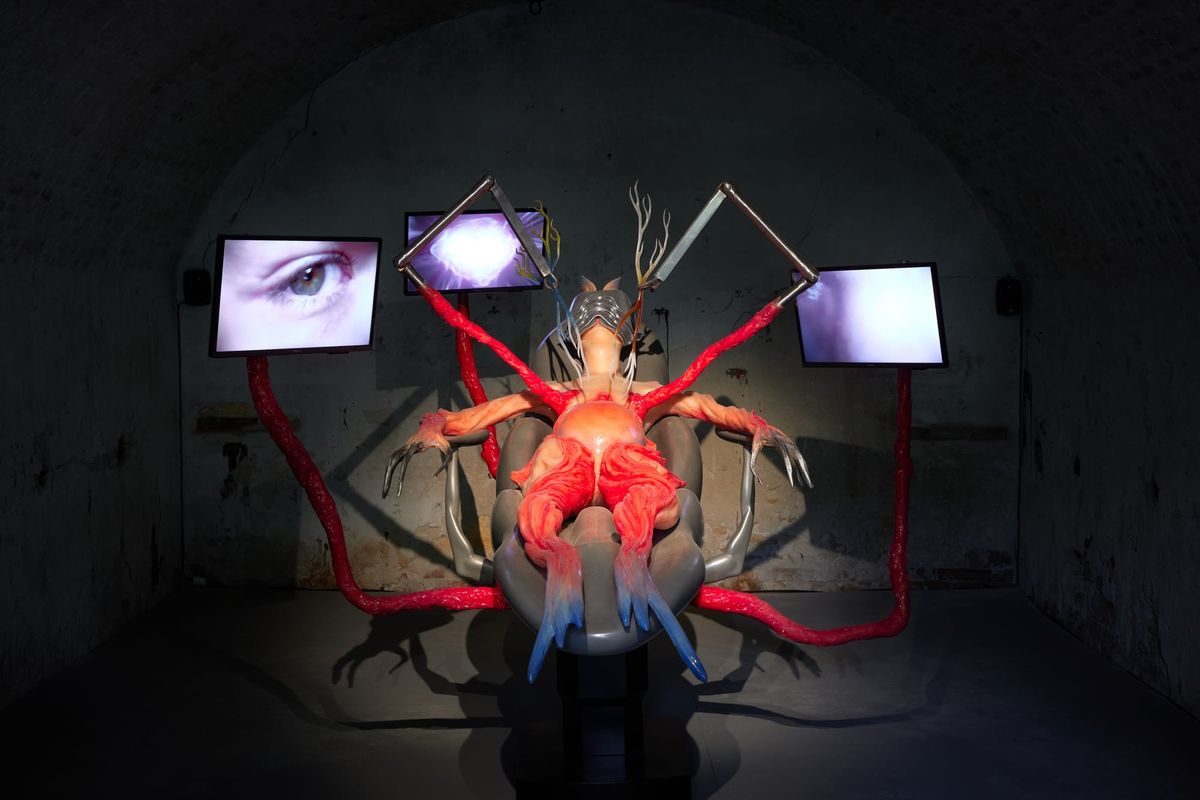
Among the artists featured in the broader conversational ecosystem of the exhibition is Agnes Questionmark, whose provocative installation Cyber-Teratology Operation (2024)—previously exhibited in the acclaimed Stranieri Ovunque – Foreigners Everywhere at the 2024 Venice Biennale—underscores the physical and technological transformations of identity. Similarly, works like Virginia Chihota’s striking Ini ndinowa, Ini ndinosimuka [Me fall, Me rise] (2025–26) anchor the exhibition’s thematic exploration of resilience, bodily persistence, and sociopolitical gravity.
Official Responses and Curatorial Intent
Speaking on the conceptual framework of the 2027 edition, co-curator Vivian Crockett emphasized that the phrase "What is inside remains, what is outside expands" serves as more than just a historical citation; it is a vital blueprint for contemporary cultural workers.
"When 3NÓS3 marked the doors of São Paulo’s galleries in 1979, they weren’t merely rejecting the establishment—they were validating the boundless potential of culture that exists beyond the sanctioned walls of museums and elite institutions," Crockett noted. "Today, as political freedoms face renewed threats across the globe, that message has taken on an urgent, modern resonance."
Co-curator Isabella Rjeille expanded on how international perspectives shaped the selection of the 36 participants. By weaving together methodologies from the Global South and beyond, the curatorial team aimed to disrupt predictable exhibition models.

"We are not just bringing international artists into a New York institution," Rjeille explained. "We are asking what it means to allow the outside—with all its messy, urgent, and decentralized realities—to radically reshape how we think about the museum space itself. The artists in this show are mapping new territories of thought, refusing to be contained by traditional borders or predictable mediums."
Museum leadership has similarly championed the expansion as a watershed moment. The integration of The Outside Expands into the newly enlarged building signals the New Museum’s ongoing commitment to serving as a vital laboratory for avant-garde, boundary-pushing global practices.
Implications for the Contemporary Art World
The arrival of The Outside Expands in early 2027 carries profound implications for the global art ecology:
- Challenging Institutional Complacency: By using 3NÓS3’s 1979 intervention as a foundational text, the triennial actively questions the role of the contemporary museum. It asks whether elite institutions can truly house revolutionary ideas, or if their primary function should be to serve as a porous conduit for external, grassroots movements.
- A New Standard for Global Representation: With 34 nations represented across just 36 entries, the exhibition avoids the trap of tokenism by favoring deep dives into complex, regional practices over superficial geographic quotas. This approach ensures that emerging artists from under-represented geographies receive rigorous, sustained critical attention.
- The Re-Emergence of Political Craft: As democratic institutions face mounting pressures worldwide, the art world is experiencing a resurgence of politically engaged, community-oriented, and boundary-defying work. The 2027 Triennial positions itself at the bleeding edge of this shift, celebrating creators who build alternative structures when official frameworks fail.
As the countdown to February 4, 2027, begins, the art world watches Manhattan with bated breath. Through The Outside Expands, the New Museum is poised to prove that the most vital contemporary art is rarely found sitting comfortably inside the lines—it is forged on the outside, pushing relentlessly outward.
 Neng Nana
 Laily UPN
 Jia Lissa
